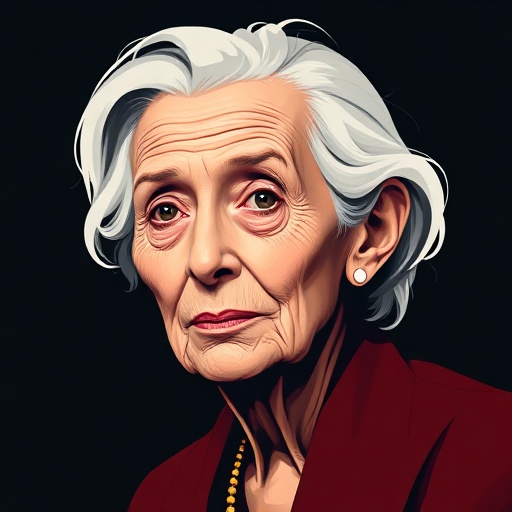
Jane Goodall — "I believe that we can change the world, one individual at a time."
I believe that we can change the world, one individual at a time.
I believe that we can change the world, one individual at a time.
Click any product to generate a realistic preview. Up to 3 at a time.
* Initial load can take up to 90 seconds — revising the preview in another color is nearly instant.
"The chimpanzees taught me that it's important to be patient."
"We need to listen to the voices of the natural world, and learn from them."
"The great thing about chimpanzees is that they teach you humility."
"The more we learn about the true nature of non-human animals, especially those with complex brains and complex social behavior, the more ethical concerns are raised regarding their use in the service …"
"Animals are not just things. They're living beings with feelings, just like us."
British primatologist who in 1960 began the longest-running wild primate study at Gombe Stream, transforming our understanding of chimpanzees. Closely associated with Dian Fossey (mountain-gorilla researcher) and Birutė Galdikas (orangutan researcher; together with Goodall and Fossey one of Louis Leakey's 'Trimates'). For an intellectual contrast, see Walter Palmer, American dentist who killed Cecil the Lion in Zimbabwe in 2015 — Palmer represents the trophy-hunting tradition Goodall's life's work has been organized against — the colonial-era hunter-naturalist worldview that treated primates and big game as specimens or trophies, which Goodall's Roots & Shoots and Jane Goodall Institute exist specifically to displace.
Found in 1 providers: grok
1 source checked
Real, lasting change doesn't require waiting for governments or large institutions to act. Each person's daily choices — what they buy, how they speak, what causes they champion — create ripple effects that collectively reshape society. Progress is an accumulation of small, deliberate acts by ordinary people. It is an argument for personal responsibility and optimism over cynicism: no individual contribution is too small to matter.
Goodall built her career on the power of individual action. A young woman with no formal degree, she traveled alone to Gombe, Tanzania in 1960, studying chimps through patient one-on-one observation — proving individuals, human and animal, hold unique personalities worth protecting. Her Roots and Shoots program, now active in 60-plus countries, is built on exactly this premise: empowering one young person at a time to become an environmental advocate.
Goodall rose to prominence as environmental crises accelerated and faith in large institutions declined. The 1960s-70s birthed the modern environmental movement; by the 1990s-2000s, climate change became undeniable while political gridlock deepened. Her philosophy countered that paralysis directly. The internet era then demonstrated concretely how one person's act could spark global movements — from local recycling campaigns to Greta Thunberg — validating her grassroots, individual-first worldview in real time.
AI-generated insights based on extensive research and information for context. Factual errors? Email [email protected].
Your cart is empty