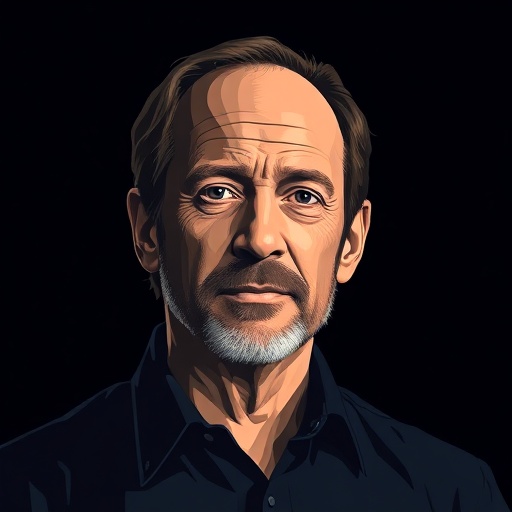
Tim Berners-Lee — "I didn't invent the internet. I invented the World Wide Web. The internet was al…"
I didn't invent the internet. I invented the World Wide Web. The internet was already there.
I didn't invent the internet. I invented the World Wide Web. The internet was already there.
Click any product to generate a realistic preview. Up to 3 at a time.
* Initial load can take up to 90 seconds — revising the preview in another color is nearly instant.
"The web is a mirror of us. We have to make sure it reflects our best qualities."
"The web is not a privilege, it is a right."
"I'm constantly surprised by what people do with the web."
"The web is not just a technology; it's a social construct. We need to think about its social implications."
"I was devastated when I saw how the web was being misused."
British computer scientist who invented the World Wide Web at CERN in 1989 and founded the W3C, championing open web standards. Closely associated with Vint Cerf (TCP/IP co-creator and 'father of the internet') and Marc Andreessen (Mosaic browser creator and Netscape co-founder). For an intellectual contrast, see Mark Zuckerberg, Facebook (Meta) founder — Zuckerberg's walled-garden Facebook is the canonical contemporary opposite of Berners-Lee's open-web vision; Berners-Lee's Solid project and 'recapture the web' essays are explicitly written as a rebuttal to the platform-monopoly model Facebook pioneered.
Found in 1 providers: grok
1 source checked
People often confuse the internet with the web, but they are different things. The internet is the global network of connected computers — infrastructure built over decades. What Berners-Lee created in 1989 was the World Wide Web: web pages, hyperlinks, browsers, and HTTP that let anyone navigate that infrastructure. He is correcting a flattering but inaccurate credit, insisting on precise recognition of what he actually built versus what already existed.
Berners-Lee is a scientist who values precision above personal glory, evident throughout his career. He created the Web at CERN in 1989 using existing internet infrastructure, then deliberately chose not to patent it, giving the technology to humanity freely. This quote reflects his commitment to accuracy over inflated credit. He consistently acknowledges the engineers behind TCP/IP and ARPANET, whose work made his invention possible in the first place.
The internet's roots trace to ARPANET in 1969 and TCP/IP standardization in the early 1980s — decades before Berners-Lee's 1989 proposal at CERN. The dot-com boom of the mid-1990s created enormous public excitement around 'the internet,' frequently conflating infrastructure with applications. As browsers made the Web mainstream, confusion about who invented what became rampant. Berners-Lee repeatedly had to correct journalists and the public who credited him with inventing something he had merely built upon.
AI-generated insights based on extensive research and information for context. Factual errors? Email [email protected].
Your cart is empty