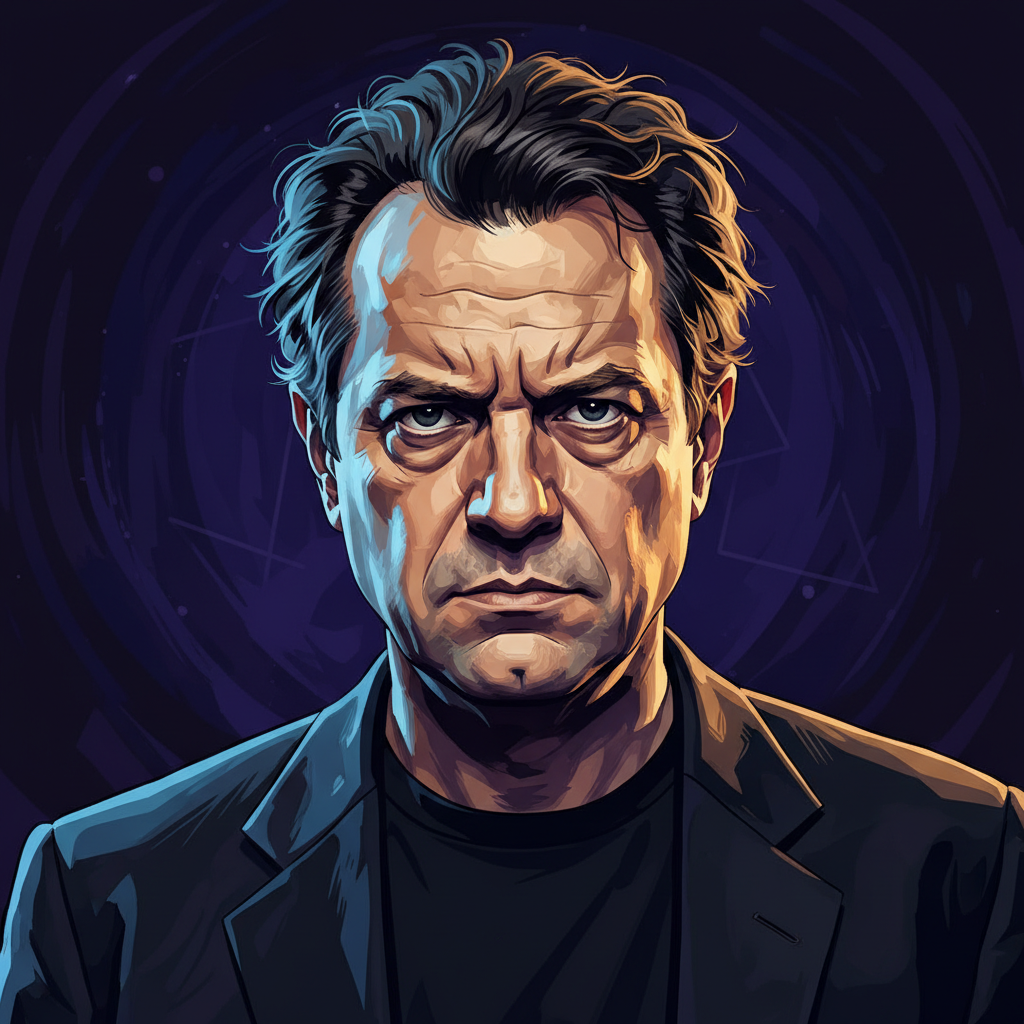
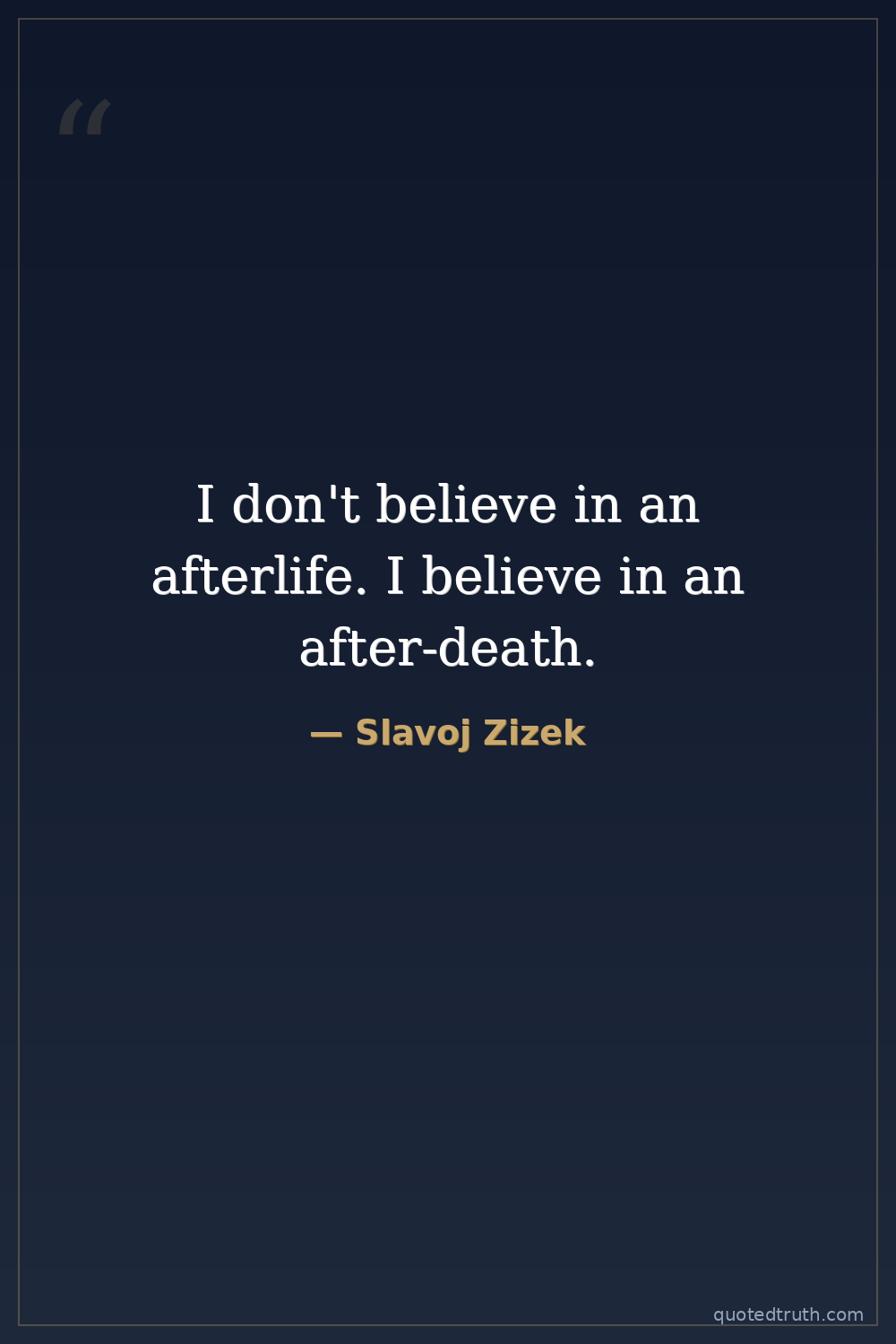
Slavoj Zizek — "I don't believe in an afterlife. I believe in an after-death."
I don't believe in an afterlife. I believe in an after-death.
I don't believe in an afterlife. I believe in an after-death.
Click any product to generate a realistic preview. Up to 3 at a time.
* Initial load can take up to 90 seconds — revising the preview in another color is nearly instant.
"It's not the same thing: coffee without cream or coffee without milk. What you don't get is part of the identity of what you get."
"The only way to escape ideology is to embrace it."
"We live in a post-ideological era, which means we are more ideological than ever."
"The only way to escape ideology is to embrace it in its purest form."
"The problem is not lack of choice, but too much choice."
Slovenian philosopher and cultural theorist whose Lacanian readings of ideology, film, and pop culture (The Sublime Object of Ideology, 1989) made him the most-cited continental philosopher of the 21st century. Closely associated with Alain Badiou (French Marxist philosophical contemporary) and Judith Butler (post-structuralist peer in gender theory). For an intellectual contrast, see Jordan Peterson, Canadian psychologist and 12 Rules for Life author — The 2019 Žižek-Peterson Toronto debate — billed 'Happiness: Capitalism vs Marxism' — sold out a 3,000-seat hall. The canonical contemporary 'continental Marxist vs Anglo-conservative-psychologist' clash, with diametrically opposed views on the political function of meaning-making.
The standard scholarly entry points to Slavoj Zizek's work: Tony Myers (Edinburgh, cultural theory) — Slavoj Žižek (2003); Glyn Daly (Northampton, political theory) — Conversations with Žižek (2004, with Žižek). These are the works graduate seminars cite when teaching Slavoj Zizek.
Found in 1 providers: grok
1 source checked
Your cart is empty