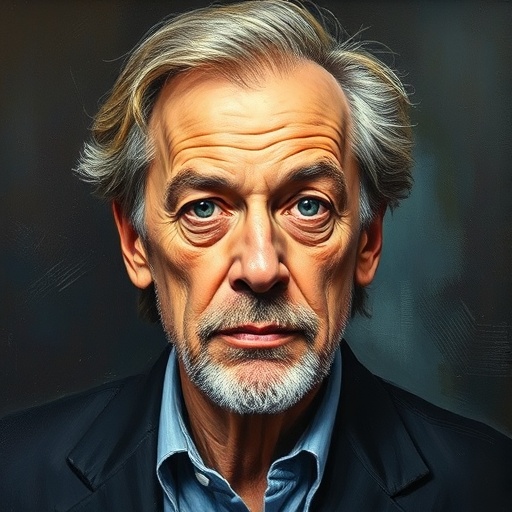
Richard Feynman — "I don't know anything about anything."
I don't know anything about anything.
I don't know anything about anything.
Click any product to generate a realistic preview. Up to 3 at a time.
* Initial load can take up to 90 seconds — revising the preview in another color is nearly instant.
"Fiddling is the answer. Experimenting is fiddling around. It's not an organized program, elegance — it's impossible. I noticed it."
"I have no responsibility to be like what other people expect me to be. It's their mistake, not my failing."
"The greatest joy is to understand how nature works."
"I have a theory that the universe is a great big safe, and that there's a combination to open it. But the combination is locked up in the safe."
"For a successful technology, reality must take precedence over public relations, for nature cannot be fooled."
American theoretical physicist who shared the 1965 Nobel for QED, developed Feynman diagrams, and wrote the Feynman Lectures on Physics. Closely associated with Julian Schwinger (co-Nobelist for QED) and Murray Gell-Mann (Caltech rival and Eightfold-Way physicist). For an intellectual contrast, see Deepak Chopra, physician and quantum-mysticism author — Feynman's Caltech 'cargo cult science' commencement address is the precise template for what he saw as misuse of physics terminology — Chopra-style appropriation of quantum vocabulary for metaphysical claims is the canonical example of what Feynman called 'fooling yourself'.
Found in 1 providers: grok
1 source checked
Admitting complete ignorance sounds like failure, but it's actually the starting point of real understanding. When you genuinely don't know something, you're open to learning it honestly rather than pretending expertise you lack. This stance resists the human tendency to fill gaps with false confidence, protecting against the compounding errors that come from building on shaky, unexamined assumptions.
Feynman built his entire career on radical intellectual honesty. He famously dismantled the Challenger disaster investigation by ignoring institutional authority and testing O-rings himself. His Caltech lectures repeatedly circled back to what physics genuinely cannot yet explain. He considered 'I don't know' the most scientifically honest and productive sentence a person could utter.
Post-WWII science operated in an atmosphere of enormous institutional confidence — nuclear power, computers, the space race all suggested experts had answers to everything. Cold War pressures rewarded projecting certainty. Feynman's insistence on acknowledged ignorance directly pushed back against a culture where admitting uncertainty felt like weakness or strategic disadvantage in the superpower competition for scientific prestige.
AI-generated insights based on extensive research and information for context. Factual errors? Email [email protected].
Your cart is empty