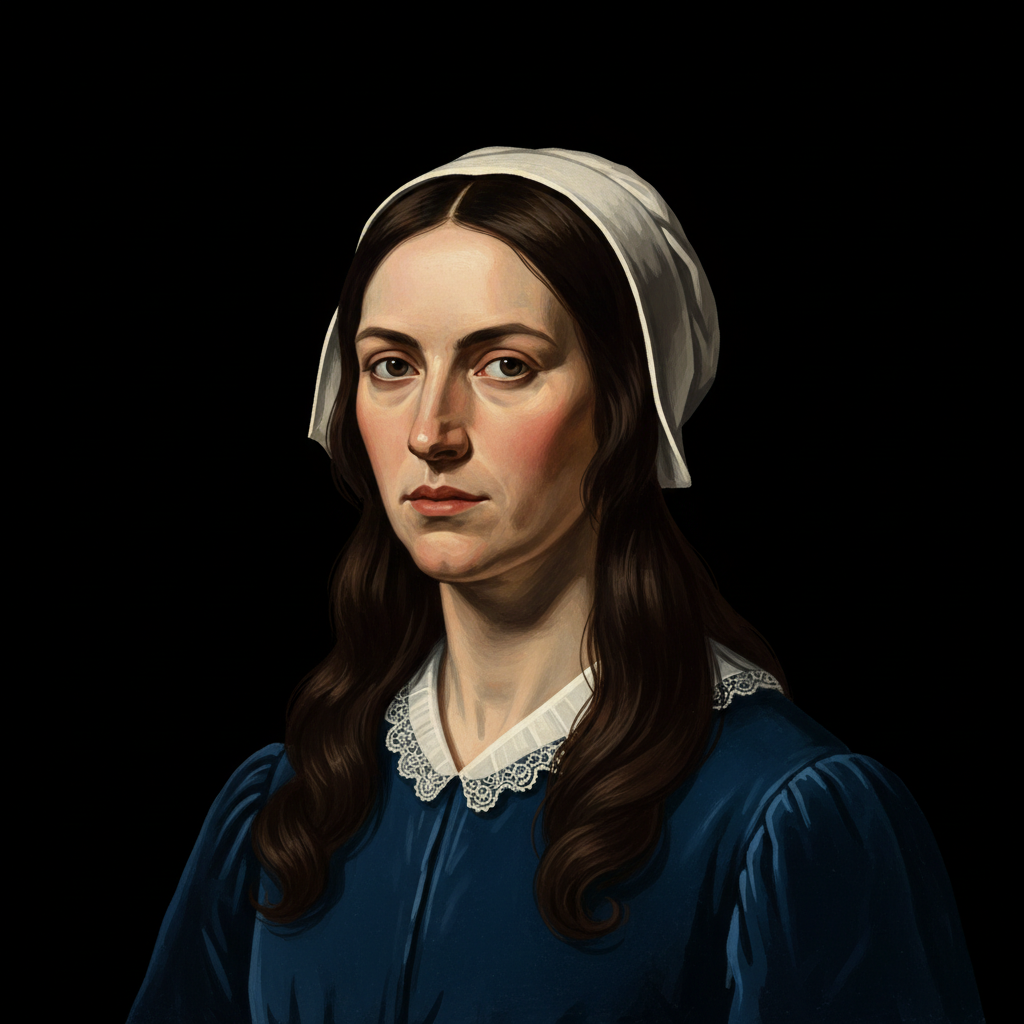
Mary Wollstonecraft — "I have a heart that is too benevolent to be cruel."
I have a heart that is too benevolent to be cruel.
I have a heart that is too benevolent to be cruel.
Click any product to generate a realistic preview. Up to 3 at a time.
* Initial load can take up to 90 seconds — revising the preview in another color is nearly instant.
"Contending for the rights of woman, my main argument is built on this simple principle, that if she be not prepared by education to become the companion of man, she will stop the progress of knowledge…"
"It is difficult for me to be patient with the folly of mankind."
"Women are rendered feeble and wretched by a variety of causes, some of which are natural, but more are artificial."
"It is a waste of time to be always thinking of what you are to say."
"It is the preservation of the species, not of individuals, which appears to be the design of Deity throughout the whole of nature."
English writer and proto-feminist philosopher whose A Vindication of the Rights of Woman (1792) is the founding text of modern feminist theory. Closely associated with Thomas Paine (Rights of Man co-conspirator and revolutionary contemporary) and William Godwin (her husband and philosopher of anarchism). For an intellectual contrast, see Edmund Burke, Anglo-Irish conservative and parliamentarian — Burke's Reflections on the Revolution in France (1790) was the explicit target of Wollstonecraft's first book — A Vindication of the Rights of Men (1790), written in the weeks after Burke's appeared. She extended the argument to women in her second Vindication two years later. Burke's tradition-and-prescription conservatism is the worldview Wollstonecraft's career was structured against.
Found in 1 providers: grok
1 source checked
Your cart is empty