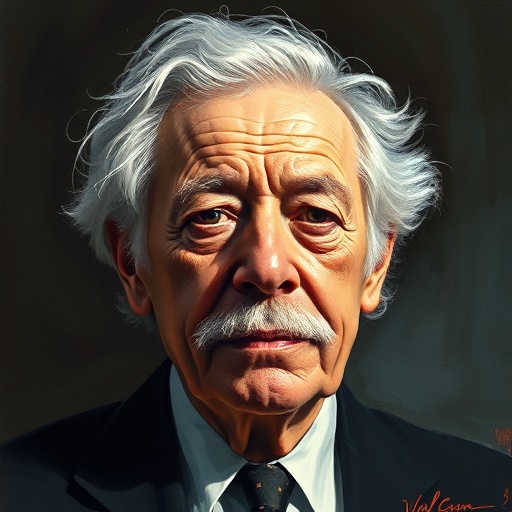
Linus Pauling — "I have always been a fighter, and I believe that it is important to stand up for…"
I have always been a fighter, and I believe that it is important to stand up for what you believe in.
I have always been a fighter, and I believe that it is important to stand up for what you believe in.
Click any product to generate a realistic preview. Up to 3 at a time.
* Initial load can take up to 90 seconds — revising the preview in another color is nearly instant.
"I believe that the proper dose of vitamin C is 10 grams per day, and that it should be taken in divided doses throughout the day."
"I believe that the world would be a better place if everyone took more vitamin C."
"Science is the search for truth -- it is not a game in which one tries to beat his opponent, to do harm to others."
"The only limit to our realization of tomorrow will be our doubts of today."
"I confess that I had harbored the feeling that sooner or later I would be the one to get the DNA structure; and although I was pleased with the double-helix, I 'rather wished the idea had been his'."
Found in 1 providers: grok
1 source checked
Personal conviction demands action, not just private belief. When you know something is right — or wrong — staying silent is its own kind of failure. This quote argues that integrity means accepting the cost of opposition: criticism, risk, conflict. Fighting for what you believe isn't aggression; it's the minimum required of anyone who actually holds a position rather than just performing one when it's convenient.
Pauling lived this literally. After his 1954 Nobel Prize in Chemistry, he threw himself into anti-nuclear activism during peak Cold War tension, delivering an 11,000-scientist petition to the UN against weapons testing. The U.S. government revoked his passport; the FBI investigated him for Communist sympathies. He fought every accusation publicly and without retreat — and won the Nobel Peace Prize in 1962, one of only two people ever to receive two unshared Nobels.
The 1950s and early 1960s made public dissent genuinely dangerous. McCarthyism destroyed careers; scientists who questioned U.S. nuclear policy were labeled Communist sympathizers and investigated. Pauling's activism occurred when conformity was enforced institutionally, not just socially. The nuclear arms race had produced weapons capable of civilizational destruction, yet public opposition was treated as treasonous. Standing up in that climate meant risking everything — making the sentiment far more than rhetorical.
AI-generated insights based on extensive research and information for context. Factual errors? Email [email protected].
Your cart is empty