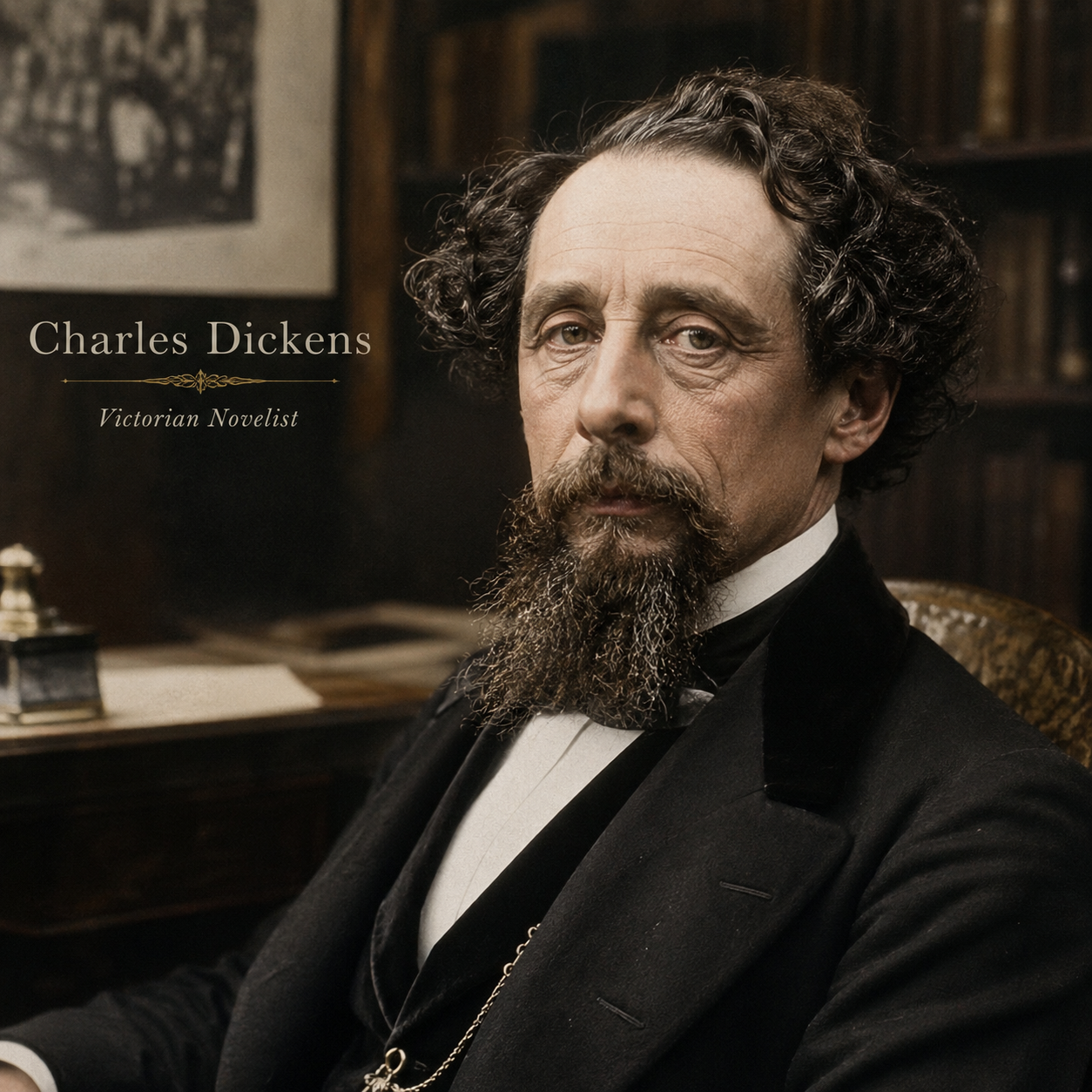
Charles Dickens — "I have always been of the opinion that it is better to be happy than to be rich,…"
I have always been of the opinion that it is better to be happy than to be rich, and that it is better to be good than to be great.
I have always been of the opinion that it is better to be happy than to be rich, and that it is better to be good than to be great.
Click any product to generate a realistic preview. Up to 3 at a time.
* Initial load can take up to 90 seconds — revising the preview in another color is nearly instant.
"I am a believer in Marley’s Ghost."
"The American women are certainly not pretty... They are not graceful, they are not elegant, they are not accomplished, they are not intellectual, they are not virtuous, and they are not honest."
"I have a great deal of the child in me, and that is why I love children."
"The universe makes rather an indifferent parent, I am afraid."
"There are some people who are always grumbling because roses have thorns; I am thankful that thorns have roses."
English novelist whose Oliver Twist (1838), A Christmas Carol (1843), and Bleak House (1852) made Victorian poverty inescapable for the British middle class. Closely associated with William Makepeace Thackeray (Vanity Fair rival and contemporary serial novelist) and George Eliot (later Victorian giant who built on Dickens's social-realism foundation). For an intellectual contrast, see Jeremy Bentham, founder of utilitarianism (1748-1832) — Mr. Gradgrind in Hard Times (1854) is a direct caricature of Bentham-style social calculation — 'Facts, sir, nothing but Facts!' is the most-cited literary attack on utilitarianism's reduction of human life to measurable units. Dickens's serialized social-novel form is itself a rebuke of utilitarian abstraction.
Found in 1 providers: grok
1 source checked
Your cart is empty