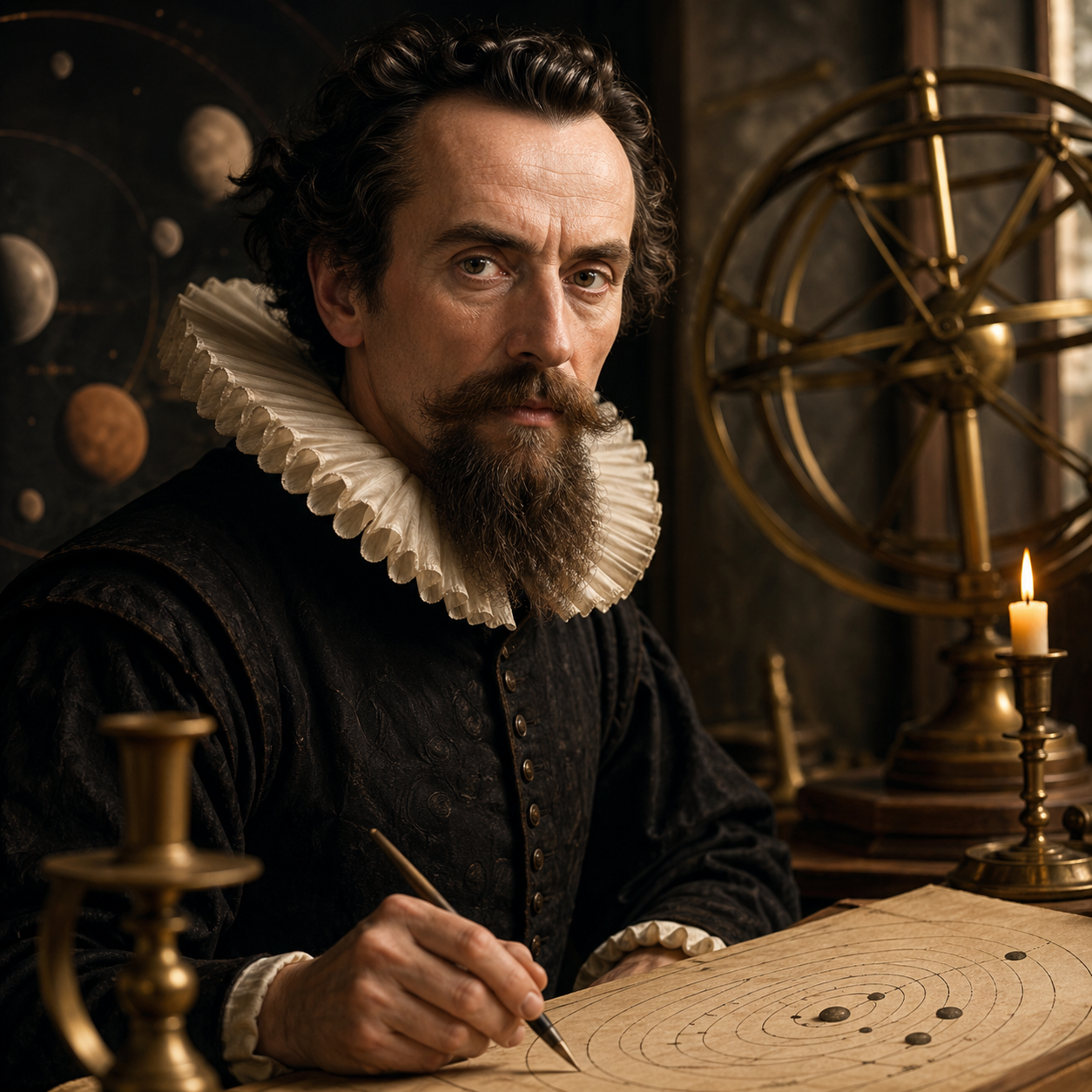
Johannes Kepler — "I have been a father, and I have rejoiced in my children."
I have been a father, and I have rejoiced in my children.
I have been a father, and I have rejoiced in my children.
Click any product to generate a realistic preview. Up to 3 at a time.
* Initial load can take up to 90 seconds — revising the preview in another color is nearly instant.
"I have been tormented by the desire to understand the celestial motions."
"I am stealing the golden vessels of the Egyptians to build a tabernacle to my God from them, far far away from the boundaries of Egypt. If you forgive me, I shall rejoice; if you are enraged with me, …"
"I am a German, and I love my country."
"I have often been poor, but I have always been rich in spirit."
"The works of God are beautiful and great; let us, therefore, with all our might, strive to know them."
Found in 1 providers: grok
1 source checked
The speaker is expressing simple, profound happiness at the experience of fatherhood. Having children and watching them grow brought him deep joy and satisfaction. It's a statement of gratitude for family life itself, acknowledging that raising kids was one of the meaningful, happiness-giving parts of his existence, separate from career or achievement. Parenthood mattered, and he found genuine delight in it.
Kepler fathered numerous children across two marriages, though he buried several young, including his beloved son Friedrich to smallpox. Despite these devastating losses and constant financial strain, his letters reveal deep paternal affection. A man who mathematized the heavens still grounded his emotional life in family. This quote reflects the tender private Kepler behind the astronomer, whose faith and humanism valued domestic bonds as genuine sources of meaning alongside scientific discovery.
In early modern Europe, child mortality was staggering, with roughly a third of children dying before age five. The Thirty Years' War (1618-1648) brought plague, famine, and displacement, threatening families constantly. Kepler himself fled religious persecution and saw his mother tried for witchcraft. Against this brutal backdrop, expressing joy in surviving children carried weight modern readers underestimate. Fatherhood was precious precisely because it was precarious, making such gratitude a meaningful affirmation.
AI-generated insights based on extensive research and information for context. Factual errors? Email [email protected].
Your cart is empty