John Wesley — "I have often thought, that if I were to choose a place to preach in, it should b…"
I have often thought, that if I were to choose a place to preach in, it should be in the open air.
I have often thought, that if I were to choose a place to preach in, it should be in the open air.
Click any product to generate a realistic preview. Up to 3 at a time.
* Initial load can take up to 90 seconds — revising the preview in another color is nearly instant.
"The rich, the honourable, the great, will hardly enter into the kingdom of heaven."
"I am not afraid of giving too much, but of giving too little."
"I have but one point in view, to promote, as far as I am able, vital, practical religion."
"I have found that the more I pray, the more I have to pray for."
"What is the secret of your strength? I answer, the power of prayer."
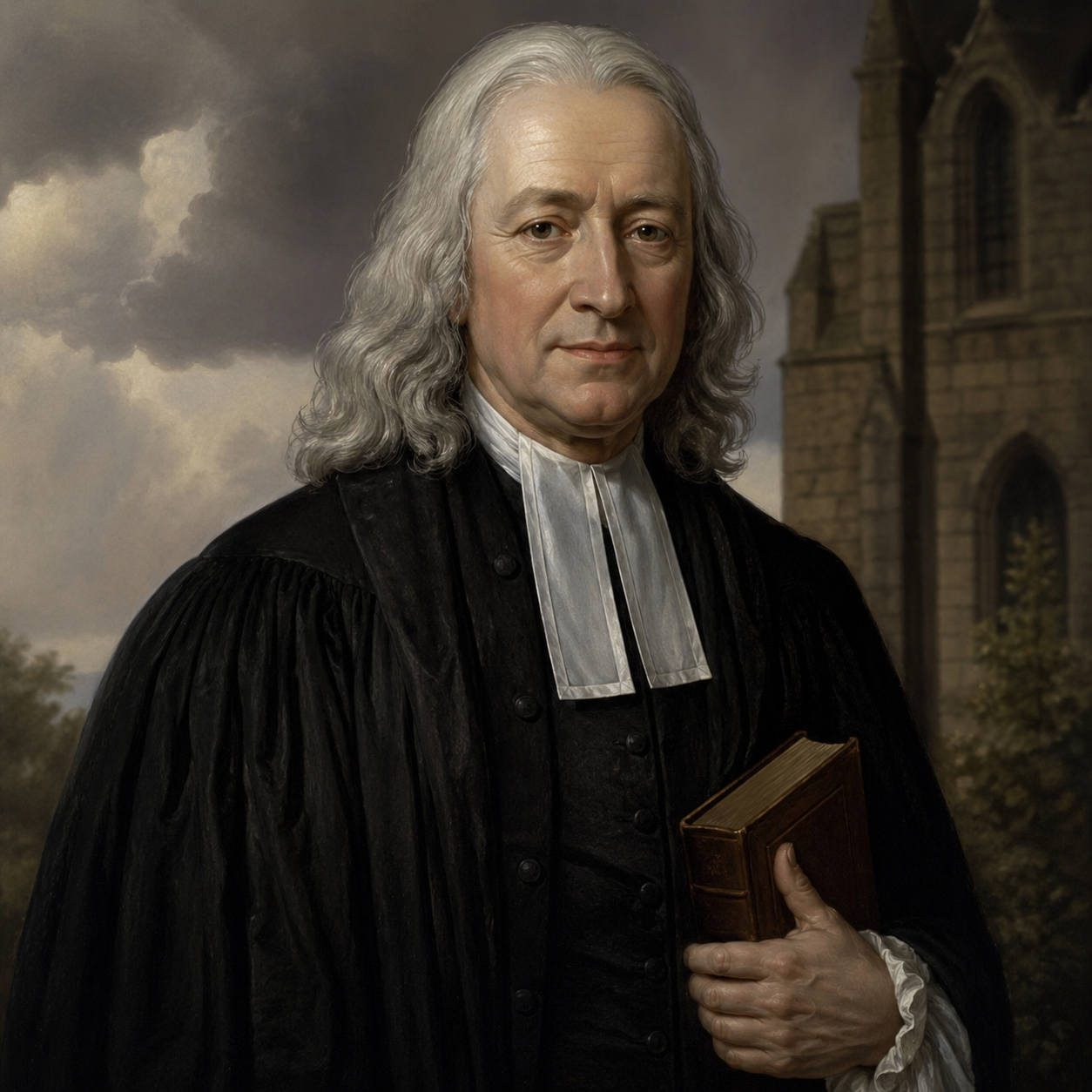
English Anglican cleric and founder of Methodism, whose open-air preaching and class-meeting structure created the largest 18th-century evangelical revival. Closely associated with Charles Wesley (his hymn-writing brother) and George Whitefield (early co-revivalist, later doctrinal opponent). For an intellectual contrast, see George Whitefield, Calvinist evangelical revivalist — Whitefield's predestinarian Calvinism vs Wesley's free-grace Arminian theology split the early Methodist movement permanently in the 1739-41 break. The founding evangelical Calvinist-Arminian schism — the two parallel evangelical traditions American Christianity descends from.
Found in 1 providers: grok
1 source checked
Wesley preferred preaching outdoors rather than inside church buildings. He found open spaces more inviting to ordinary people who might never enter a formal church, believing the gospel should reach everyone wherever they gathered — fields, streets, marketplaces — rather than waiting for people to come to a consecrated building on their own initiative.
Wesley literally practiced this belief, famously preaching to thousands of miners and laborers in fields across Britain. After being barred from many Anglican pulpits, he embraced open-air preaching as his primary method, riding 250,000 miles on horseback and delivering over 40,000 sermons outdoors, founding Methodism's distinctly populist, accessible character.
18th-century England had a vast unchurched working class — coal miners in Bristol, factory workers in the Midlands — who felt unwelcome in Anglican parish churches tied to the gentry. The Evangelical Revival and early Industrial Revolution created desperate spiritual hunger among the poor, making Wesley's fields-and-crossroads approach a radical democratic challenge to established religion's social gatekeeping.
AI-generated insights based on extensive research and information for context. Factual errors? Email [email protected].
Your cart is empty