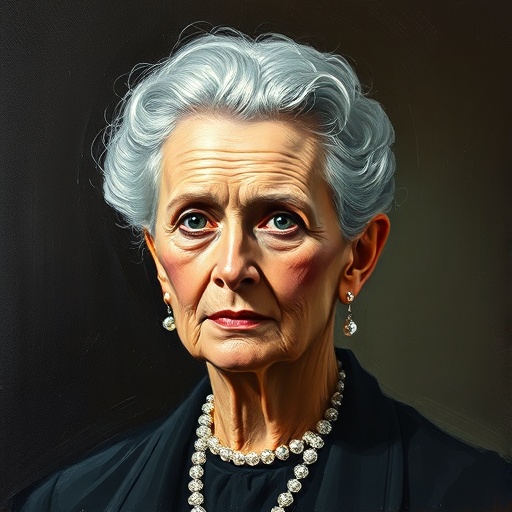
Marie Curie — "I have tried to preserve the memory of Pierre Curie and to perpetuate the work w…"
I have tried to preserve the memory of Pierre Curie and to perpetuate the work which was the object of his life.
I have tried to preserve the memory of Pierre Curie and to perpetuate the work which was the object of his life.
Click any product to generate a realistic preview. Up to 3 at a time.
* Initial load can take up to 90 seconds — revising the preview in another color is nearly instant.
"I am a Polish woman, and I am proud of it. And I am proud of my work. And I am proud of my discoveries. And I am proud of my contributions to humanity."
"A scientist must be a child. He must be curious. He must be eager to learn. He must be willing to make mistakes."
"You cannot hope to build a better world without improving the individuals. To that end, each of us must work for his own improvement, and at the same time share a general responsibility for all humani…"
"A scientist in his laboratory is not only a technician: he is also a child placed before natural phenomena which impress him like a fairy tale."
"I never saw myself as a woman in science. I saw myself as a scientist. And I am proud of it."
Found in 1 providers: grok
1 source checked
The speaker explains that she has worked to keep alive the memory of Pierre Curie and to continue the scientific work that defined his life. It is a statement of devotion, commitment, and stewardship: she sees herself as guardian of both his legacy and his unfinished research, ensuring that his contributions are not forgotten and that the mission he pursued continues forward through her own efforts.
After Pierre Curie's sudden death in 1906, Marie took over his professorship at the Sorbonne, becoming its first female professor, and pressed forward with radioactivity research. She isolated pure radium, won a second Nobel Prize in Chemistry in 1911, founded the Radium Institute, and wrote a biography of Pierre. Her life embodied this pledge: she turned private grief into decades of shared scientific labor carrying his name and vision forward.
In the early twentieth century, widowed women were expected to retreat into mourning, not inherit a husband's laboratory and chair at a major European university. Science was overwhelmingly male, and radioactivity was a brand-new field with unknown dangers. World War I soon followed, during which Curie deployed mobile X-ray units. Her public devotion to Pierre's legacy also helped shield her from scandal and sexist attacks that tried to diminish her independent achievements.
AI-generated insights based on extensive research and information for context. Factual errors? Email [email protected].
Your cart is empty