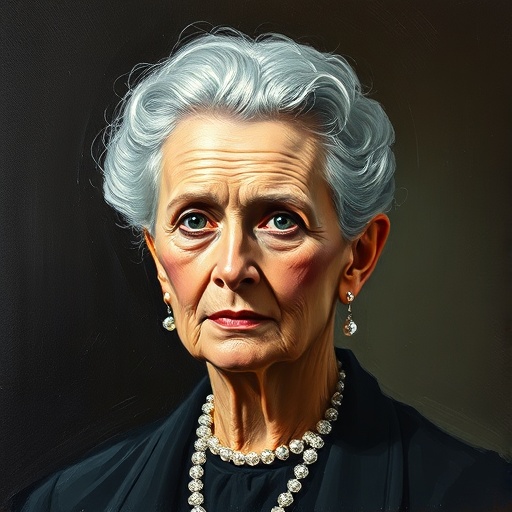
Marie Curie — "I never had a moment of doubt that science was the right path for me."
I never had a moment of doubt that science was the right path for me.
I never had a moment of doubt that science was the right path for me.
Click any product to generate a realistic preview. Up to 3 at a time.
* Initial load can take up to 90 seconds — revising the preview in another color is nearly instant.
"I am among those who think that science has great beauty."
"I am a woman of science. I am a woman of reason. I am a woman of logic. I am a woman of truth. I am a woman of justice. I am a woman of peace. I am a woman of love. I am a woman of humanity. I am all …"
"I am not afraid of anything. I am only afraid of not being able to do my work. I am only afraid of not being able to discover new things. I am only afraid of not being able to contribute to the progre…"
"I am not afraid of anything. I am only afraid of not being able to do my work. I am only afraid of not being able to discover new things."
"I am among those who think that science has great beauty. A scientist in his laboratory is not merely a technician: he is also a child confronting natural phenomena that impress him as though they wer…"
Found in 1 providers: grok
1 source checked
The speaker is expressing absolute certainty about their chosen career. From the very beginning, they never hesitated, never questioned, and never considered another direction. Science was not one option among many but the single correct path. The statement conveys unwavering conviction, a sense of calling, and the quiet confidence of someone who found their purpose early and pursued it without second-guessing or regret throughout their life.
Curie's life embodied this certainty. Barred from Polish universities as a woman, she worked as a governess to fund her sister's studies before attending the Sorbonne, where she studied physics in freezing attics. She isolated polonium and radium through years of grueling shed-work, won two Nobel Prizes in separate sciences, and continued research despite radiation sickness. Nothing, not poverty, sexism, widowhood, nor illness, deflected her from the laboratory.
In the late 1800s and early 1900s, women were systematically excluded from European scientific institutions. Polish universities refused female students under Russian occupation, and the French Academy of Sciences rejected Curie's membership in 1911 despite her Nobel work. Physics itself was being transformed by discoveries of X-rays, electrons, and radioactivity, opening a frontier where persistence mattered more than pedigree. Her conviction stood against an era that told women science was not their path.
AI-generated insights based on extensive research and information for context. Factual errors? Email [email protected].
Your cart is empty