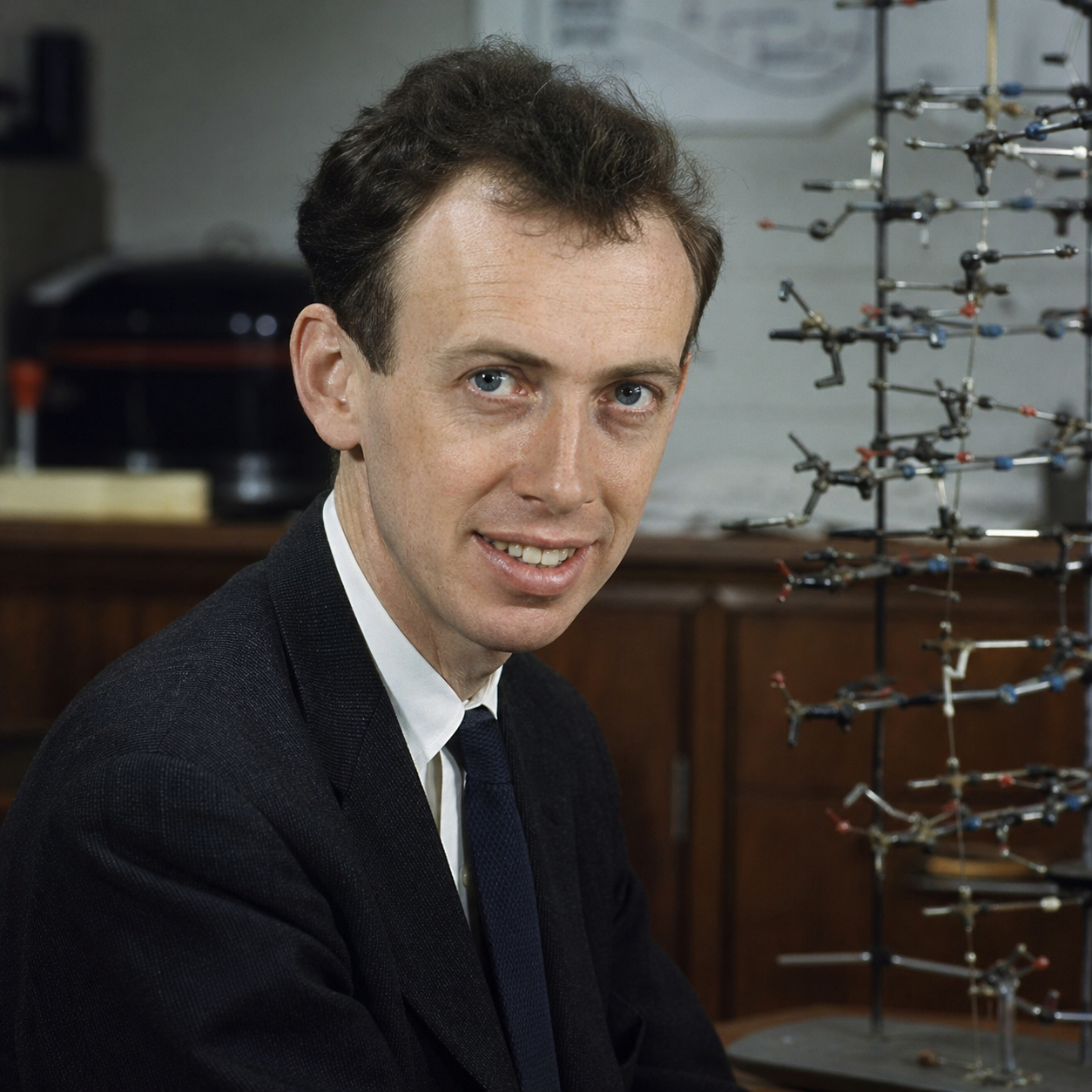
James Watson — "I never learned how to do experiments properly."
I never learned how to do experiments properly.
I never learned how to do experiments properly.
Click any product to generate a realistic preview. Up to 3 at a time.
* Initial load can take up to 90 seconds — revising the preview in another color is nearly instant.
"There is no firm reason to anticipate that the intellectual capacities of peoples geographically separated in their evolution should prove to have evolved identically. Our wanting to reserve equal pow…"
"I've never met a stupid person who was happy."
"If you're not having fun, you're doing something wrong."
"Some people think that if you talk about race, you're a racist. I don't think so."
"I'm not a very good diplomat."
Found in 1 providers: grok
1 source checked
A candid admission of intellectual humility blended with strategic self-awareness. Watson is saying his scientific strength was never hands-on experimental precision but rather conceptual thinking, model-building, and synthesizing data others generated. In plain terms: he was the theorist who saw meaning in results, not the technician who produced them. It reframes what being a scientist means — suggesting vision and interpretation can matter more than mastery of technique.
Watson and Francis Crick built the double helix model not through their own X-ray experiments but by interpreting data — crucially, Rosalind Franklin's Photo 51 — gathered by others. Watson was a theorist and model-builder, not a bench experimentalist. His Nobel-winning insight came from seeing structural implications in crystallography data he hadn't produced himself. This quote reflects his honest reckoning with that reality and his lifelong identity as a conceptual visionary over a technical craftsman.
The 1950s molecular biology revolution transformed biology from a descriptive science into a physics-driven, model-building discipline. The race to crack DNA's structure involved fierce competition between Watson and Crick at Cambridge, Rosalind Franklin and Maurice Wilkins at King's College, and Linus Pauling at Caltech. In this era, theoretical model-building was ascendant over pure experimentation. Watson's admission also carries modern ethical weight given ongoing debate about Franklin's uncredited experimental contributions to the discovery.
AI-generated insights based on extensive research and information for context. Factual errors? Email [email protected].
Your cart is empty