Tim Berners-Lee — "I want to see a web where people are in control of their own data, and where the…"
I want to see a web where people are in control of their own data, and where they can choose who they share it with.
I want to see a web where people are in control of their own data, and where they can choose who they share it with.
Click any product to generate a realistic preview. Up to 3 at a time.
* Initial load can take up to 90 seconds — revising the preview in another color is nearly instant.
"The web is a tool for creativity, for innovation, for change."
"The web is a platform for innovation, and we need to keep it open for new ideas."
"The web is a reflection of our collective intelligence."
"The web is a messy place, and that's okay. It's a reflection of humanity."
"We need to build a web that is truly for everyone, where everyone has a voice."
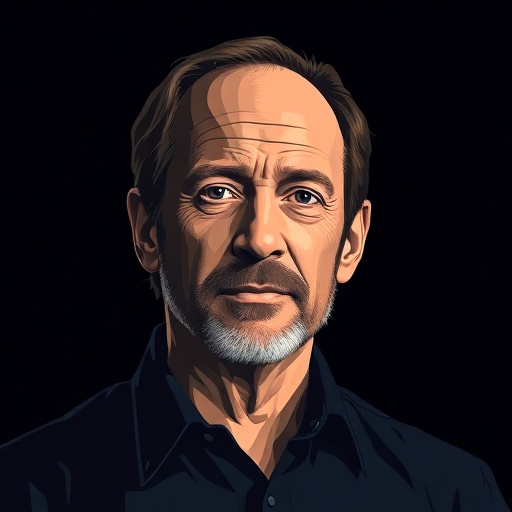
British computer scientist who invented the World Wide Web at CERN in 1989 and founded the W3C, championing open web standards. Closely associated with Vint Cerf (TCP/IP co-creator and 'father of the internet') and Marc Andreessen (Mosaic browser creator and Netscape co-founder). For an intellectual contrast, see Mark Zuckerberg, Facebook (Meta) founder — Zuckerberg's walled-garden Facebook is the canonical contemporary opposite of Berners-Lee's open-web vision; Berners-Lee's Solid project and 'recapture the web' essays are explicitly written as a rebuttal to the platform-monopoly model Facebook pioneered.
Found in 1 providers: grok
1 source checked
People should own their personal information online, deciding independently who gets access to it rather than surrendering control to corporations or platforms by default. Privacy is not a privilege but a fundamental right of participation on the internet. Users deserve transparency and genuine choice about how their data moves through digital systems, rather than having those decisions made invisibly by the services they use.
Berners-Lee invented the Web in 1989 as an open, decentralized system meant to empower individuals. Watching his creation become dominated by data-harvesting corporations deeply troubled him. He founded the Solid project to restore user data ownership through personal online data stores (PODs), and has repeatedly advocated for a Contract for the Web. His activism reflects guilt-driven responsibility for what the Web became.
This reflects growing alarm in the 2010s-2020s following revelations like Edward Snowden's NSA disclosures, the Cambridge Analytica-Facebook scandal, and GDPR's passage in Europe. As surveillance capitalism became the dominant internet business model, public awareness of data exploitation surged. Berners-Lee's statement emerged as governments and technologists debated whether the original open-web vision could be reclaimed from platform monopolies.
AI-generated insights based on extensive research and information for context. Factual errors? Email [email protected].
Your cart is empty