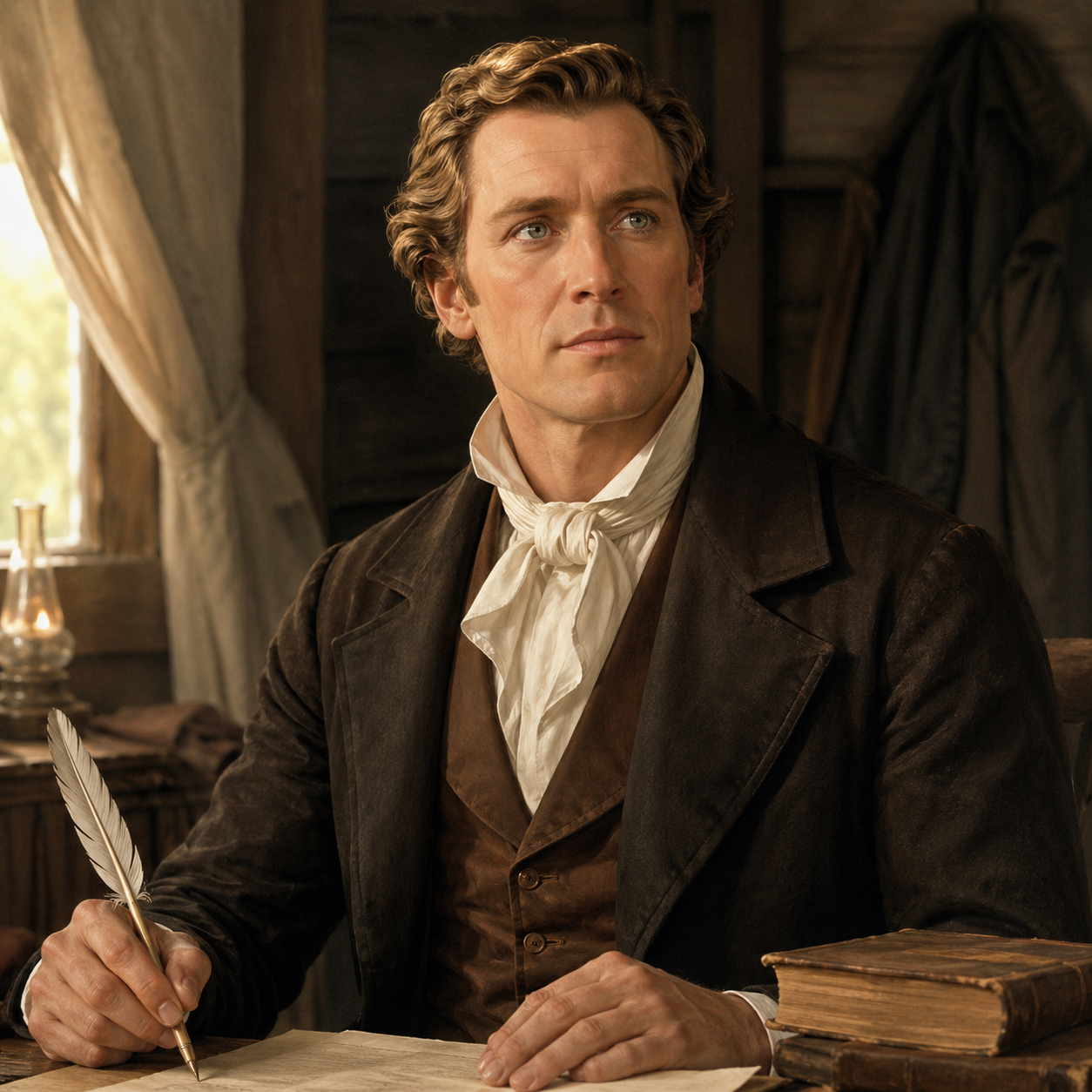
Joseph Smith — "I will preach on the stand what I preach in the pulpit."
I will preach on the stand what I preach in the pulpit.
I will preach on the stand what I preach in the pulpit.
Click any product to generate a realistic preview. Up to 3 at a time.
* Initial load can take up to 90 seconds — revising the preview in another color is nearly instant.
"I have a testimony to lay before you, my testimony is that I am a prophet of God; and I know it; and I tell you in the name of Jesus Christ that I am a prophet."
"They have souls, and are subjects of salvation. Go into Cincinnati or any city, and find an educated negro, who rides in his carriage, and you will see a man who has risen by the powers of his own min…"
"God will yet reveal many great and important things pertaining to the Kingdom of God."
"If I were to be saved and go to heaven, and see any man there that I had not endeavored to save, I would feel worse there than I would in hell."
"I am a man of temperance, and I will be temperate in all things."
Found in 1 providers: grok
1 source checked
What a person teaches publicly should match exactly what they teach in formal settings — no hidden doctrines, no whispered teachings that contradict official positions. This is a pledge of intellectual and moral consistency: whether speaking from an outdoor platform to crowds or behind a formal church pulpit, the message stays the same. It signals a refusal to maintain two separate narratives — one for insiders, one for public consumption.
Joseph Smith founded a new faith in 1830 that introduced radical doctrines — plural marriage, new scripture, a living prophet — that critics accused him of concealing or revealing selectively. He faced relentless charges of fraud and deception throughout his life. This vow of consistent preaching directly counters those accusations, asserting his theology, however controversial, was taught the same everywhere. He was martyred in 1844 partly because his bold public declarations inflamed opponents.
The 1830s–1840s American frontier was a hotbed of competing religious revivals. The Second Great Awakening spawned dozens of new sects, and charismatic preachers were routinely accused of telling congregations one thing while privately living another. Mob violence against religious dissenters was common. In this climate, credibility depended on perceived authenticity. A leader's willingness to preach identical controversial truths in public and private was a direct challenge to accusations of manipulation and hidden agendas.
AI-generated insights based on extensive research and information for context. Factual errors? Email [email protected].
Your cart is empty