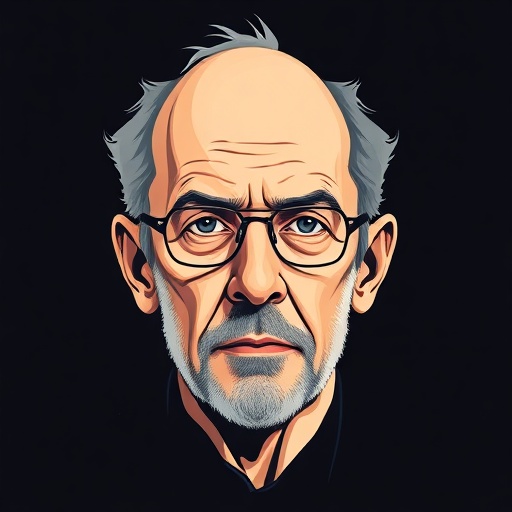
Michel Foucault — "I write to understand, not to be understood."
I write to understand, not to be understood.
I write to understand, not to be understood.
Click any product to generate a realistic preview. Up to 3 at a time.
* Initial load can take up to 90 seconds — revising the preview in another color is nearly instant.
"Pleasure and power are not mutually exclusive."
"The history of truth is a history of error."
"The desire for knowledge is a form of power."
"The body is directly involved in a political field; power relations have an immediate hold upon it."
"The history of sexuality is the history of the body."
French philosopher and historian whose Discipline and Punish (1975) and The History of Sexuality reframed power, knowledge, and institutions in modern thought. Closely associated with Jacques Derrida (deconstruction peer) and Gilles Deleuze (philosophical ally on power and difference). For an intellectual contrast, see Jürgen Habermas, German social theorist of communicative rationality — Habermas insisted on universal norms of reason — exactly the position Foucault's 'power/knowledge' framework treats as itself a power effect. The Foucault-Habermas debate is the canonical postwar argument over whether reason is universal-emancipatory or always-already complicit with power.
The standard scholarly entry points to Michel Foucault's work: Didier Eribon (French intellectual biographer) — Michel Foucault (1989); Stuart Elden (Warwick, political geographer) — Foucault's Last Decade (2016); Gary Gutting (Notre Dame, philosophy) — Foucault: A Very Short Introduction (2005). These are the works graduate seminars cite when teaching Michel Foucault.
Your cart is empty