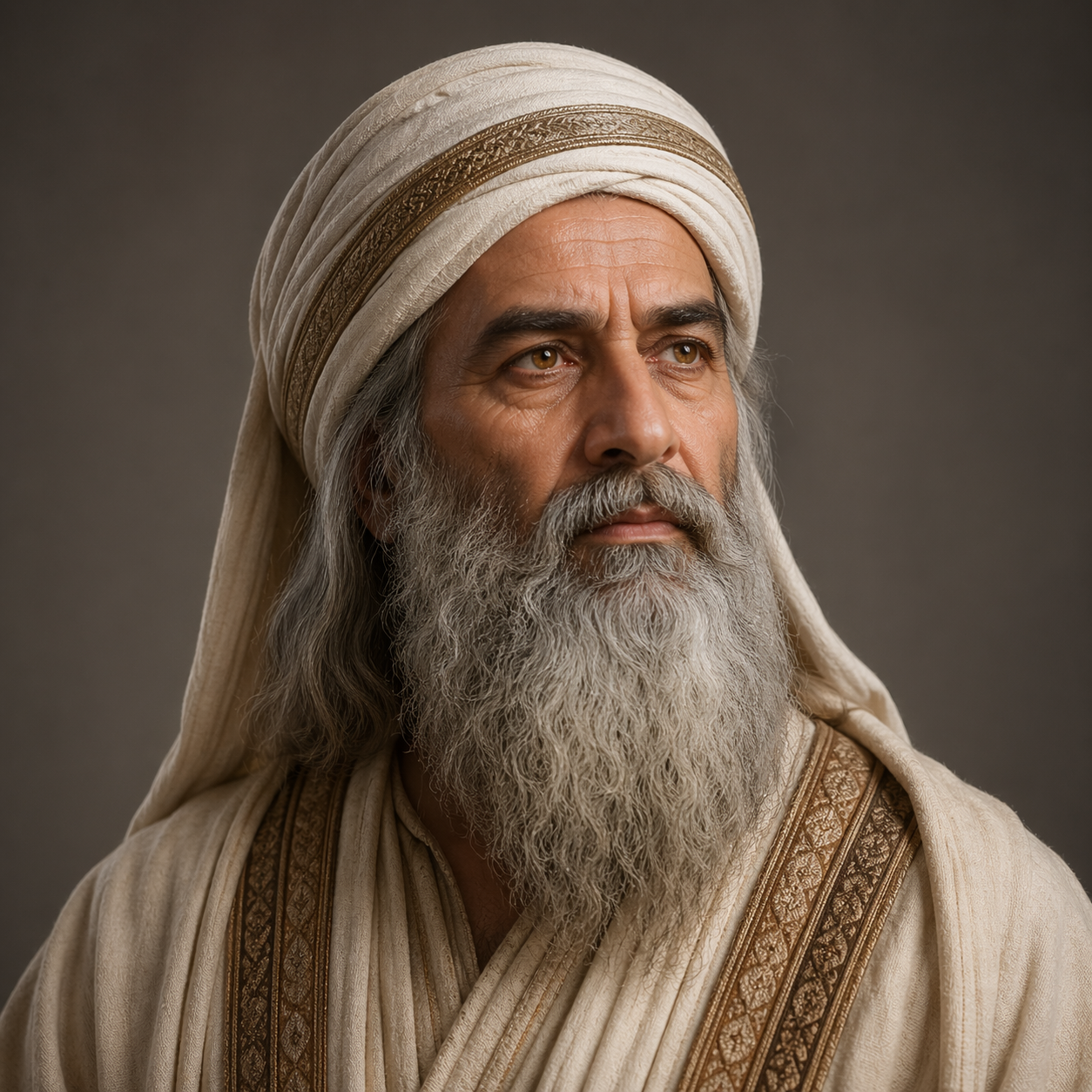
Zoroaster — "I yearn to know the truth, O Ahura Mazda, and to live according to it."
I yearn to know the truth, O Ahura Mazda, and to live according to it.
I yearn to know the truth, O Ahura Mazda, and to live according to it.
Click any product to generate a realistic preview. Up to 3 at a time.
* Initial load can take up to 90 seconds — revising the preview in another color is nearly instant.
"May your days be filled with joy and your enemies be utterly confused by your excellent fashion choices."
"May your wisdom grow with each passing day. And may your hair stay where it is."
"The universe is vast and mysterious. And I still can't find my sandals."
"The best word is that which speaks of truth, the best deed is that which is done for truth."
"The wise man chooses Righteousness, the unwise man chooses the Lie."
Iranian prophet who founded Zoroastrianism, the first major religion of cosmic dualism between good (Ahura Mazda) and evil (Angra Mainyu). Closely associated with The Buddha (near-contemporary Eastern moral-cosmological revolutionary). For an intellectual contrast, see Friedrich Nietzsche, German philosopher of 'beyond good and evil' — Nietzsche appropriated Zarathustra's name for Thus Spoke Zarathustra (1883) precisely to invert the original's moral cosmology — the historical Zoroaster founded the good-versus-evil framework Nietzsche's character announces the end of.
Found in 1 providers: grok
1 source checked
The speaker expresses a deep desire to understand what is genuinely true and then align their daily life with that truth. It's not just intellectual curiosity, it's a commitment to let discovered truth shape action. Knowing without living by it is incomplete; living without knowing is blind. The plea is directed upward, asking a higher wisdom for clarity so that conduct and conviction match.
Zoroaster founded a faith built on Asha, meaning truth and cosmic order, and addressed Ahura Mazda as the supreme wise lord. His Gathas, the hymns attributed to him, repeatedly plead for insight and right action. As a reforming priest, he rejected ritual without ethics and taught that good thoughts, good words, and good deeds flow from knowing truth. This line captures his entire mission in one sentence.
Zoroaster lived in ancient Iran, likely between 1500 and 1000 BCE, among pastoral tribes practicing polytheistic rituals, animal sacrifice, and intoxicant cults led by hereditary priests. Moral accountability was thin and power often decided right. His monotheistic reform, centered on one wise creator and personal ethical choice between truth and the lie, broke sharply from that world and later shaped Persian empires and influenced Jewish, Christian, and Islamic ideas.
AI-generated insights based on extensive research and information for context. Factual errors? Email [email protected].
Your cart is empty