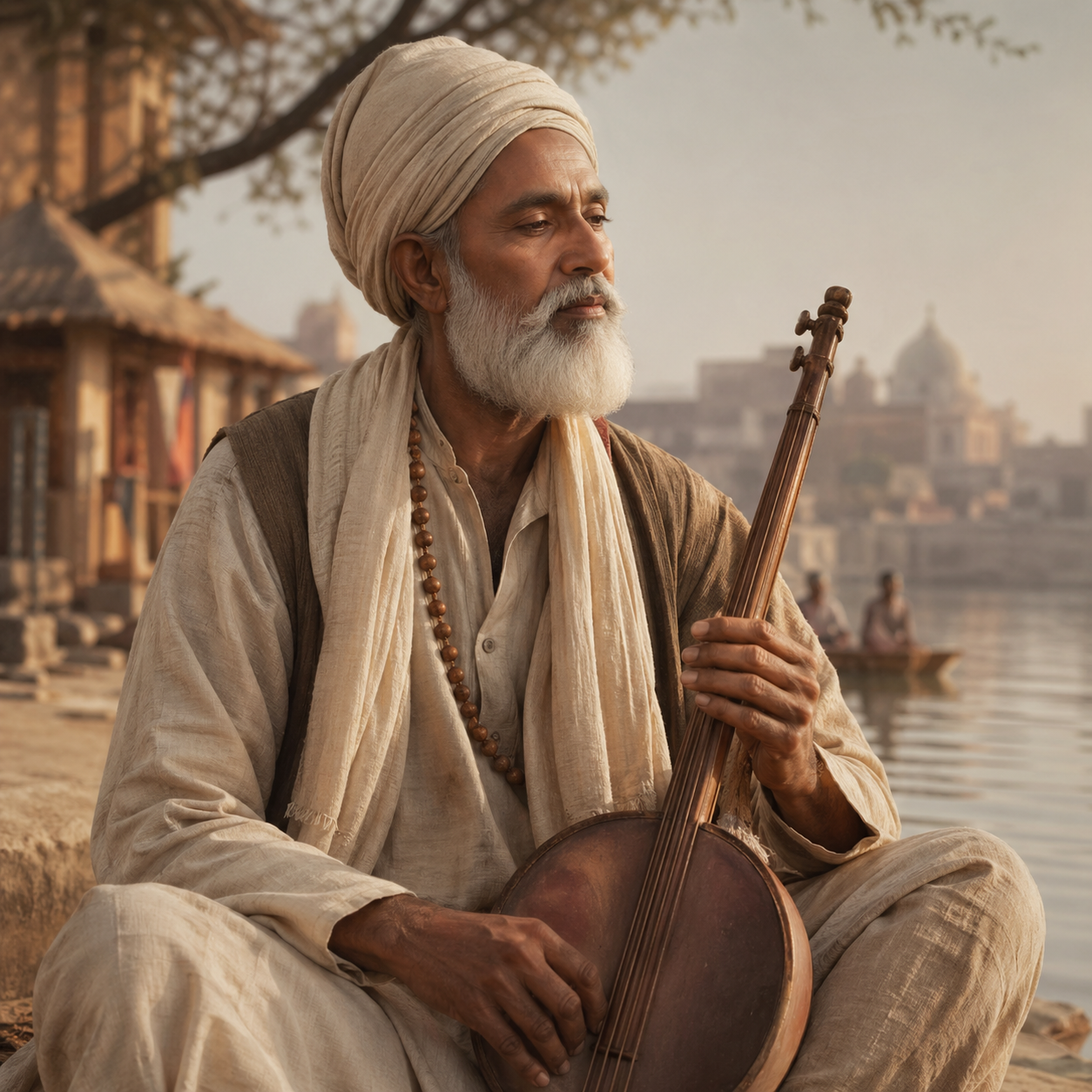
Kabir — "If God dies, then I will die; If he does not die, then why should I die?"
If God dies, then I will die; If he does not die, then why should I die?
If God dies, then I will die; If he does not die, then why should I die?
Click any product to generate a realistic preview. Up to 3 at a time.
* Initial load can take up to 90 seconds — revising the preview in another color is nearly instant.
"The earth is a dish, and the sky is a lid. The sun and moon are lamps, and the stars are jewels."
"So many bodies, so many opinions! But my Beloved, though invisible, is in all these bodies. There is no life at all without the Beloved; the Self lives as each and every one."
"The dog barks, but the caravan passes on. The world barks, but the truth remains."
"The light which shines in the eye is really the light of the heart."
"The world is a dream, and the dream is real."
Indian mystic poet whose verses (preserved in the Sikh Guru Granth Sahib and the Hindu Bhakti tradition) attacked both Hindu and Islamic orthodoxy. Closely associated with Guru Nanak (founder of Sikhism, who incorporated Kabir's verses). For an intellectual contrast, see Brahmanical priesthood, the ritualistic Hindu establishment of his era — Kabir's poetry is the founding text of bhakti devotional rebellion against ritualistic Hinduism — his verses ridicule caste, ritual purity, and priestly mediation as religious theatre.
Your cart is empty