Martin Luther — "If I had to do it all over again, I would still burn the pope’s bull."
If I had to do it all over again, I would still burn the pope’s bull.
If I had to do it all over again, I would still burn the pope’s bull.
Click any product to generate a realistic preview. Up to 3 at a time.
* Initial load can take up to 90 seconds — revising the preview in another color is nearly instant.
"The greatest blessing of all is to have a wife who is pious, God-fearing, and domestic."
"Nor let ministers cease studying until they have discovered and are sure that they have taught the devil to death and have become more learned than God himself and all His saints."
"God does many things that he does not disclose to us in his word; he also wills many things which he does not disclose himself as willing in his word. Thus he does not will the death of a sinner, acco…"
"If I am not allowed to laugh in heaven, I don't want to go there."
"A man remains foolish until his 40th year, when he begins to recognize his foolishness; then life is soon over."
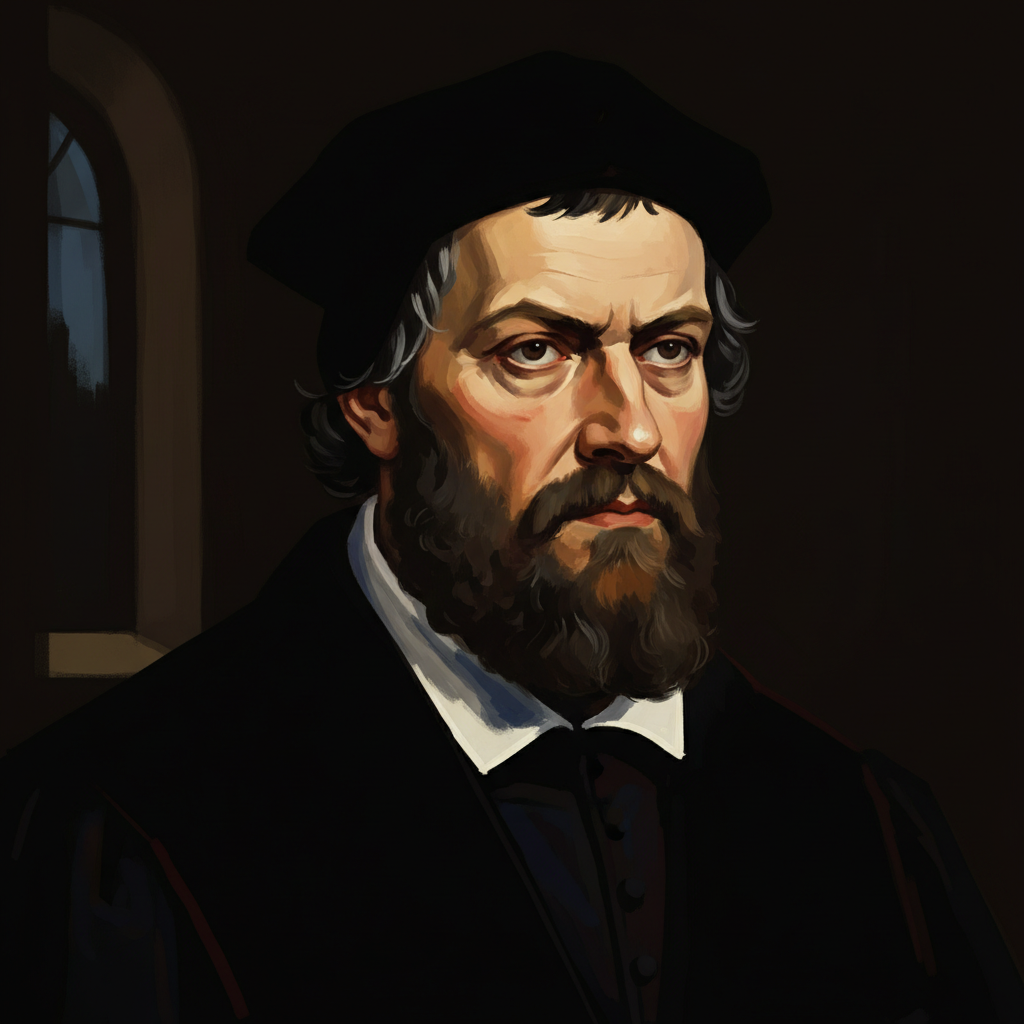
German theologian whose 95 Theses (1517) launched the Protestant Reformation and broke the Catholic Church's monopoly on Western Christianity. Closely associated with Philipp Melanchthon (Lutheran systematizer) and John Calvin (later Reformer who built on Luther's break). For an intellectual contrast, see Pope Leo X, Renaissance pope (1513-1521) — Leo X's indulgence sales triggered Luther's break and Leo excommunicated him in 1521 — Luther's entire Reformation is structured as a direct answer to the indulgence-funded Vatican Leo represented.
Found in 1 providers: deepseek
1 source checked
Looking back on a defining, risky decision, the speaker says he has zero regret and would repeat the defiant act without hesitation. Burning an official order from the highest authority was a point-of-no-return gesture, and he's affirming that even knowing the consequences, he stands by it. It's a statement of conviction over convenience, treating the break with power as necessary rather than reckless.
On December 10, 1520, Luther publicly burned Pope Leo X's bull Exsurge Domine, which threatened his excommunication unless he recanted his Ninety-Five Theses. The act sealed his split from Rome and led to his excommunication in 1521 and outlaw status at the Diet of Worms. This quote captures his stubborn, conscience-bound temperament—famously summed up in 'Here I stand'—refusing to retract what he believed Scripture demanded.
In the early 1500s, the papacy held supreme spiritual and political authority across Western Europe, and defying a papal bull was both heresy and treason. The printing press was spreading Luther's tracts faster than Rome could suppress them, fueling religious, political, and peasant unrest. Indulgence sales, clerical corruption, and calls for reform had primed Germany for rupture, making one friar's bonfire in Wittenberg a spark that fractured Christendom and launched the Reformation.
AI-generated insights based on extensive research and information for context. Factual errors? Email [email protected].
Your cart is empty