Siddhartha Gautama (Buddha) — "If you knew what I know about the power of giving, you would not let a single me…"
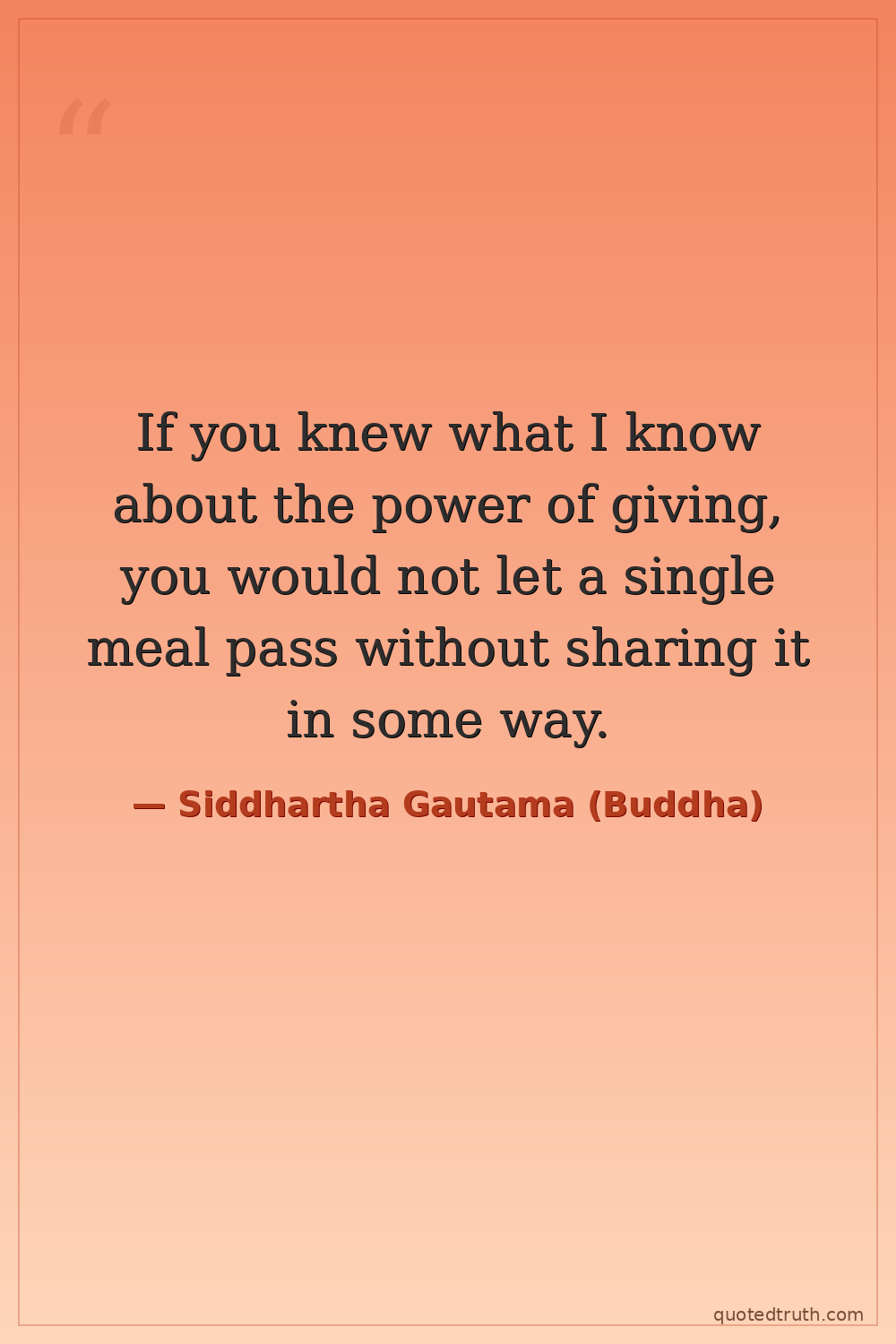
If you knew what I know about the power of giving, you would not let a single meal pass without sharing it in some way.
If you knew what I know about the power of giving, you would not let a single meal pass without sharing it in some way.
Click any product to generate a realistic preview. Up to 3 at a time.
* Initial load can take up to 90 seconds — revising the preview in another color is nearly instant.
"You yourself, as much as anybody in the entire universe, deserve your love and affection."
"One day, in the morning, having put on his undergarment and taken his outer robe and bowl, the Blessed One entered Sāvatthī for alms."
"Beware of your thoughts; they become words. Beware of your words; they become actions. Beware of your actions; they become habits. Beware of your habits; they become character. Beware of your characte…"
"If anything is worth doing, do it with all your heart."
"The only way to ease our pain is to experience it fully."
Often attributed, but the precise source in the Pali Canon is elusive. Reflects the spirit of generosity.
Date: c. 5th century BCE
GeneralFound in 2 providers: grok,gemini
2 sources checked
Generosity transforms the giver more than the receiver. If you truly grasped how deeply sharing shapes your own mind, dissolves selfishness, and creates lasting well-being, you would never eat alone without offering some portion to others. Every meal becomes an opportunity to practice openness, reduce attachment to possessions, and build connection. The saying insists that withholding is a hidden loss, and giving is a practical path to inner freedom and happiness.
Siddhartha abandoned royal wealth at 29 and lived on alms food placed in his bowl by villagers, experiencing firsthand how giving and receiving sustain community. Generosity (dana) became the first of the ten perfections he taught, foundational before ethics or meditation. As founder of Buddhism, he structured the monastic sangha around daily almsround, making lay giving the engine of spiritual life. His teachings repeatedly frame selflessness as the direct antidote to craving, the root of suffering.
In 5th-century BCE northern India, rigid Vedic ritual and a hardening caste system concentrated religious merit among brahmin priests and wealthy patrons. Wandering ascetics (sramanas) like Siddhartha challenged this, teaching that ordinary people earned spiritual worth through ethical action, not sacrifice fees. Famine and urbanization around the Ganges basin made food insecurity real, so sharing meals carried weight beyond metaphor. His emphasis on universal giving democratized merit, undercutting priestly gatekeeping and offering householders a direct path to virtue.
AI-generated insights based on extensive research and information for context. Factual errors? Email [email protected].
Your cart is empty