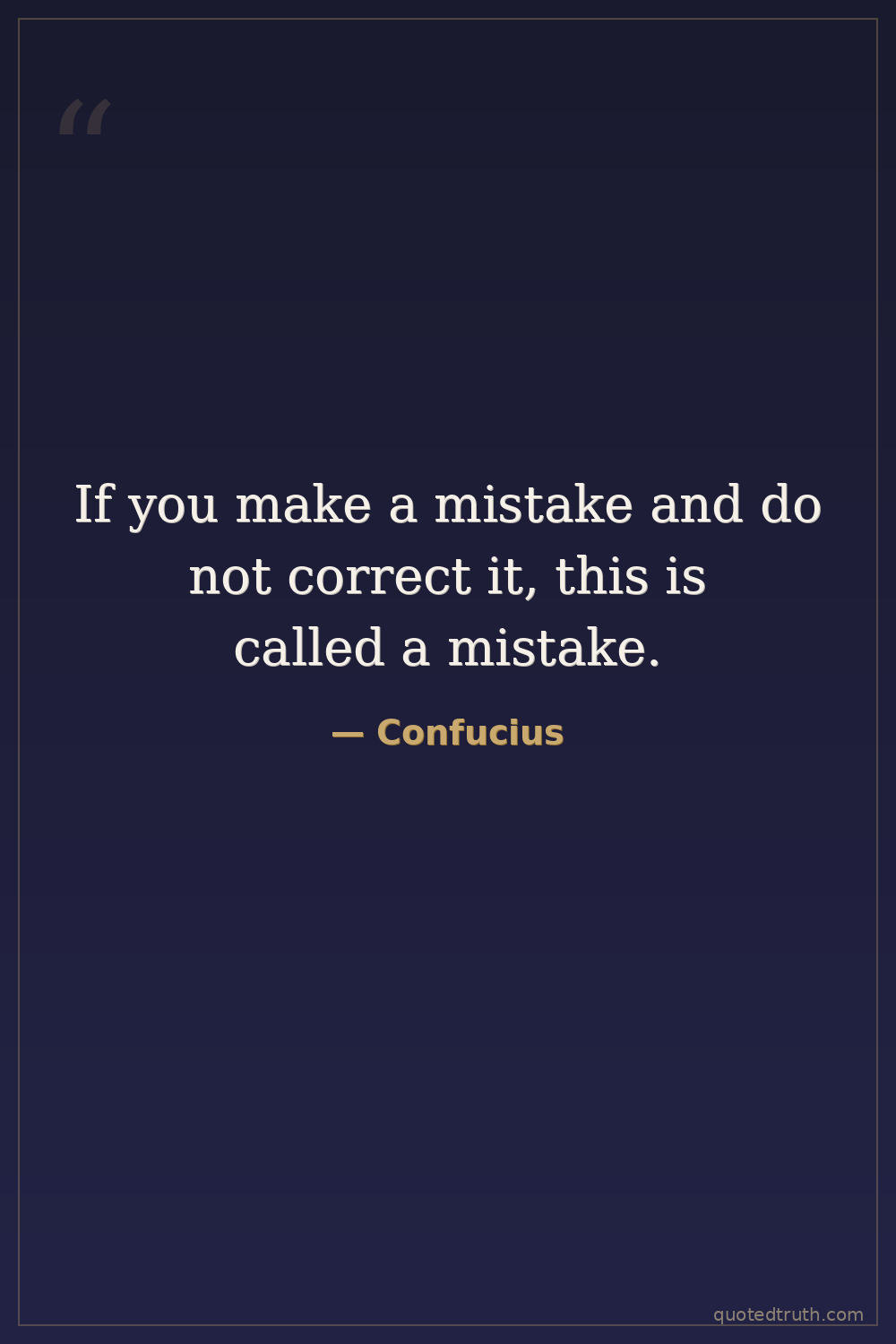
Confucius — "If you make a mistake and do not correct it, this is called a mistake."
If you make a mistake and do not correct it, this is called a mistake.
If you make a mistake and do not correct it, this is called a mistake.
Click any product to generate a realistic preview. Up to 3 at a time.
* Initial load can take up to 90 seconds — revising the preview in another color is nearly instant.
"Humanity is more important for people than water or fire. I have seen people walk through water and fire and die. I have never seen someone tread the path of humanity and perish."
"The Master said, 'He who acts with a constant view to his own advantage will be much murmured against.'"
"By three methods we may learn wisdom: First, by reflection, which is noblest; Second, by imitation, which is easiest; and third by experience, which is the bitterest."
"Attack the evil that is within yourself, rather than attacking the evil that is in others."
"The superior man is dignified, but not contentious; social, but not clannish."
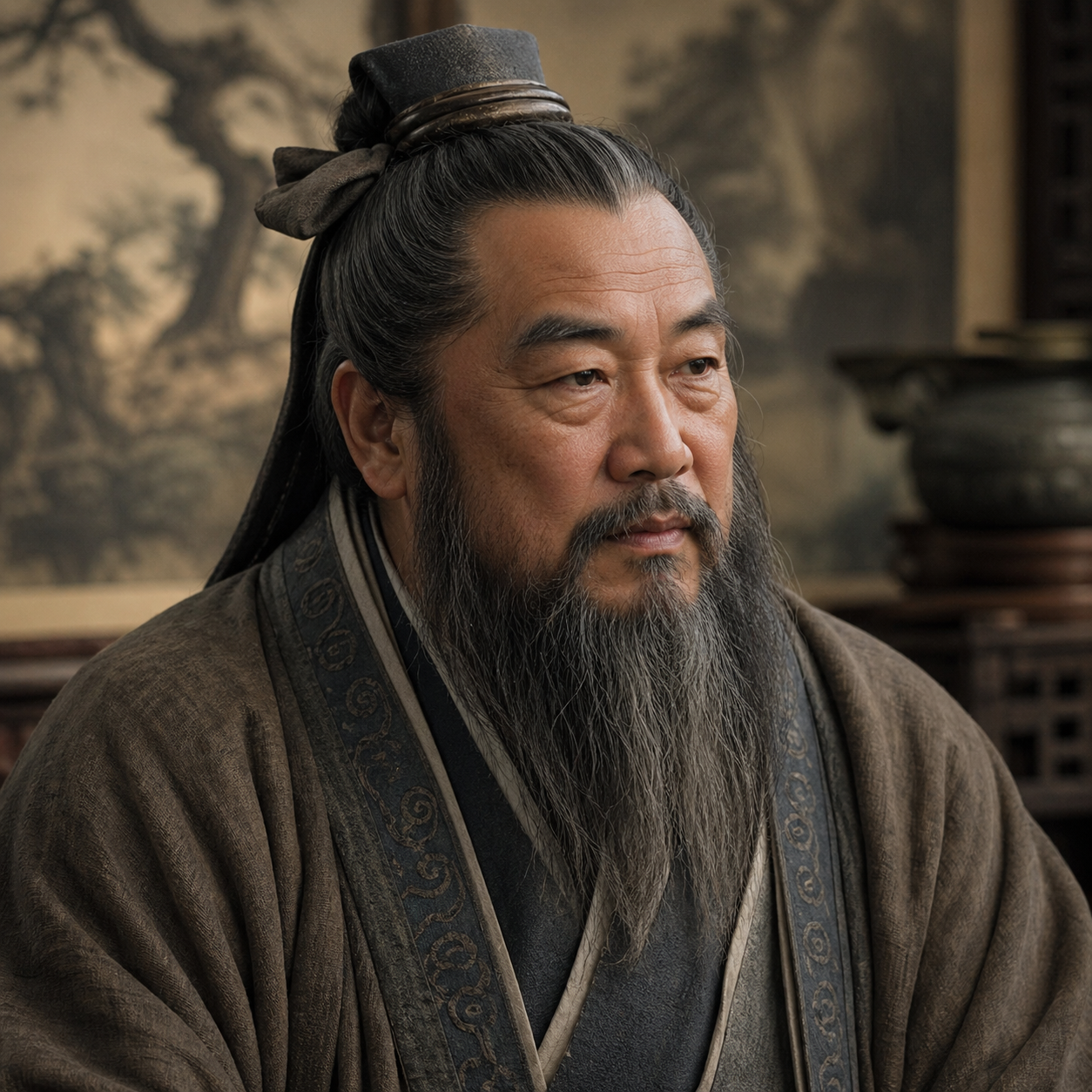
Chinese philosopher and teacher whose teachings (compiled by his students in the Analects) became the foundational ethical framework of East Asian civilization for 2,500 years. Closely associated with Mencius (his most-influential follower a century later). For an intellectual contrast, see Laozi, near-contemporary Chinese sage and Tao Te Ching author — Confucius systematized social order through ritual and family hierarchy; Laozi's Taoist effortless-action philosophy argued such systems were the disease, not the cure. The two founding poles of Chinese moral philosophy — every East Asian moral tradition since has positioned itself between them.
The standard scholarly entry points to Confucius's work: Philip J. Ivanhoe (Georgetown, Chinese philosophy) — Confucian Moral Self Cultivation (2000); Edward Slingerland (UBC, Asian Studies) — Effortless Action: Wu-wei as Conceptual Metaphor (2003); Tu Weiming (Harvard, Confucian scholar) — Confucian Thought: Selfhood as Creative Transformation (1985). These are the works graduate seminars cite when teaching Confucius.
Found in 1 providers: gemini
1 source checked
A mistake only becomes a real failure when you refuse to fix it. Everyone slips up, but ignoring the error, covering it up, or pretending it never happened is the actual wrongdoing. Acknowledging the misstep and taking steps to correct it transforms a simple error into growth. The true fault lies not in being imperfect, but in lacking the humility and willingness to repair what went wrong.
Confucius built his entire ethical system around self-cultivation and continuous moral improvement. He taught that the junzi, or exemplary person, constantly examines their conduct and revises it. As a teacher who trained disciples in government and ritual, he emphasized accountability over perfection. His own life involved political failures and exile, yet he modeled humility by revisiting his views. This saying captures his belief that character is forged through honest correction, not flawless performance.
Confucius lived during the Spring and Autumn period of ancient China, an era of collapsing Zhou authority, warring states, and moral decay among rulers. Officials clung to power through deception, and accountability was rare in corrupt courts. Confucius responded by reviving ideals of virtue, ritual propriety, and personal responsibility. In a climate where leaders rarely admitted fault, his call to acknowledge and correct errors was a radical ethical stance aimed at restoring social harmony through honest self-governance.
AI-generated insights based on extensive research and information for context. Factual errors? Email [email protected].
Your cart is empty