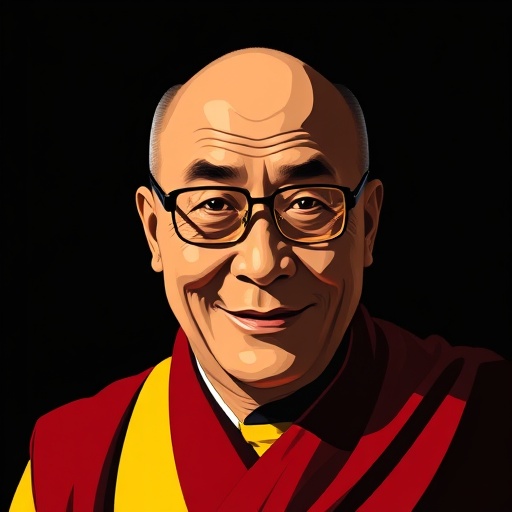
Dalai Lama (14th) — "If you want others to be happy, practice compassion. If you want to be happy, pr…"
If you want others to be happy, practice compassion. If you want to be happy, practice compassion.
If you want others to be happy, practice compassion. If you want to be happy, practice compassion.
Click any product to generate a realistic preview. Up to 3 at a time.
* Initial load can take up to 90 seconds — revising the preview in another color is nearly instant.
"My hope and prayer is that the Chinese Communist Party will change."
"The Chinese people are very good people."
"I think the most important thing is to have a good heart. If you have a good heart, everything else will follow."
"My main interest is to promote human values, compassion, forgiveness, tolerance, self-discipline, contentment. That's my main interest."
"I am open to guidance from the universe, and I don’t let my limited perception of reality get in the way."
Found in 2 providers: deepseek,grok
2 sources checked
Compassion isn't just a moral obligation toward others — it's the most direct route to your own happiness. The quote collapses the false divide between selfishness and selflessness: the same practice that benefits others also benefits you. Rather than viewing kindness as self-sacrifice, it reframes compassion as self-interest properly understood. Happiness isn't found by focusing inward but by genuinely caring about the suffering and wellbeing of those around you.
Tenzin Gyatso has led Tibetan Buddhism from exile since China's 1959 annexation of Tibet. Despite witnessing the destruction of thousands of monasteries, mass displacement of his people, and decades of failed negotiations, he refused bitterness and championed non-violence — earning the 1989 Nobel Peace Prize. Karuna (compassion) is the cornerstone of Mahayana Buddhist practice he embodies. His entire public mission — books, lectures, policy positions — consistently returns to compassion as both spiritual foundation and practical peacemaking tool.
The Dalai Lama rose to global prominence during the Cold War and its aftermath — an era defined by ideological hatred, proxy wars, nuclear anxiety, and mass atrocities from Cambodia to Bosnia. The 1989 Nobel Prize coincided with Tiananmen Square and the Berlin Wall's fall. Later, 9/11 and the War on Terror intensified cycles of retaliation globally. His message that compassion — not retaliation — breaks these cycles became increasingly urgent as tribalism and political polarization escalated worldwide.
AI-generated insights based on extensive research and information for context. Factual errors? Email [email protected].
Your cart is empty