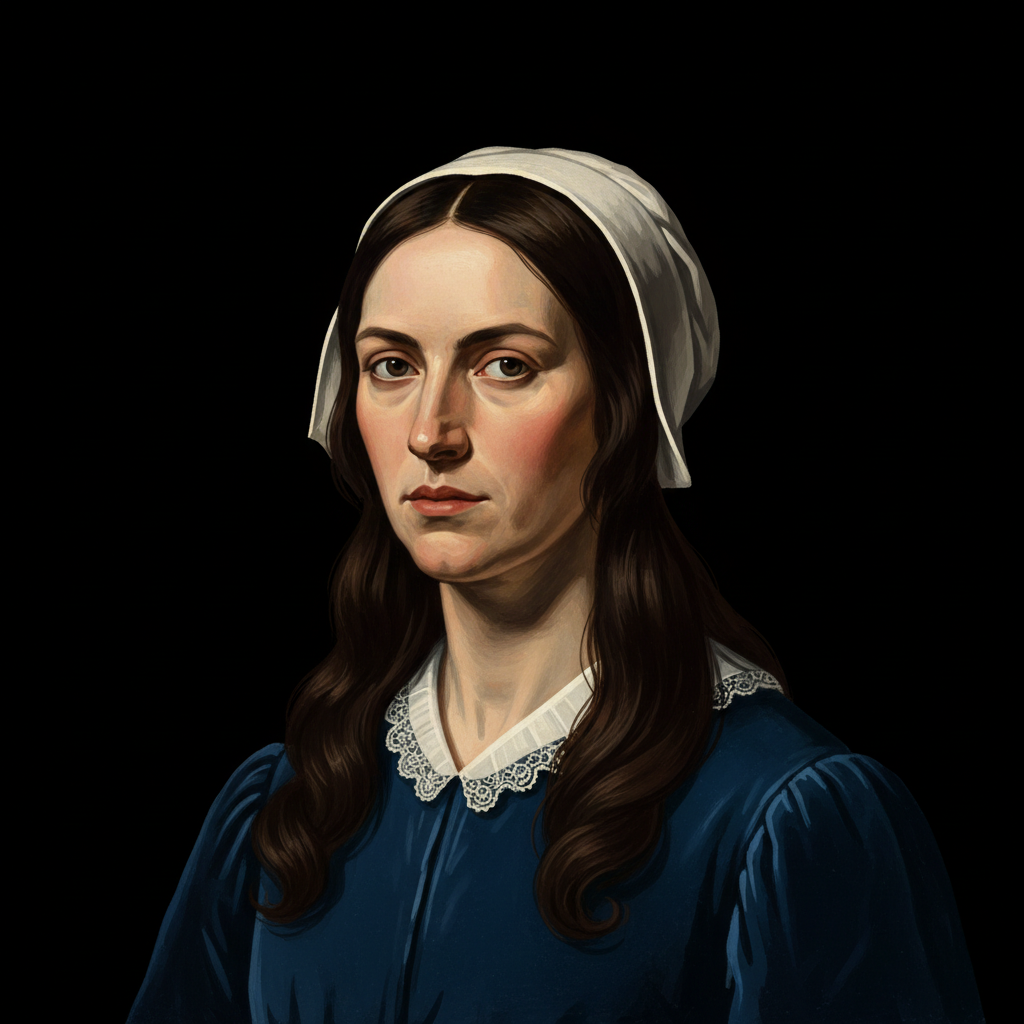
Mary Wollstonecraft — "Ignorance is a frail base for virtue."
Ignorance is a frail base for virtue.
Ignorance is a frail base for virtue.
Click any product to generate a realistic preview. Up to 3 at a time.
* Initial load can take up to 90 seconds — revising the preview in another color is nearly instant.
"I am not a creature of impulse, but of deliberation."
"How can a being be noble who is only good because she is afraid of being wicked?"
"The desire of being always admired is the reason why women are so often useless."
"Women are told from their infancy, and taught by the example of their mothers, that a little knowledge of human weakness, justly termed cunning, softness of temper, outward obedience, and a scrupulous…"
"Women are systematically degraded by receiving the trivial attentions which men think it manly to pay to the sex, when, in fact, they are insultingly supporting their own superiority."
English writer and proto-feminist philosopher whose A Vindication of the Rights of Woman (1792) is the founding text of modern feminist theory. Closely associated with Thomas Paine (Rights of Man co-conspirator and revolutionary contemporary) and William Godwin (her husband and philosopher of anarchism). For an intellectual contrast, see Edmund Burke, Anglo-Irish conservative and parliamentarian — Burke's Reflections on the Revolution in France (1790) was the explicit target of Wollstonecraft's first book — A Vindication of the Rights of Men (1790), written in the weeks after Burke's appeared. She extended the argument to women in her second Vindication two years later. Burke's tradition-and-prescription conservatism is the worldview Wollstonecraft's career was structured against.
Your cart is empty