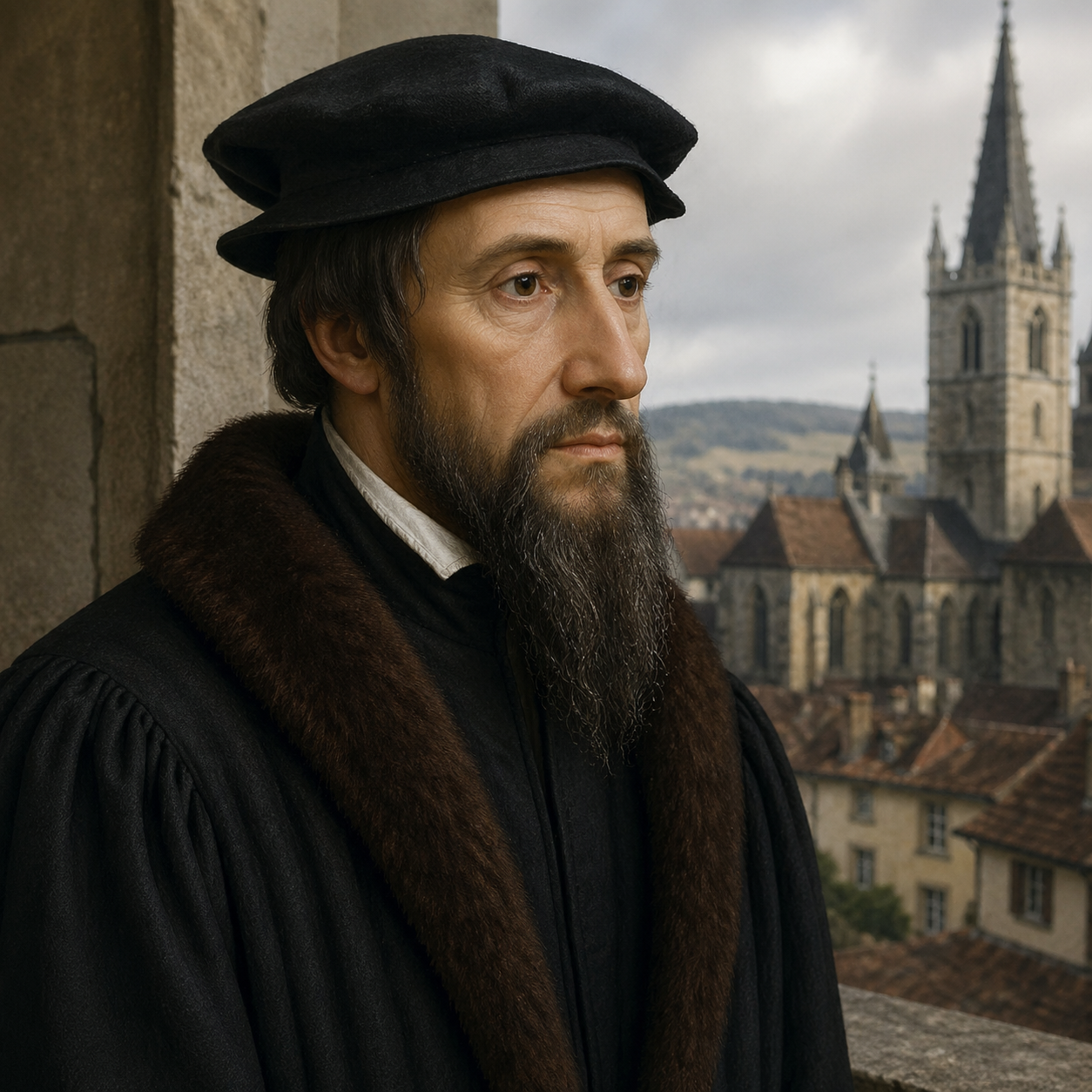
John Calvin — "Ignorance is the mother of superstition."
Ignorance is the mother of superstition.
Ignorance is the mother of superstition.
Click any product to generate a realistic preview. Up to 3 at a time.
* Initial load can take up to 90 seconds — revising the preview in another color is nearly instant.
"Whence it is sufficiently plain that they are not chosen for their own merit, but because God has gratuitously chosen them."
"God, by a just and irreprehensible, but incomprehensible judgment, has predestinated some to eternal life, and others to eternal death."
"The true worship of God consists in obeying him."
"There is not one blade of grass, there is no color in this world that is not intended to make us rejoice."
"God has his reasons for electing some and reprobating others, though these reasons are hidden from us."
French theologian whose Institutes of the Christian Religion (1536) systematized Protestant Reformed doctrine, including predestination. Closely associated with Martin Luther (Reformation founder, Calvin's predecessor). For an intellectual contrast, see Jacobus Arminius, Dutch Reformed theologian (1560-1609) — Arminius's rejection of strict double-predestination founded Arminianism — the theological tradition modern Methodism, most evangelicalism, and Pentecostalism descend from. The Calvinist-Arminian debate has divided Protestantism for 400 years.
Found in 1 providers: grok
1 source checked
When people lack genuine knowledge or understanding, they fill that void with irrational beliefs, fear-based rituals, and unfounded superstitions. This quote argues that ignorance creates the conditions where superstition grows and thrives — without education and critical thinking, people accept baseless explanations for the unknown. The principle remains sharp today: misinformation flourishes where education fails, and fear-driven belief replaces reasoned inquiry.
Calvin grounded his entire Reformation project in combating practices he deemed superstition born of ignorance — Catholic indulgences, relic worship, and prayers to saints. He founded the Geneva Academy in 1559 specifically to train educated ministers and literate congregants. He preached in vernacular French so ordinary people could access Scripture directly. For Calvin, an educated, Bible-reading laity was the antidote to a Church he believed had thrived on keeping people ignorant.
The 16th-century Reformation was partly a battle against practices reformers labeled Catholic superstition — indulgence selling, relic cults, and prayers to saints multiplied by popular ignorance. The printing press was spreading literacy and vernacular Bibles, threatening the Church's interpretive monopoly. Witch trials swept Europe as deep popular superstition flourished. Humanist scholars like Erasmus had already attacked folk religion as unbiblical. Reformed Christianity demanded an educated laity capable of reading and judging Scripture themselves.
AI-generated insights based on extensive research and information for context. Factual errors? Email [email protected].
Your cart is empty