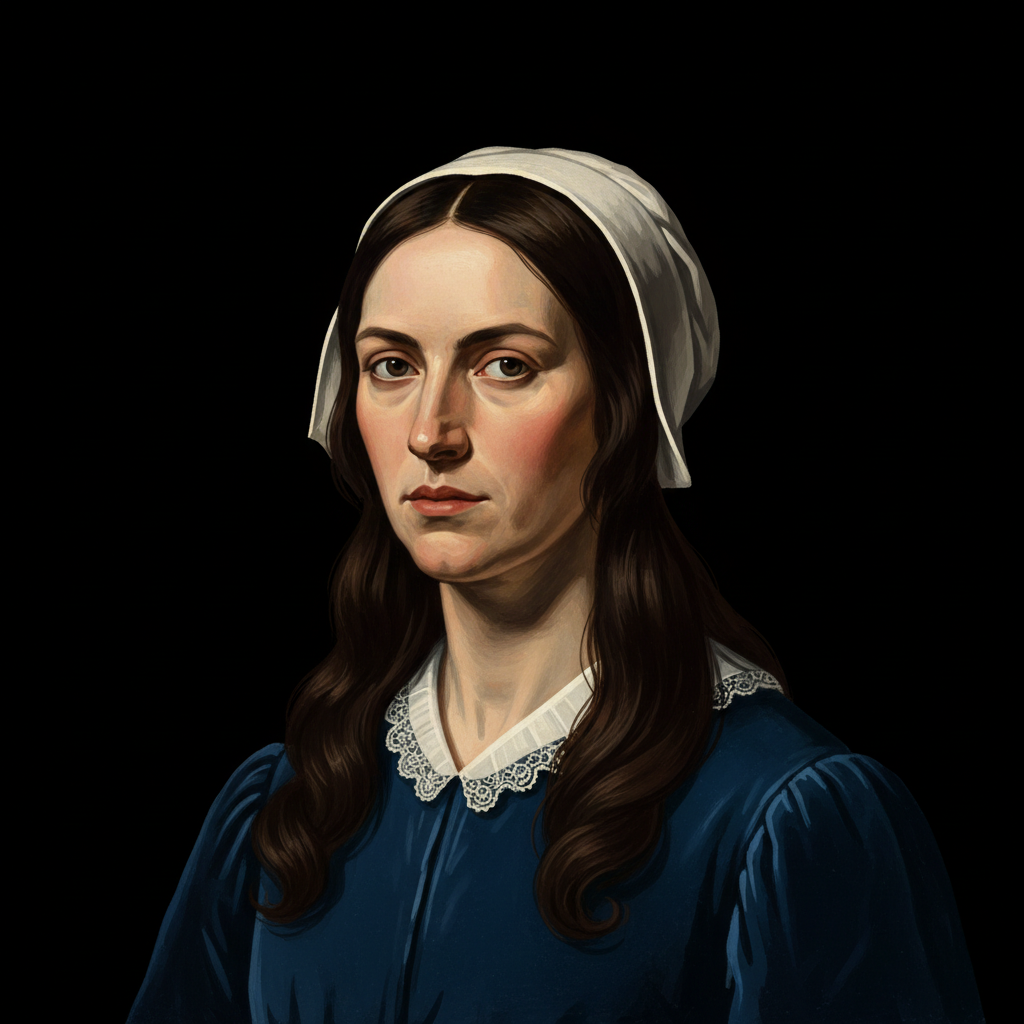
Mary Wollstonecraft — "In fact, it is a farce to call any being virtuous whose virtues do not result fr…"
In fact, it is a farce to call any being virtuous whose virtues do not result from the exercise of its own reason.
In fact, it is a farce to call any being virtuous whose virtues do not result from the exercise of its own reason.
Click any product to generate a realistic preview. Up to 3 at a time.
* Initial load can take up to 90 seconds — revising the preview in another color is nearly instant.
"The grand source of female folly and vice has ever appeared to me to arise from a mistaken estimate of sexual character."
"I have been so accustomed to hear beauty of the mind extolled, that I have been led to expect something more than ordinary, when I have met with a woman with a cultivated understanding."
"I am a solitary being, who has no ties to bind her to the world."
"To be more precise, a woman should be educated to be a rational creature, and then she will be a good wife and mother."
"I am a child of nature, who has been taught to think; and I will not resign my birthright for a mess of pottage."
English writer and proto-feminist philosopher whose A Vindication of the Rights of Woman (1792) is the founding text of modern feminist theory. Closely associated with Thomas Paine (Rights of Man co-conspirator and revolutionary contemporary) and William Godwin (her husband and philosopher of anarchism). For an intellectual contrast, see Edmund Burke, Anglo-Irish conservative and parliamentarian — Burke's Reflections on the Revolution in France (1790) was the explicit target of Wollstonecraft's first book — A Vindication of the Rights of Men (1790), written in the weeks after Burke's appeared. She extended the argument to women in her second Vindication two years later. Burke's tradition-and-prescription conservatism is the worldview Wollstonecraft's career was structured against.
Your cart is empty