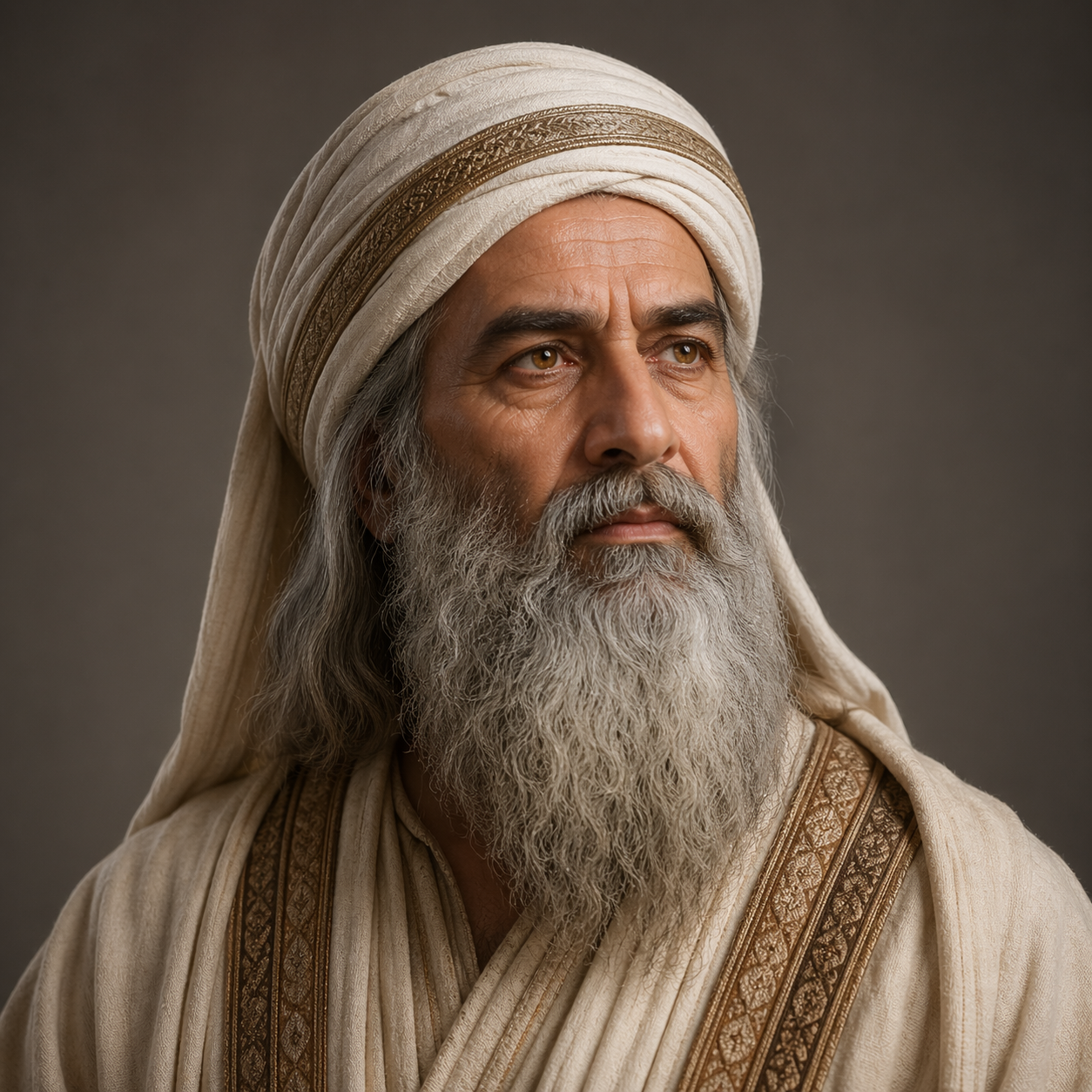
Zoroaster — "In the radiance of righteousness, we shall learn self-knowledge and righteous th…"
In the radiance of righteousness, we shall learn self-knowledge and righteous thinking.
In the radiance of righteousness, we shall learn self-knowledge and righteous thinking.
Click any product to generate a realistic preview. Up to 3 at a time.
* Initial load can take up to 90 seconds — revising the preview in another color is nearly instant.
"The inner fire of wisdom and truth must be kindled in every heart."
"The soul of the righteous shall be immortal, the soul of the wicked shall perish."
"Choose the truth. And if the truth is inconvenient, choose it anyway. But maybe grumble a little."
"How shall I satisfy Thee, O Ahura Mazda?"
"Embrace change. Unless it involves getting up early on a weekend."
Iranian prophet who founded Zoroastrianism, the first major religion of cosmic dualism between good (Ahura Mazda) and evil (Angra Mainyu). Closely associated with The Buddha (near-contemporary Eastern moral-cosmological revolutionary). For an intellectual contrast, see Friedrich Nietzsche, German philosopher of 'beyond good and evil' — Nietzsche appropriated Zarathustra's name for Thus Spoke Zarathustra (1883) precisely to invert the original's moral cosmology — the historical Zoroaster founded the good-versus-evil framework Nietzsche's character announces the end of.
Found in 1 providers: gemini
1 source checked
Living ethically illuminates who you truly are. When you commit to right action and align your life with truth and goodness, that practice becomes a mirror. It teaches you to recognize your own motives, confront your flaws honestly, and cultivate disciplined, clear thinking. Righteousness here is not performance but a daily path of reflection that sharpens self-awareness and trains the mind to reason justly rather than impulsively or selfishly.
Zoroaster taught that Asha, cosmic truth and righteous order, was the organizing principle of a moral life. He urged followers to practice Humata, Hukhta, Hvarshta, good thoughts, good words, good deeds, insisting ethics was a matter of personal choice, not ritual compliance. As a prophet who rejected the priestly cult of his day and preached individual responsibility before Ahura Mazda, this saying distills his core claim that righteous living generates both self-knowledge and clarity of mind.
Zoroaster lived in ancient Iran, roughly the second millennium BCE, among semi-nomadic Indo-Iranian tribes whose religion centered on animal sacrifice, polytheistic nature worship, and a warrior caste of priests. Cattle raiding, tribal violence, and ritualism dominated spiritual life. Against this, Zoroaster introduced a radically ethical monotheism centered on one wise lord, Ahura Mazda, and a cosmic struggle between truth and the lie, making inward moral discernment, rather than sacrifice, the path to divine alignment.
AI-generated insights based on extensive research and information for context. Factual errors? Email [email protected].
Your cart is empty