Charles Darwin — "It is a cursed evil to any man to become so absorbed in any one subject as I am …"
It is a cursed evil to any man to become so absorbed in any one subject as I am in mine.
It is a cursed evil to any man to become so absorbed in any one subject as I am in mine.
Click any product to generate a realistic preview. Up to 3 at a time.
* Initial load can take up to 90 seconds — revising the preview in another color is nearly instant.
"I had no intention of writing an autobiography, but I found myself doing so."
"I have steadily endeavoured to keep my mind free so as to give up any hypothesis, however much beloved, as soon as facts are shown to be opposed to it."
"If the misery of the poor be caused not by the laws of nature, but by our institutions, great is our sin."
"The greatest discovery of all is that the world is not as we thought it was."
"Nothing is easier than to admit in words the truth of the universal struggle for life, or more difficult—at least I have found it so—than constantly to bear this conclusion in mind."
British naturalist whose On the Origin of Species (1859) established evolution by natural selection — the unifying theory of modern biology. Closely associated with Thomas Henry Huxley (his 'bulldog' public defender) and Alfred Russel Wallace (independent co-discoverer of natural selection). For an intellectual contrast, see William Paley, Anglican theologian and Natural Theology author (1743-1805) — Origin of Species is structurally a 400-page reply to Paley — Darwin admired Paley's watchmaker-argument as an undergraduate at Cambridge and then spent 20 years building the empirical machinery to displace him. The cleanest 'design argument vs natural selection' founding rebuttal in science.
The standard scholarly entry points to Charles Darwin's work: Janet Browne (Harvard, history of science) — Charles Darwin: Voyaging (1995) and The Power of Place (2002); Adrian Desmond (UCL, biographer) — Darwin: The Life of a Tormented Evolutionist (1991, with James Moore). These are the works graduate seminars cite when teaching Charles Darwin.
Found in 1 providers: grok
1 source checked
Becoming completely consumed by a single obsession is damaging to a person, even when that obsession is meaningful. Total absorption crowds out balance, relationships, and broader experience. The speaker recognizes the cost of single-minded devotion: it narrows life even as it deepens expertise, becoming a kind of curse that the obsessive person inflicts upon themselves through their own compulsive drive to understand one thing completely.
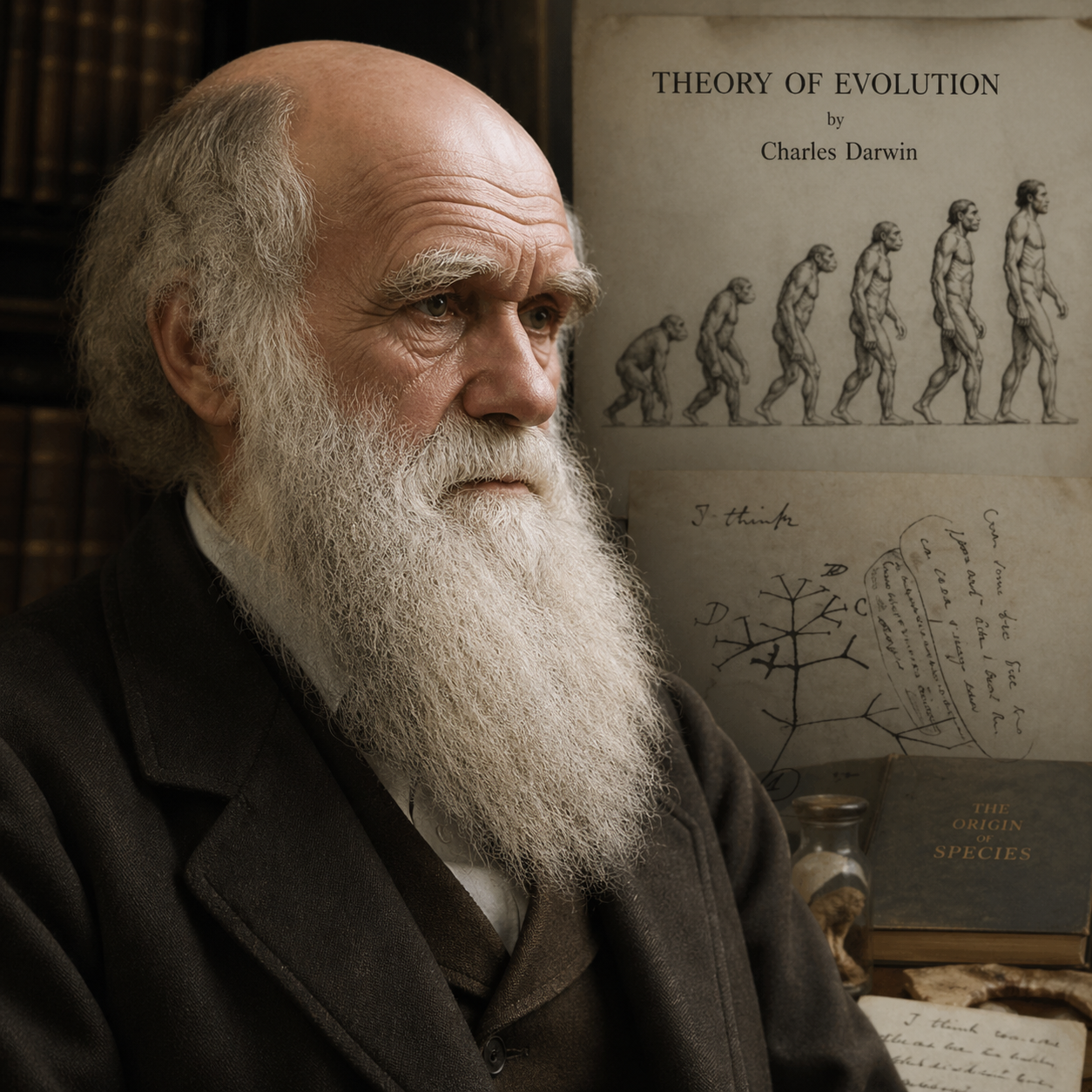
Darwin spent decades developing his theory of evolution, delaying publication of On the Origin of Species for twenty years partly from anxiety. His health collapsed repeatedly, likely worsened by stress and isolation. He worked obsessively from his study at Down House, rarely traveling, sacrificing social life and physical wellbeing. This quote reflects genuine self-awareness about how his consuming scientific passion extracted a personal toll he recognized but could not abandon.
Victorian Britain celebrated industriousness and specialization, yet also prized the gentleman-scholar with broad cultivation. Darwin lived during an era of explosive scientific discovery when natural philosophy was professionalizing into discrete disciplines. Simultaneously, Victorian culture worried about nervous exhaustion from overwork. Darwin's confession resonates against this tension: society demanded focused expertise while medical discourse warned that monomania and nervous collapse threatened men who pushed intellectual obsession too far.
AI-generated insights based on extensive research and information for context. Factual errors? Email [email protected].
Your cart is empty