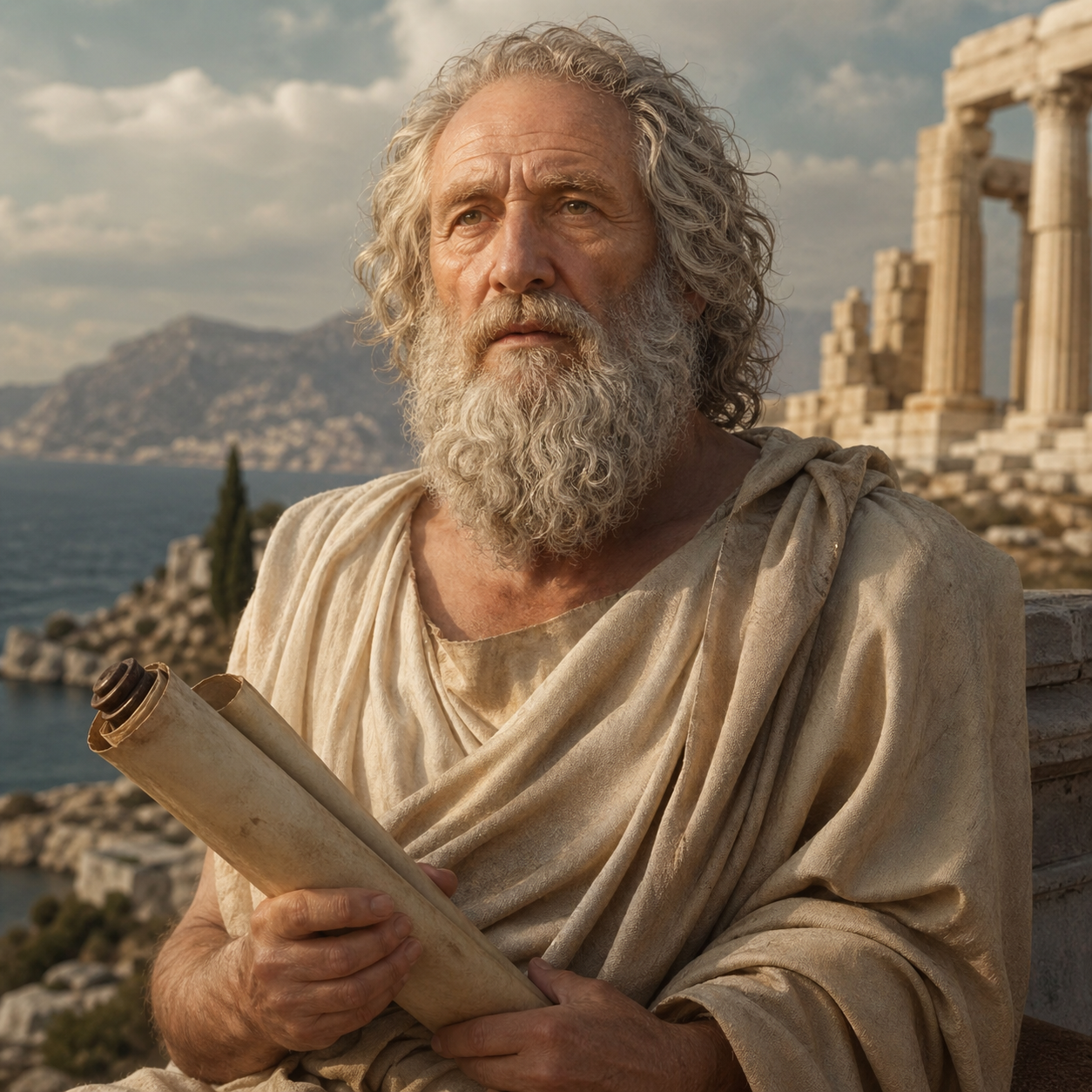
Homer — "It is an ill thing to be a slave."
It is an ill thing to be a slave.
It is an ill thing to be a slave.
Click any product to generate a realistic preview. Up to 3 at a time.
* Initial load can take up to 90 seconds — revising the preview in another color is nearly instant.
"No mortal can hurry me down to Hades before my time, but if a man's hour is come, be he brave or be he coward, there is no escape for him when he has once been born."
"For there is no more oppressive trouble for a man than a wandering life."
"There is the heat of Love, the pulsing rush of Longing, the lover's whisper, irresistible—magic to make the sanest man go mad."
"And bid your handmaids to do their work. But stories concern men, all men, but especially me, for mine is the power in the house."
"The young men were eager for battle, but the old men were wise."
Greek epic poet traditionally credited with the Iliad and the Odyssey, the foundational works of Western literature. Closely associated with Hesiod (near-contemporary Greek poet of Theogony and Works and Days). For an intellectual contrast, see Plato, Greek philosopher of the Republic — Republic Book X bans the poets from the ideal city, with Homer as the explicit target — Plato argued Homer's gods set immoral examples and that poetry corrupts moral education. The founding philosophy-versus-poetry quarrel of Western thought.
Your cart is empty