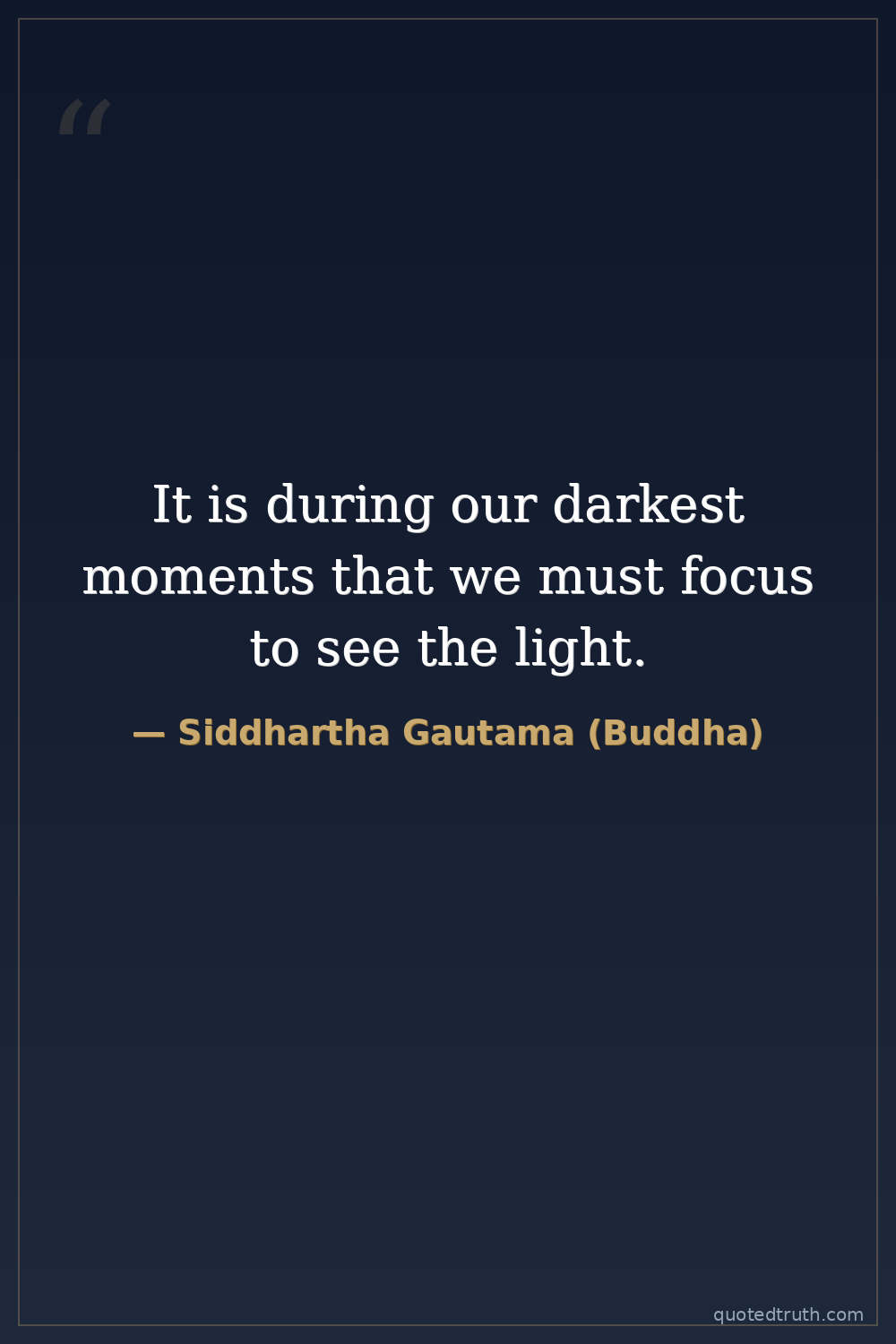
Siddhartha Gautama (Buddha) — "It is during our darkest moments that we must focus to see the light."
It is during our darkest moments that we must focus to see the light.
It is during our darkest moments that we must focus to see the light.
Click any product to generate a realistic preview. Up to 3 at a time.
* Initial load can take up to 90 seconds — revising the preview in another color is nearly instant.
"Drop by drop is the water pot filled. Likewise, the wise man, gathering it little by little, fills himself with good."
"The gift of truth excels all other gifts."
"Wear your ego like a loose garment."
"All wrong-doing arises because of mind. If mind is transformed can wrong-doing remain?"
"Nothing can harm you as much as your own thoughts unguarded."
Attributed, often cited in various Buddhist texts and teachings.
Date: c. 5th century BCE
Life & DeathFound in 1 providers: grok
1 source checked
When life feels overwhelming, painful, or hopeless, that is precisely the moment to concentrate your attention on whatever hope, wisdom, or possibility still exists. Suffering is not a reason to give up or despair; it is a call to redirect your focus toward clarity and inner guidance. The darker things get, the more deliberate effort is required to notice what is good, true, or redemptive rather than drowning in the shadows.
The Buddha built his entire teaching around confronting suffering directly. After leaving his sheltered palace life and encountering sickness, aging, and death, he pursued enlightenment through years of harsh asceticism and deep meditation. His Four Noble Truths begin with acknowledging suffering, then pivot to liberation from it. This quote mirrors his core insight: awareness and mindful focus, rather than avoidance, are the path through darkness toward awakening and inner peace.
In 5th–6th century BCE northern India, the Buddha lived amid rigid caste hierarchies, Vedic ritual dominance, and widespread peasant hardship. Spiritual seekers called shramanas were abandoning society to wander forests searching for liberation from rebirth's endless cycle. Plagues, famines, and warring kingdoms made suffering a daily reality. Against this backdrop, his message that ordinary people could find clarity and freedom through disciplined attention, rather than priestly sacrifice, was radically accessible and transformative.
AI-generated insights based on extensive research and information for context. Factual errors? Email [email protected].
Your cart is empty