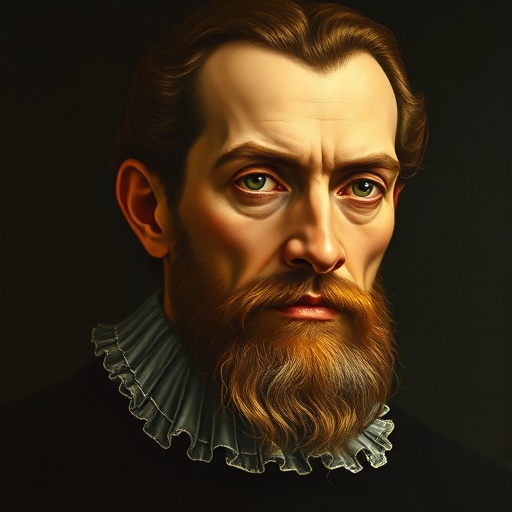
Machiavelli — "It is necessary to be a fox to discover snares and a lion to terrify wolves."
It is necessary to be a fox to discover snares and a lion to terrify wolves.
It is necessary to be a fox to discover snares and a lion to terrify wolves.
Click any product to generate a realistic preview. Up to 3 at a time.
* Initial load can take up to 90 seconds — revising the preview in another color is nearly instant.
"Everyone sees what you appear to be, few experience what you really are."
"The injury that is to be done to a man must be such that one need not fear his revenge."
"It is not fortune, but their own indolence, that causes men to abandon themselves to their fate."
"It is much safer to be feared than loved because love is preserved by the link of obligation which, owing to the baseness of men, is broken at every opportunity for their advantage; but fear preserves…"
"The first method for estimating the intelligence of a ruler is to look at the men he has around him."
Florentine diplomat and political theorist whose The Prince (written 1513) became the founding text of political realism and gave us the adjective 'Machiavellian.' Closely associated with Francesco Guicciardini (fellow Florentine political analyst and historian). For an intellectual contrast, see Erasmus of Rotterdam, Dutch humanist and The Education of a Christian Prince author (1516) — Erasmus's princely-instruction manual was published three years after Machiavelli's, for the same European audience, and is the explicit Christian-virtue alternative to Machiavellian power-realism. The cleanest 'realism vs idealism' founding pairing in modern political theory.
Your cart is empty