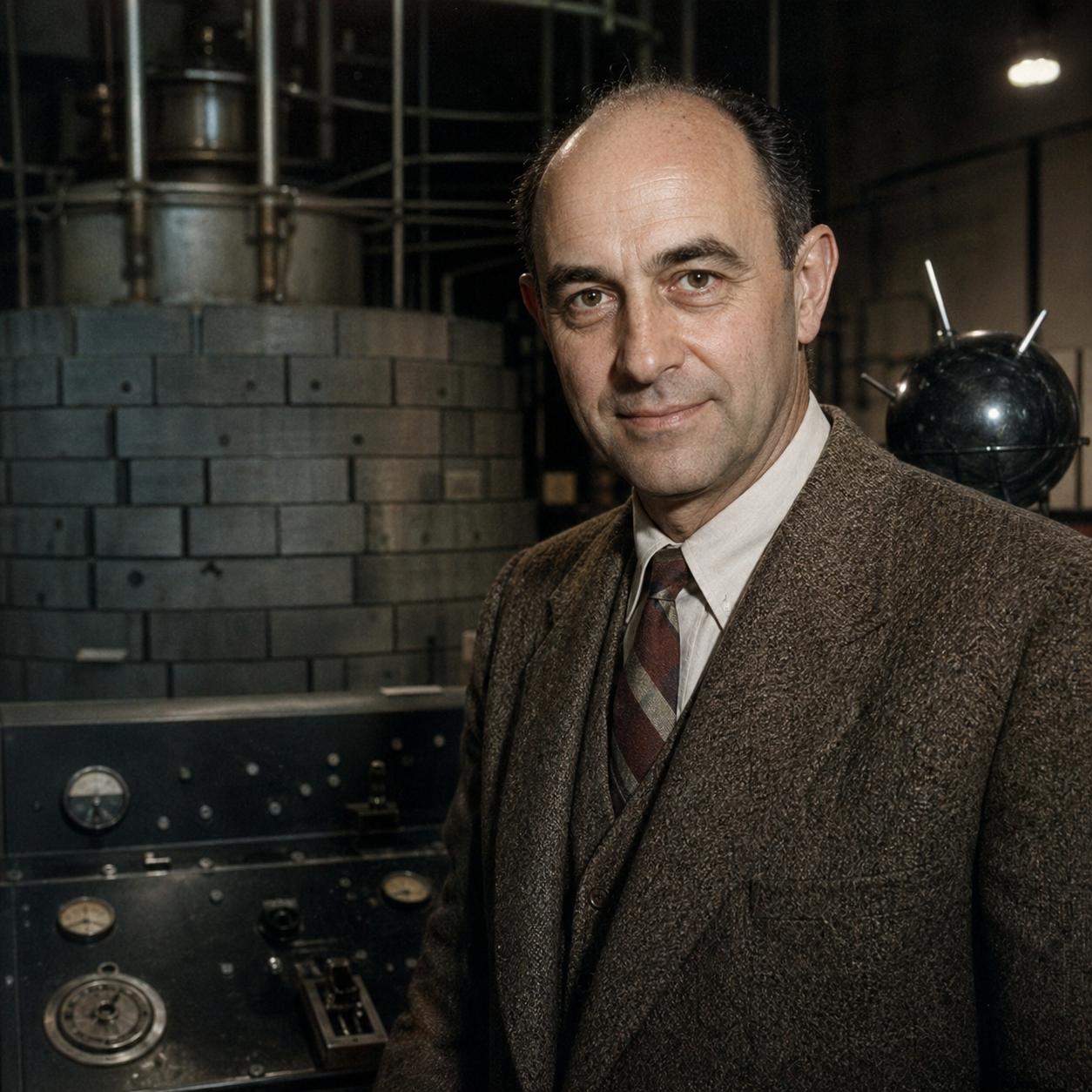
Enrico Fermi — "It is not enough to invent. One must also know how to sell."
It is not enough to invent. One must also know how to sell.
It is not enough to invent. One must also know how to sell.
Click any product to generate a realistic preview. Up to 3 at a time.
* Initial load can take up to 90 seconds — revising the preview in another color is nearly instant.
"The universe is governed by laws, and it is our job to discover those laws."
"The world is full of interesting things to do with neutrons."
"The atomic bomb is a testament to the power of human intellect, but it is also a warning about the dangers of human folly."
"The universe is a strange and wonderful place, and we are only beginning to understand it."
"It is not possible that such a small difference in the atomic weights of hydrogen and helium could have such tremendous consequences."
Found in 1 providers: grok
1 source checked
Invention alone doesn't guarantee impact. Even a breakthrough idea remains dormant if its creator can't persuade others of its value — convincing funders, policymakers, colleagues, or the public. The practical reality is that ideas need champions who can communicate their worth clearly and compellingly. Technical genius must be paired with the ability to advocate, pitch, and build buy-in if innovation is to move from concept to real-world consequence.
Fermi wasn't just a theorist — he was a pragmatic builder who had to sell his most audacious idea: a nuclear chain reaction beneath the bleachers of a Chicago football stadium. Convincing Army officials, university administrators, and Manhattan Project leadership required more than equations. His ability to translate complex physics into actionable confidence was as essential to history as his experimental genius. Without that persuasion, Chicago Pile-1 never gets funded or built.
In the 1940s, science entered an era of massive state patronage — breakthroughs required government funding, military cooperation, and political will. The Manhattan Project exemplified this: physicists had to convince skeptical generals that atomic energy was worth billions. Post-war, nuclear power needed public acceptance against widespread fear. Scientists were no longer lone researchers but stakeholders in a competitive Cold War landscape where clearly communicating a discovery's value had become existential.
AI-generated insights based on extensive research and information for context. Factual errors? Email [email protected].
Your cart is empty