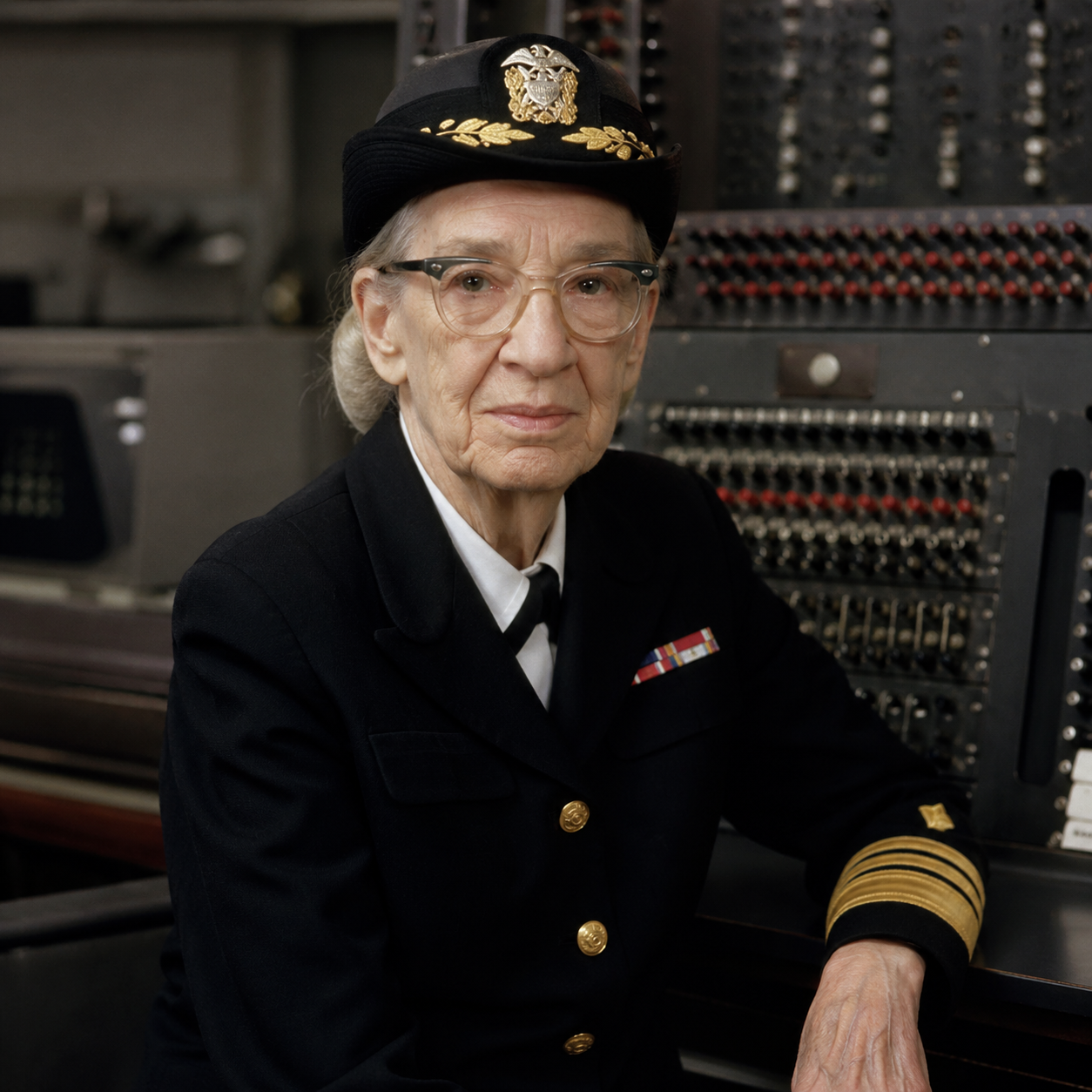
Grace Hopper — "It's a beautiful thing, a computer. It's a wonderful thing."
It's a beautiful thing, a computer. It's a wonderful thing.
It's a beautiful thing, a computer. It's a wonderful thing.
Click any product to generate a realistic preview. Up to 3 at a time.
* Initial load can take up to 90 seconds — revising the preview in another color is nearly instant.
"We didn't have any manuals. We had to figure it out ourselves."
"From then on, when anything went wrong with a computer, we said it had bugs in it."
"We're flooding people with information. We need to feed it through a processor. A human must turn information into intelligence or knowledge. We've tended to forget that no computer will ever ask a ne…"
"I am now going to make you a gift that will stay with you the rest of your life. For the rest of your life, every time you say, 'We've always done it that way,' my ghost will appear and haunt you for …"
"I will not take what you need to give me. I will take what you want to give me."
Found in 1 providers: grok
1 source checked
A simple, heartfelt declaration of wonder at computers as objects worthy of admiration — not just instruments of calculation but things with intrinsic beauty. It frames technology through an emotional lens, suggesting machines can inspire the same awe as art or nature. The repetition of 'beautiful' and 'wonderful' emphasizes genuine feeling over technical description, inviting others to share amazement rather than fear or indifference toward computing.
Hopper spent decades working intimately with computers, from the Harvard Mark I in 1944 to late-career advocacy for standardizing programming languages. She developed the first compiler and helped create COBOL, viewing computers as tools to democratize, not fear. Her enthusiasm was legendary — she carried nanosecond wire segments to lectures to make computing tangible. This quote captures the genuine love driving a career others might have seen as purely technical.
In Hopper's era, computing transitioned from classified wartime machinery to commercial and eventually personal technology. Public perception oscillated between fear and indifference — computers seemed cold, alien, threatening to jobs and autonomy. Scientists rarely spoke of them with warmth. Hopper's advocacy, including prominent television appearances in the 1980s, helped shift cultural narrative. Calling a machine beautiful was a deliberate reframing, encouraging a generation to see computers as partners in human progress rather than adversaries.
AI-generated insights based on extensive research and information for context. Factual errors? Email [email protected].
Your cart is empty