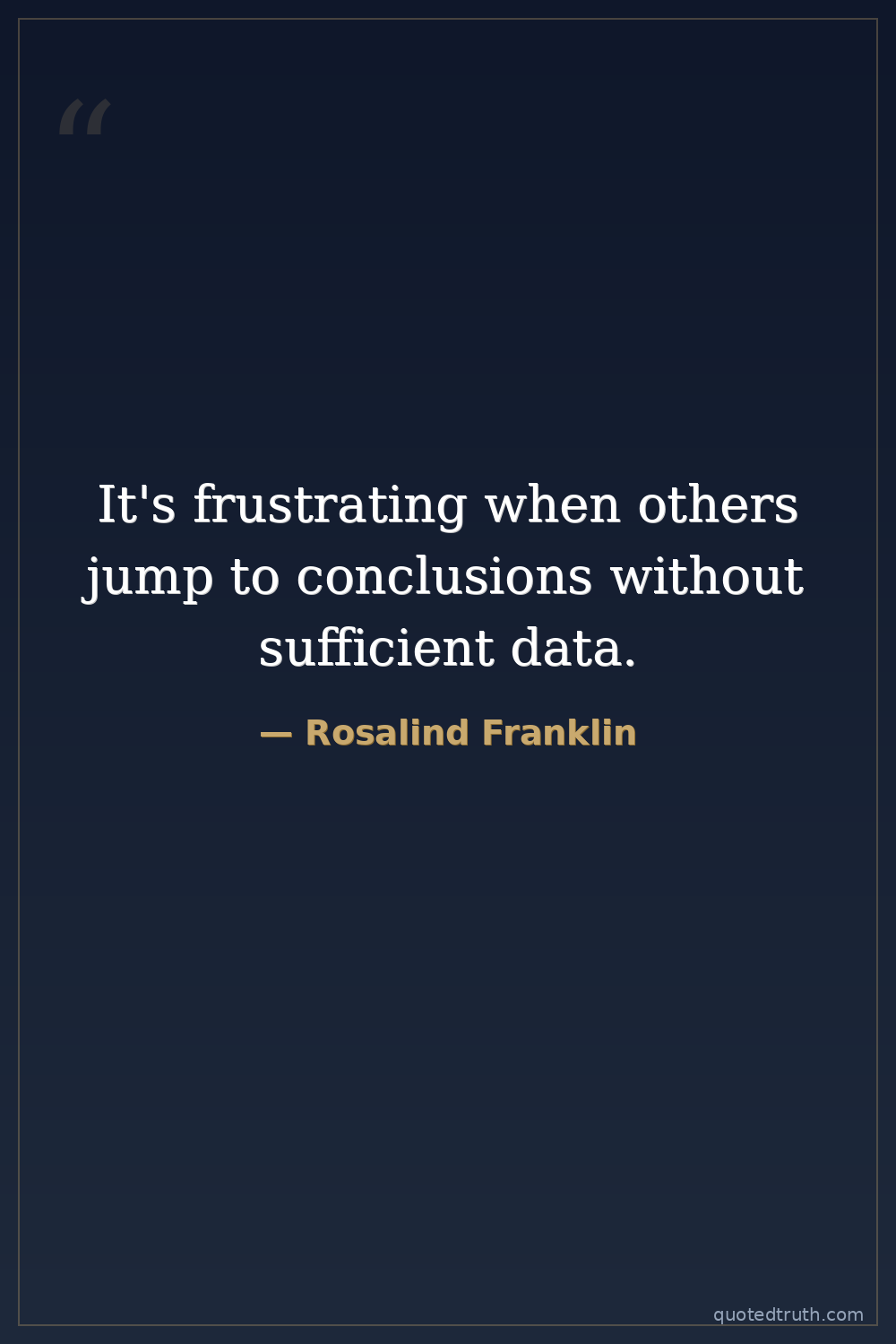
Rosalind Franklin — "It's frustrating when others jump to conclusions without sufficient data."
It's frustrating when others jump to conclusions without sufficient data.
It's frustrating when others jump to conclusions without sufficient data.
Click any product to generate a realistic preview. Up to 3 at a time.
* Initial load can take up to 90 seconds — revising the preview in another color is nearly instant.
"I believe in letting the data speak for themselves."
"I have no patience for intellectual dishonesty."
"The most important thing is to have an open mind and to be willing to follow the evidence wherever it leads."
"I am not one to seek fame or glory, but rather to contribute to knowledge."
"Science and everyday life cannot and should not be separated."
Found in 1 providers: grok
1 source checked
When someone reaches a conclusion before gathering enough evidence, they risk being wrong and spreading that error. Real understanding requires patience: collecting data, testing it, and only then drawing conclusions. Jumping ahead feels efficient but produces unreliable results. This expresses a core scientific ethic — that the rush to know something shouldn't outpace the rigorous work required to actually know it.
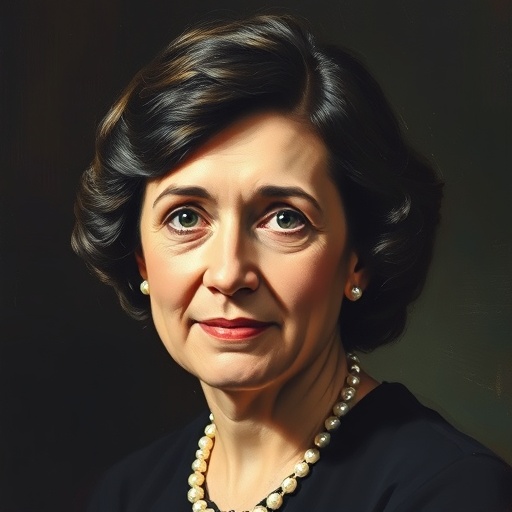
Franklin spent years producing painstaking X-ray diffraction images of DNA — including the famous Photo 51 — to build an airtight case for its structure. Watson and Crick used her data without consent or credit to propose the double helix in 1953. She had resisted declaring a structure prematurely, insisting on more evidence. This quote captures her documented frustration with colleagues who treated speculation as settled conclusion.
In the 1950s, the race to crack DNA's structure was fierce and competitive, shaped by Cold War scientific urgency and institutional rivalry between London and Cambridge labs. Science culture rewarded bold, fast claims over careful evidence accumulation. Women researchers were routinely marginalized and denied credit. The era's pressure to publish first rather than publish correctly created exactly the environment where conclusions routinely outran data.
AI-generated insights based on extensive research and information for context. Factual errors? Email [email protected].
Your cart is empty