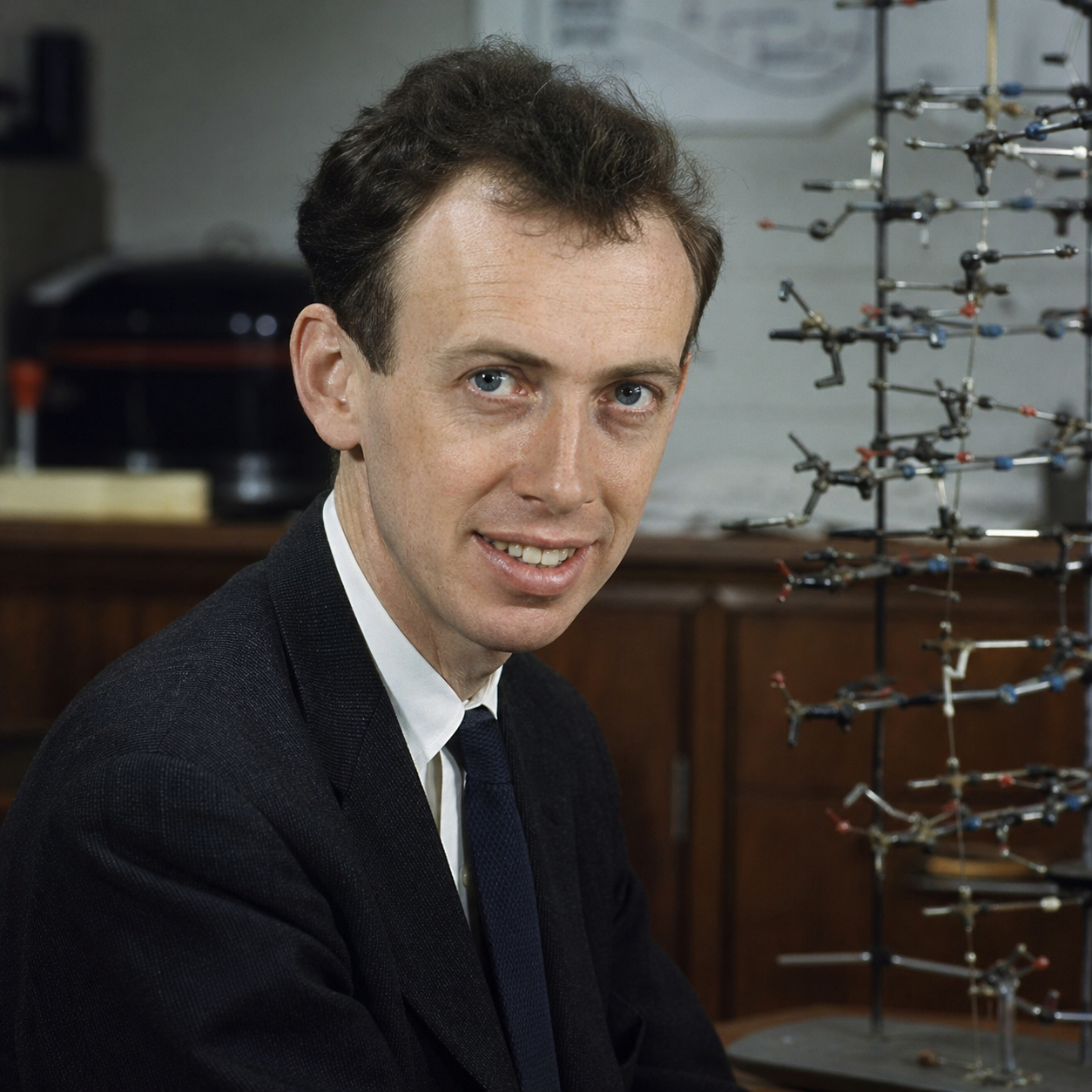
James Watson — "I've always been interested in what makes people tick."
I've always been interested in what makes people tick.
I've always been interested in what makes people tick.
Click any product to generate a realistic preview. Up to 3 at a time.
* Initial load can take up to 90 seconds — revising the preview in another color is nearly instant.
"It's much more important to be right than to be nice."
"I think we should be able to choose our children's genes."
"I am inherently gloomy about the prospect of Africa because all our social policies are based on the assumption that their intelligence is the same as ours — whereas all the testing says not really."
"All my friends who have to hire black people, they find it a problem."
"If you could find a way to make all girls pretty, you'd be a hero."
Found in 1 providers: grok
1 source checked
A declaration of deep, persistent curiosity about human nature — what motivates people, what drives their choices, what underlies personality and behavior. In modern terms, it captures the mindset of a scientist who sees humans as systems worth dissecting and understanding, not just observing. It suggests someone who finds the mechanics of people as compelling as any other puzzle, always probing beneath the surface to find the biological or psychological engine running the show.
Watson spent his career decoding the very blueprint of life — the DNA double helix, co-discovered with Crick in 1953, is literally the molecular mechanism that makes organisms tick. His curiosity extended beyond biology into controversy: his later remarks on intelligence, race, and human variation drew fierce criticism, revealing a man who kept probing what makes people different. Whether celebrated or condemned, his career was defined by relentless inquiry into life's fundamental machinery.
Watson came of age during the mid-20th century molecular biology revolution. Post-WWII science raced to explain life at the chemical level, culminating in the 1953 DNA structure discovery. The Cold War era intensified interest in human biology — eugenics' shadow lingered even as genetics emerged as a legitimate discipline. Society was beginning to ask whether behavior, intelligence, and personality had biological roots, making Watson's curiosity about what makes people tick both timely and contentious.
AI-generated insights based on extensive research and information for context. Factual errors? Email [email protected].
Your cart is empty