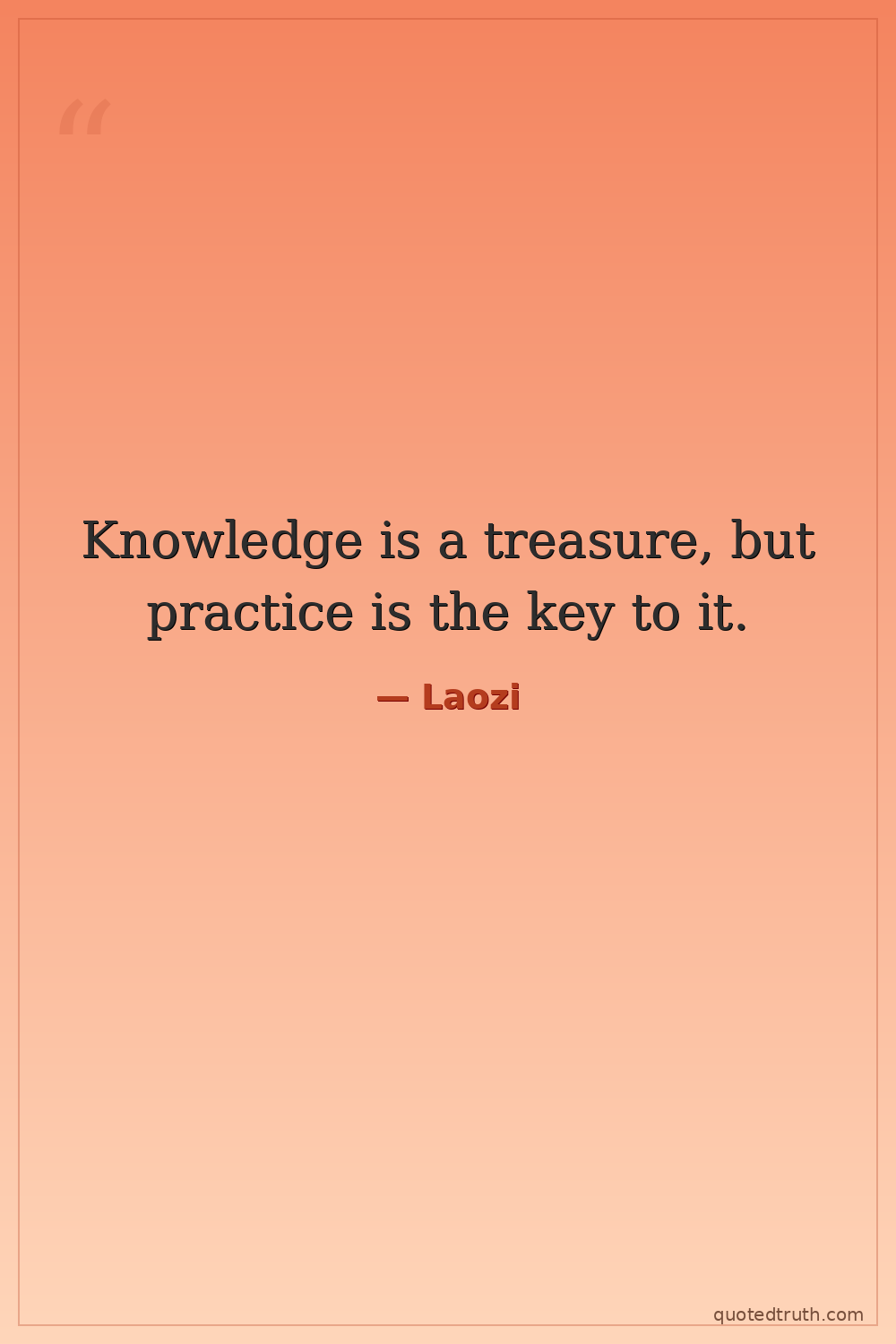
Laozi — "Knowledge is a treasure, but practice is the key to it."
Knowledge is a treasure, but practice is the key to it.
Knowledge is a treasure, but practice is the key to it.
Click any product to generate a realistic preview. Up to 3 at a time.
* Initial load can take up to 90 seconds — revising the preview in another color is nearly instant.
"He who controls others may be powerful, but he who has mastered himself is mightier still."
"When the great Tao is lost, there is 'benevolence' and 'righteousness'."
"When the great Tao is abandoned, there is humanity and righteousness. When wisdom and intelligence appear, there is great hypocrisy."
"The sage governs by emptying senses and filling bellies."
"The heaviest thing in the world is a human heart."
Reputed founder of Taoism and author of the Tao Te Ching, whose wu wei (effortless action) shaped East Asian philosophy. Closely associated with Zhuangzi (later Taoist who extended Laozi's framework). For an intellectual contrast, see Confucius, near-contemporary Chinese sage of social ritual and duty — Confucius systematized social order through ritual and hierarchy; Laozi argued that all such systems were the disease, not the cure — the two founding poles of Chinese moral philosophy.
Found in 1 providers: grok
1 source checked
Information and learning have real value, but they remain locked away until you actually apply them. Reading about swimming doesn't teach you to swim; memorizing rules doesn't make you wise. Only through repeated doing, testing, and lived experience does knowledge become useful skill. The saying urges people to stop merely collecting facts and start practicing what they have learned, because action is what unlocks the worth stored inside understanding.
Laozi, traditionally credited as founder of Taoism and author of the Tao Te Ching, taught that truth is grasped through lived alignment with the Tao rather than scholarly debate. As a legendary archivist in the Zhou court, he witnessed educated officials who knew rituals yet failed to live them. His doctrine of wu wei, effortless action, insists understanding must flow into conduct, mirroring the quote's demand that knowledge be activated through practice.
Laozi lived during the late Zhou dynasty, around the 6th century BCE, an era of political decay, warring states, and competing philosophies including Confucianism, Legalism, and Mohism. Scholars memorized classics and ritual codes to gain court positions, yet governance and morality collapsed. Against this backdrop of credentialed but ineffective elites, Laozi's insistence that wisdom be embodied rather than recited was a pointed critique of a society drowning in learning while losing the Way.
AI-generated insights based on extensive research and information for context. Factual errors? Email [email protected].
Your cart is empty