Siddhartha Gautama (Buddha) — "Let him not despise what he has received, nor should he envy others. He who envi…"
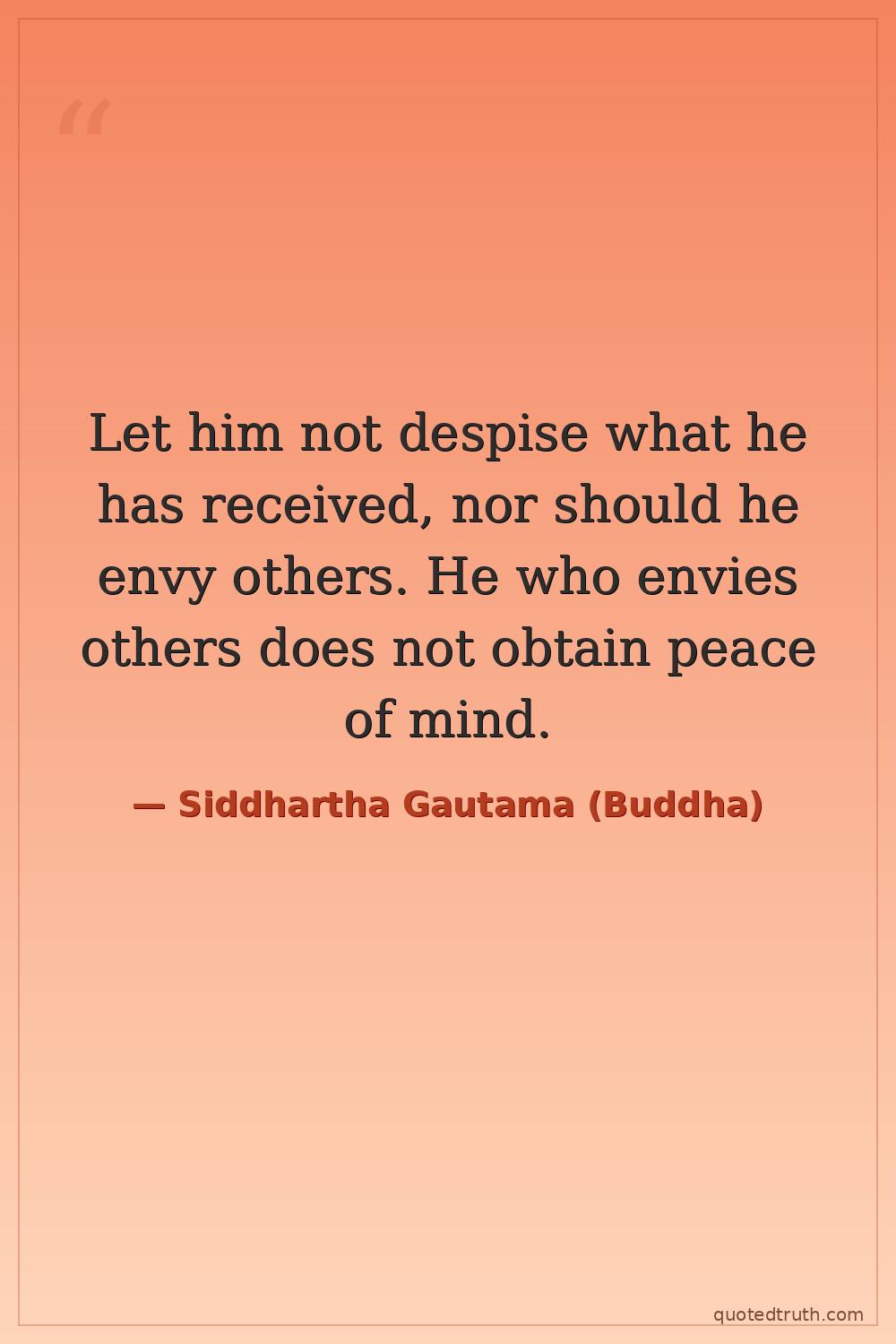
Let him not despise what he has received, nor should he envy others. He who envies others does not obtain peace of mind.
Let him not despise what he has received, nor should he envy others. He who envies others does not obtain peace of mind.
Click any product to generate a realistic preview. Up to 3 at a time.
* Initial load can take up to 90 seconds — revising the preview in another color is nearly instant.
"If you truly loved yourself, you could never hurt another."
"Virtue is persecuted more by the wicked than it is loved by the good."
"To conquer oneself is a greater task than conquering others."
"The wise ones who are intent on meditation, who delight in the peace of renunciation, such mindful ones, perfect in right understanding, cast off the net of Māra."
"One who drinks deeply of the Dharma with a clear and open mind, rests well."
Found in 1 providers: grok
1 source checked
Be content with what life gives you and stop comparing yourself to people who have more. Envy poisons your own mind long before it affects anyone else. When you constantly measure your possessions, status, or circumstances against others, you guarantee your own unhappiness. Real calm comes from accepting your portion without resentment. The person stuck in comparison never rests, because there is always someone with more to resent.
Siddhartha was born a prince with every luxury, then renounced it all to seek liberation from suffering. His core teaching identified craving and attachment as the root of human misery. This saying distills that insight into practical ethics for monks who depended on alms: take what is offered without grasping for more. His own journey from palace to begging bowl proved that peace comes from releasing comparison, not accumulating advantage.
In 5th-century BCE northern India, the rigid Vedic caste system locked people into inherited wealth and status, breeding resentment among those born lower. Rival wandering ascetics competed for lay donations and prestige. Buddha's mendicant Sangha survived entirely on daily alms, where one monk might receive rice and another scraps. Teaching contentment with received offerings prevented jealousy from fracturing the community and challenged the broader culture's obsession with hierarchy and material standing.
AI-generated insights based on extensive research and information for context. Factual errors? Email [email protected].
Your cart is empty