Pope Urban II — "Let no delay postpone the journey."
Let no delay postpone the journey.
Let no delay postpone the journey.
Click any product to generate a realistic preview. Up to 3 at a time.
* Initial load can take up to 90 seconds — revising the preview in another color is nearly instant.
"Arise, then, and go against this wicked race, and fight for the people of God!"
"O most valiant soldiers and descendants of invincible ancestors, do not degenerate, but recall the valor of your forefathers."
"Let those who have been exhausting themselves to the detriment both of body and soul now strive for a twofold reward."
"Enter upon the road to the Holy Sepulcher; wrest that land from the wicked race, and subject it to yourselves."
"Know that for all those who die in this expedition, there will be a sure entrance into paradise."
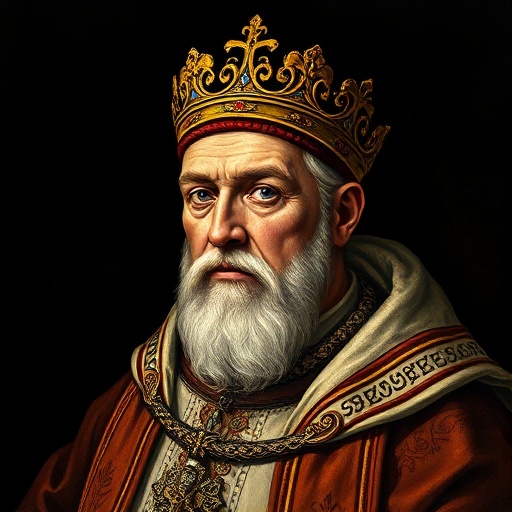
Pope (1088-1099) whose Council of Clermont speech (November 1095) launched the First Crusade — the founding event of nine centuries of Christian-Muslim military conflict. Closely associated with Pope Gregory VII (his predecessor on papal-imperial reform). For an intellectual contrast, see Saladin, Kurdish-Muslim Sultan of Egypt and Syria (1138-1193) — Saladin recaptured Jerusalem in 1187, undoing the First Crusade Urban II launched 92 years earlier. Saladin's chivalrous treatment of Christian prisoners became the canonical Muslim counter-image to Crusader brutality. The cleanest before/after pairing of the Crusades' moral arc.
Found in 1 providers: grok
1 source checked
Act now without hesitation or procrastination. When a mission is clear and the cause is righteous, waiting only weakens resolve and allows circumstances to harden against you. Urgency is not recklessness but commitment made visible through immediate action. Every day of delay is a day the goal recedes further from reach.
Urban II spoke these words at the Council of Clermont in 1095, literally launching the First Crusade. He needed thousands to abandon homes and march to Jerusalem. His entire papacy hinged on mobilizing Western Christendom quickly before enthusiasm faded. This urgency was strategic, not rhetorical — delay meant the movement would dissolve before it began.
In 1095, the Seljuk Turks controlled Jerusalem and had defeated Byzantine forces at Manzikert. Emperor Alexios I desperately sought Western military aid. Urban II understood the political window was narrow — feudal lords, knights, and peasants had to be moved before competing loyalties and harvest seasons intervened. The Crusade required momentum sustained by immediate, mass departure.
AI-generated insights based on extensive research and information for context. Factual errors? Email [email protected].
Your cart is empty