Pope Urban II — "Let the cross be your guide and your banner."
Let the cross be your guide and your banner.
Let the cross be your guide and your banner.
Click any product to generate a realistic preview. Up to 3 at a time.
* Initial load can take up to 90 seconds — revising the preview in another color is nearly instant.
"That land, as the Scripture says, 'floweth with milk and honey,' and Jerusalem is the navel of the world."
"The way to the Holy Sepulchre is now open, a way which was closed before."
"They destroy the altars, after having defiled them with their uncleanness. They circumcise the Christians, and the blood of the circumcision they either spread upon the altars or pour into the vases o…"
"Warriors who hear my voice, you who will go to war, rejoice, because you are taking up a legitimate war… Arm yourselves with the sword of the Maccabees and go to defend the house of Israel who is the …"
"If you are conquered, you will have the glory of those who die for Christ."
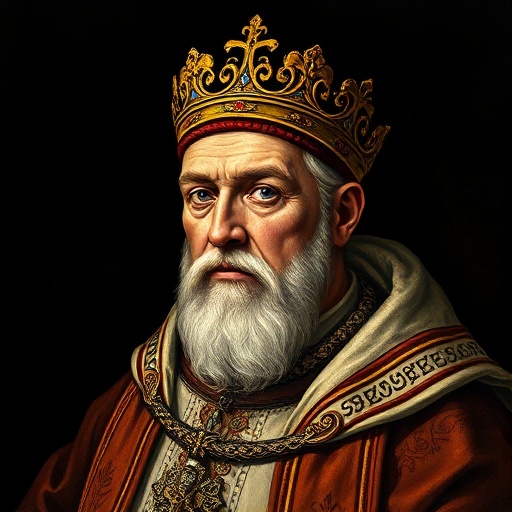
Pope (1088-1099) whose Council of Clermont speech (November 1095) launched the First Crusade — the founding event of nine centuries of Christian-Muslim military conflict. Closely associated with Pope Gregory VII (his predecessor on papal-imperial reform). For an intellectual contrast, see Saladin, Kurdish-Muslim Sultan of Egypt and Syria (1138-1193) — Saladin recaptured Jerusalem in 1187, undoing the First Crusade Urban II launched 92 years earlier. Saladin's chivalrous treatment of Christian prisoners became the canonical Muslim counter-image to Crusader brutality. The cleanest before/after pairing of the Crusades' moral arc.
Found in 1 providers: grok
1 source checked
Use the Christian cross as both your moral compass and your public symbol of allegiance. Let your core values direct every decision you make, and display them openly through your actions and commitments. It is a call to live by principle and stand publicly for what you believe—not merely as private faith, but as active, visible devotion that shapes behavior and openly identifies you to others around you.
Urban II delivered his Council of Clermont sermon in 1095, personally launching the First Crusade. A former Cluniac monk shaped by monastic discipline, he believed spiritual reform and military action were inseparable duties. Crusaders literally sewed crosses onto their garments, becoming crucesignati—those signed with the cross. For Urban, the cross was not metaphor but literal military insignia and divine mandate, making this phrase the operational slogan of his most consequential and defining historical act.
The Seljuk Turks had seized much of Anatolia from Byzantium after 1071 and controlled Jerusalem, disrupting Christian pilgrimage routes. Fragmented feudal Europe directed its violent knightly class inward, destabilizing the continent. The Cluniac Reform movement was reasserting Church moral authority across Europe. Urban II saw the Crusade as a mechanism to redirect that knightly violence outward, reunite Eastern and Western Christendom under Rome's leadership, and restore Christian access to the Holy Land.
AI-generated insights based on extensive research and information for context. Factual errors? Email [email protected].
Your cart is empty