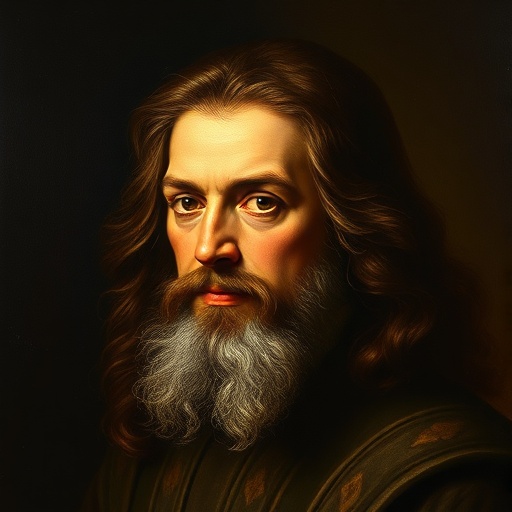
Leonardo da Vinci — "Men will seem like wooden puppets, moving without reason."
Men will seem like wooden puppets, moving without reason.
Men will seem like wooden puppets, moving without reason.
Click any product to generate a realistic preview. Up to 3 at a time.
* Initial load can take up to 90 seconds — revising the preview in another color is nearly instant.
"It is an easy thing to praise and blame, but not so easy to know what to praise and what to blame."
"Among the great things which are to be found among us, the Being of Nothingness is the greatest."
"The eye is the first organ that comes into contact with the light."
"Small rooms or dwellings discipline the mind, large ones enfeeble it."
"The mind of the painter is a mirror of the world."
Found in 1 providers: deepseek
1 source checked
People behave like automatons — reactive, unthinking, driven by habit, social pressure, or blind obedience rather than conscious deliberation. The quote warns that without engaging reason, humans lose what separates them from mere machinery. It's a critique of intellectual passivity: living on autopilot, following commands, conforming to routine without questioning why. The image of wooden puppets strips away human dignity to expose how rarely people actually think for themselves.
Leonardo filled over 13,000 notebook pages with observations, experiments, and questions — driven by a compulsive need to understand why things work. He was largely self-taught, illegitimate, and moved between patrons, always prioritizing curiosity over comfort. He preached saper vedere — knowing how to see. To him, unexamined life was a kind of mechanical failure. This quote captures his disdain for those content to exist without questioning, observing, or reasoning independently.
The Italian Renaissance was a period of intellectual awakening, yet most Europeans remained illiterate, bound by Church doctrine and feudal routine. Scholasticism prescribed what to think; humanism was just beginning to champion individual reason. Leonardo worked amid political upheaval — the Italian Wars, Sforza and Medici power struggles — watching rulers and soldiers act on instinct and tradition. Against this backdrop, his call for reason over reflex was a genuinely radical challenge to the era's intellectual conformity.
AI-generated insights based on extensive research and information for context. Factual errors? Email [email protected].
Your cart is empty