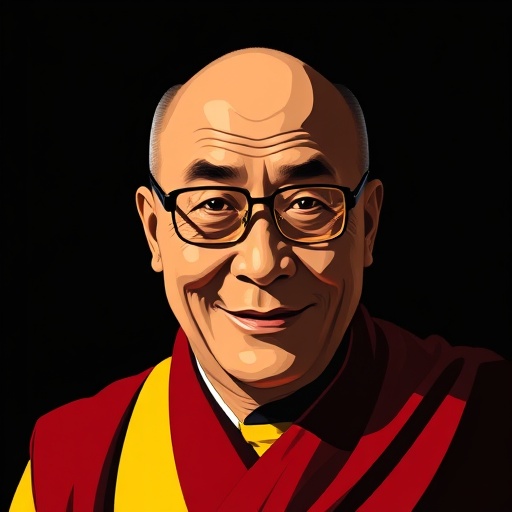
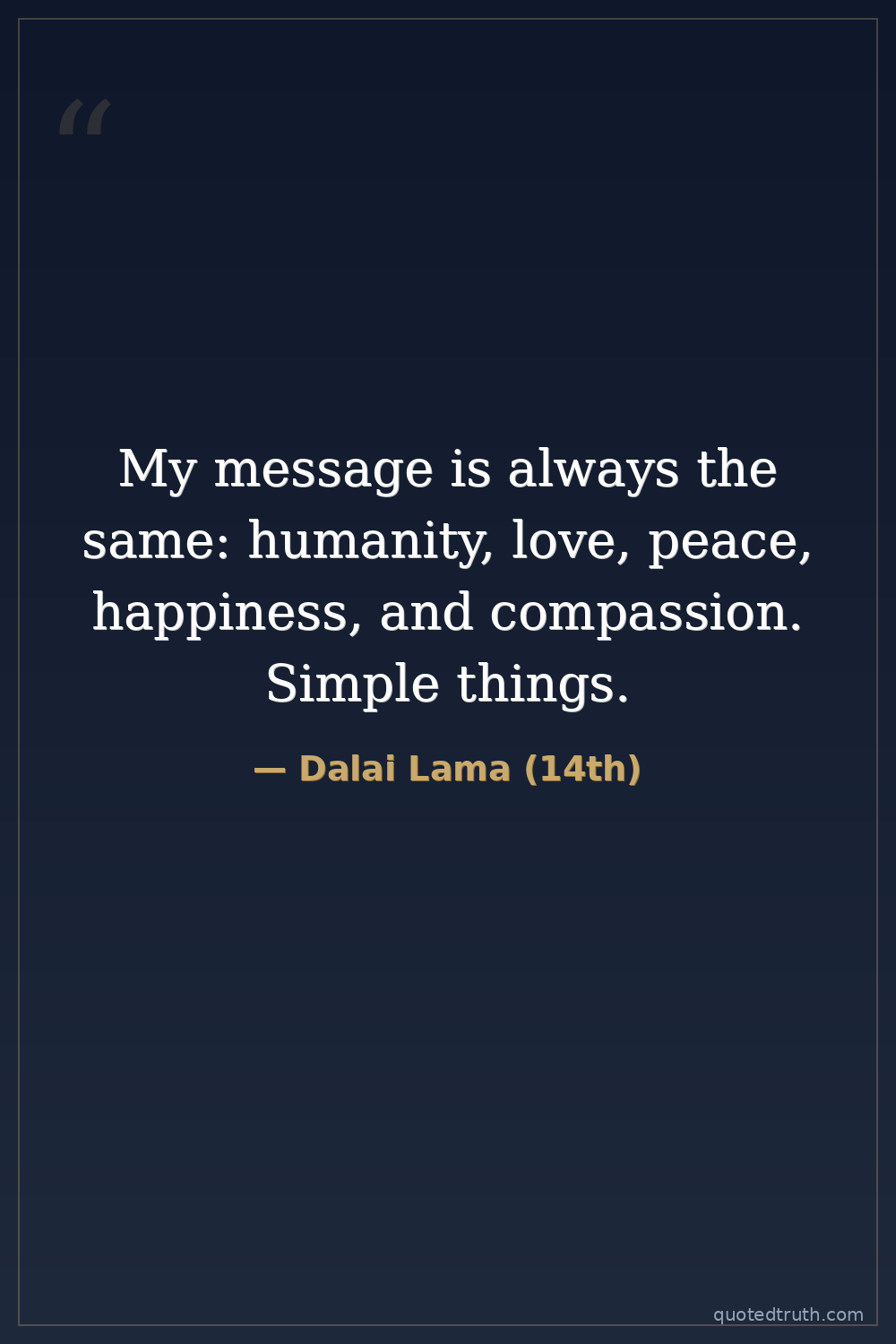
Dalai Lama (14th) — "My message is always the same: humanity, love, peace, happiness, and compassion.…"
My message is always the same: humanity, love, peace, happiness, and compassion. Simple things.
My message is always the same: humanity, love, peace, happiness, and compassion. Simple things.
Click any product to generate a realistic preview. Up to 3 at a time.
* Initial load can take up to 90 seconds — revising the preview in another color is nearly instant.
"The 21st century should be a century of dialogue, not violence."
"Love and compassion are necessities, not luxuries. Without them, humanity cannot survive."
"I am a simple person. I don't have many possessions. I just have my robes and my beads."
"Be kind whenever possible. It is always possible."
"If scientific analysis were conclusively to demonstrate certain claims in Buddhism to be false, then we must accept the findings of science and abandon those claims."
Found in 1 providers: grok
1 source checked
Despite the complexity of the modern world, the things that matter most are simple and universal. The speaker is saying his core message never changes: treat people with humanity, cultivate love and compassion, pursue inner peace, and choose happiness. He's not offering complicated theology or political programs — just a reminder that these five values are the foundation of a good life, available to anyone regardless of religion or culture.
Tenzin Gyatso, the 14th Dalai Lama, has lived this message through extraordinary circumstances — exiled from Tibet since 1959 when China occupied his homeland, he chose dialogue over violence. His decades of advocacy for Tibetan autonomy are rooted not in nationalism but in compassion. A Nobel Peace Prize laureate in 1989, he consistently frames political struggle through Buddhist ethics: inner peace enabling outer peace. His lifelong consistency here is itself the point.
Born in 1935 and ascending the throne in 1950, the 14th Dalai Lama navigated the Cold War, China's Cultural Revolution — which destroyed thousands of Tibetan monasteries — the rise of global terrorism post-9/11, and accelerating climate crisis. In a world increasingly defined by ideological polarization, nationalism, and technological disruption, his insistence on simple universal values offered a deliberate counterpoint to complexity and division.
AI-generated insights based on extensive research and information for context. Factual errors? Email [email protected].
Your cart is empty