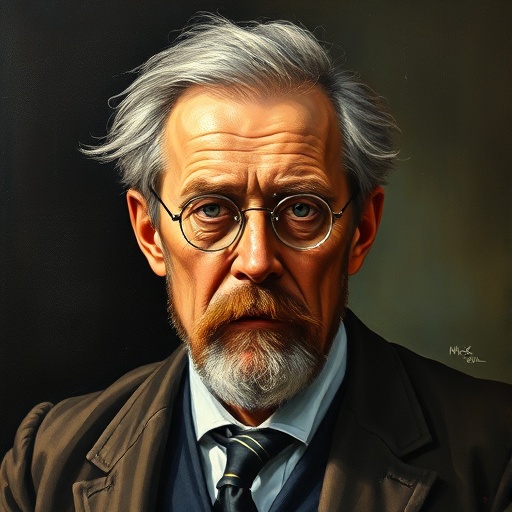
Max Planck — "No burden is so heavy for a man to bear as a succession of happy days."
No burden is so heavy for a man to bear as a succession of happy days.
No burden is so heavy for a man to bear as a succession of happy days.
Click any product to generate a realistic preview. Up to 3 at a time.
* Initial load can take up to 90 seconds — revising the preview in another color is nearly instant.
"All matter originates and exists only by virtue of a force… We must assume behind this force the existence of a conscious and intelligent Mind. This Mind is the matrix of all matter."
"We cannot rest content with an explanation of natural phenomena which does not connect them ultimately with the spiritual."
"The constant changes in the scientific worldview show how important it is to remain open to new ideas."
"A new scientific truth does not triumph by convincing its opponents and making them see the light, but rather because its opponents eventually die, and a new generation grows up that is familiar with …"
"The world needs men who can think for themselves, and not just repeat what they have been taught."
Found in 1 providers: gemini
1 source checked
Long stretches of uninterrupted happiness become exhausting rather than fulfilling. When life flows smoothly day after day, people grow restless, complacent, or anxious about what might disrupt it. Without struggle, hardship, or variation, existence loses meaning and contrast. Humans need challenge and adversity to appreciate joy and feel genuinely alive. Constant ease paradoxically weighs heavier on the spirit than occasional suffering does, because it numbs us to life's texture and significance.
Planck knew profound loss alongside scientific triumph. He revolutionized physics with his 1900 quantum hypothesis, yet endured his first wife's death, both daughters dying in childbirth, one son killed in World War I, and his eldest son Erwin executed by the Nazis in 1945 for plotting against Hitler. A devout, introspective man who found solace in music and faith, Planck understood intimately that achievement coexists with sorrow, shaping this meditation on suffering's necessary role.
Planck lived through Imperial Germany's rise, World War I's devastation, Weimar instability, Nazi tyranny, and World War II's destruction of Berlin. Science advanced spectacularly—relativity, quantum mechanics, atomic theory—while European civilization collapsed twice. Planck witnessed colleagues like Einstein forced into exile, his institute bombed, his home destroyed. The early twentieth century shattered Enlightenment optimism about progress, making reflections on suffering, endurance, and the illusion of permanent happiness deeply resonant among thoughtful Germans navigating unprecedented upheaval.
AI-generated insights based on extensive research and information for context. Factual errors? Email [email protected].
Your cart is empty