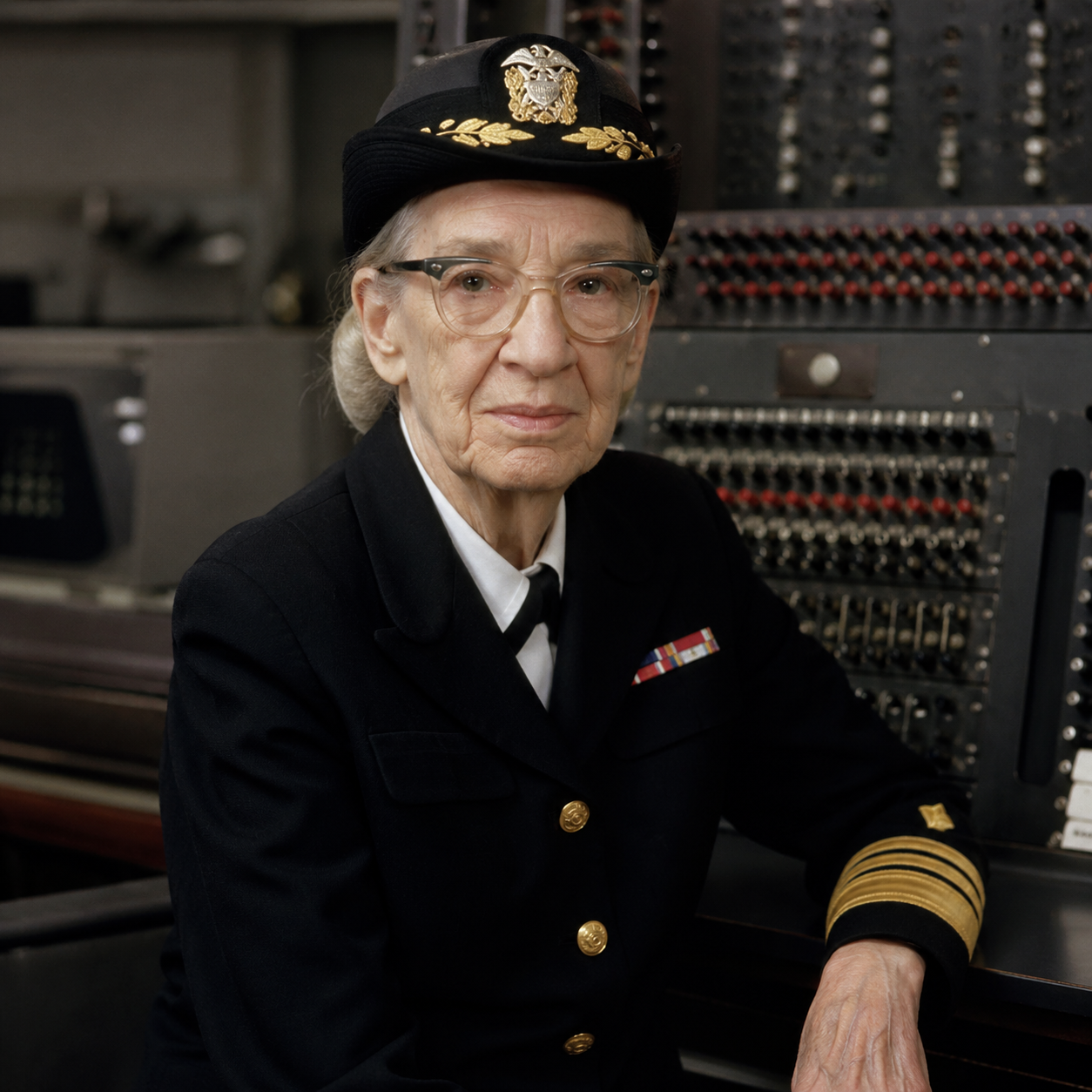
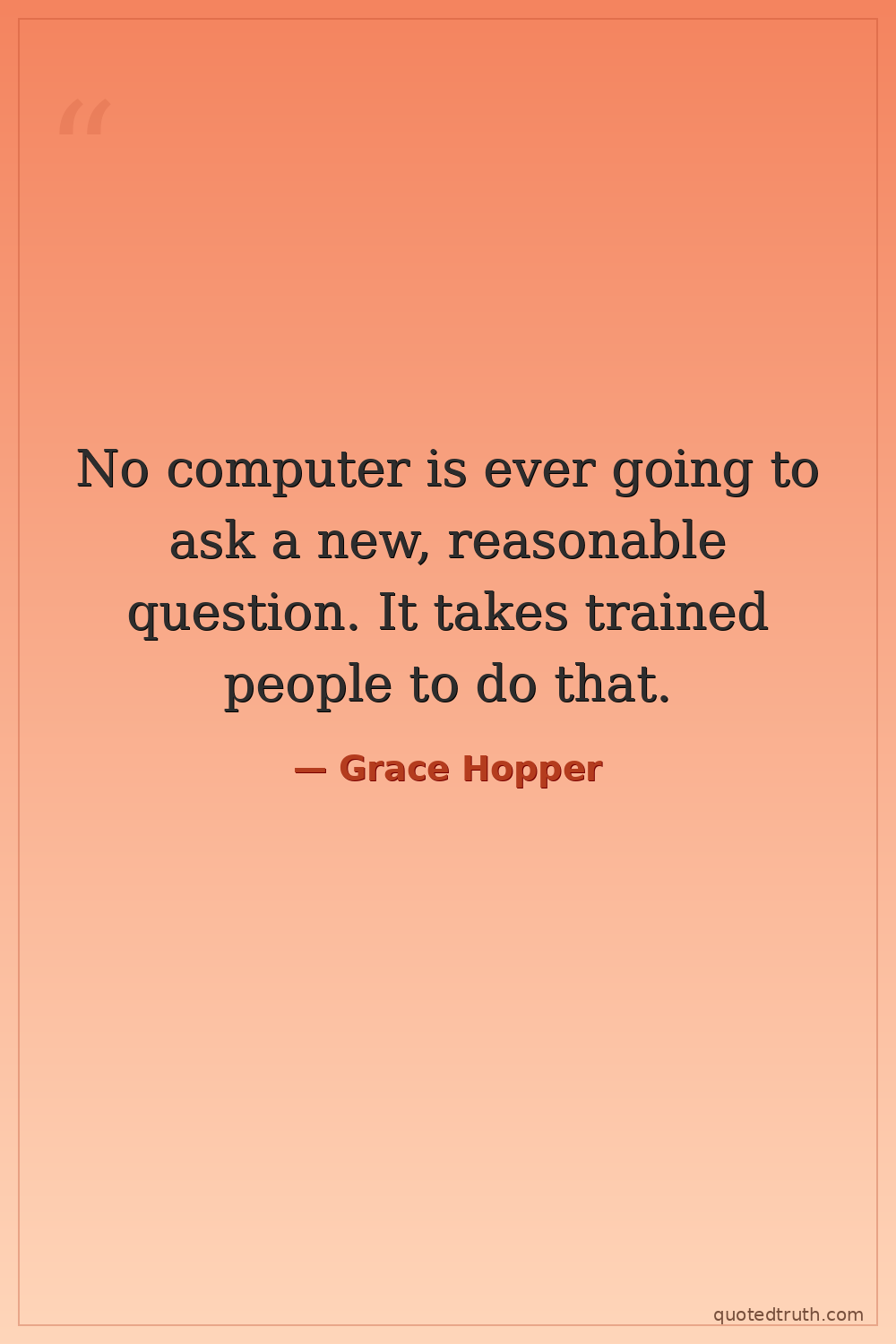
Grace Hopper — "No computer is ever going to ask a new, reasonable question. It takes trained pe…"
No computer is ever going to ask a new, reasonable question. It takes trained people to do that.
No computer is ever going to ask a new, reasonable question. It takes trained people to do that.
Click any product to generate a realistic preview. Up to 3 at a time.
* Initial load can take up to 90 seconds — revising the preview in another color is nearly instant.
"The most important thing I've accomplished, other than building the compiler, is training young people."
"If we're going to have computers, we're going to have to have programmers."
"I will not take what you need to give me. I will take what you want to give me."
"I seem to do a lot of retiring."
"The most dangerous phrase in the language is, 'We've always done it this way.'"
Emphasizing the irreplaceable role of human intelligence and critical thinking in the age of computers.
Date: 1987 (OCLC Newsletter, March/April)
GeneralFound in 1 providers: gemini
1 source checked
Computers can process information and execute instructions, but they cannot independently generate meaningful new questions. Genuine inquiry—the kind that drives discovery and progress—requires trained human minds capable of curiosity, judgment, and creative thought. A machine only operates within the framework given to it. The real engine of advancement is the educated human who can look at a problem and ask something genuinely new and productive.
Hopper programmed the Harvard Mark I and invented the first compiler, so she understood precisely what machines could and could not do. She spent decades training Navy personnel and championing human-readable languages like COBOL—because she believed people, not machines, drove innovation. Her entire career embodied the principle: build better tools, but never mistake the tool for the mind wielding it.
During Hopper's career, the postwar computing boom sparked widespread excitement and anxiety about automation displacing human workers. Cold War competition poured massive investment into computing technology, and public debate intensified over whether machines might eventually surpass human reasoning. Her statement pushed back against techno-utopianism—insisting that no matter how powerful computers became, trained human expertise remained the irreplaceable source of new ideas and genuine intellectual progress.
AI-generated insights based on extensive research and information for context. Factual errors? Email [email protected].
Your cart is empty