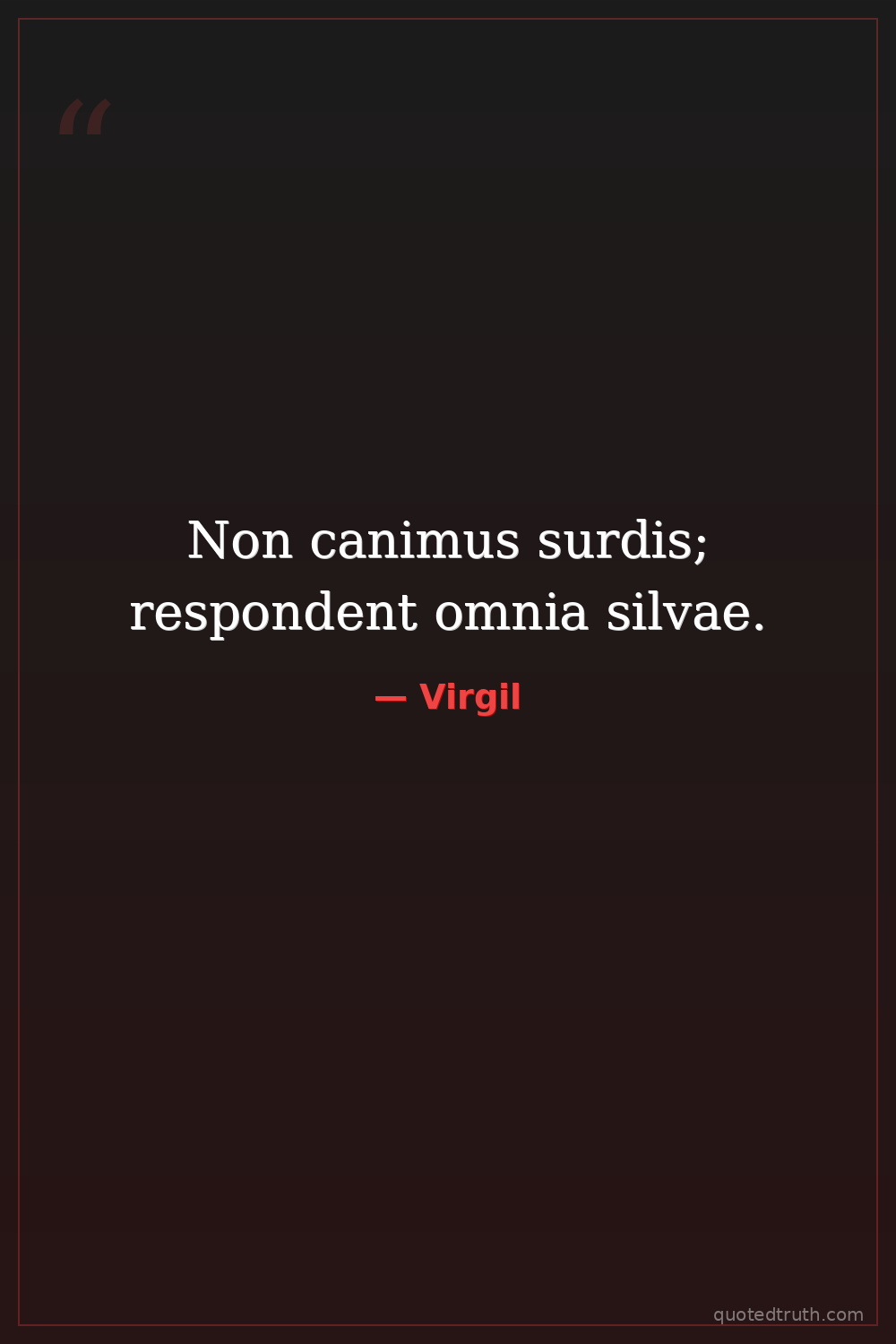
Virgil — "Non canimus surdis; respondent omnia silvae."
Non canimus surdis; respondent omnia silvae.
Non canimus surdis; respondent omnia silvae.
Click any product to generate a realistic preview. Up to 3 at a time.
* Initial load can take up to 90 seconds — revising the preview in another color is nearly instant.
"Facilis descensus Averno; noctes atque dies patet atri ianua Ditis; sed revocare gradum superasque evadere ad auras, hoc opus, hic labor est."
"Arma virumque cano, Troiae qui primus ab oris Italiam, fato profugus, Laviniaque venit litora."
"The mind moves the mass."
"Nulla dies umquam memori vos eximet aevo."
"The gods visit the sins of the fathers upon the children."
Roman poet of the Augustan age whose Aeneid is the founding national epic of Rome and Western literature's most-imitated hexameter poem. Closely associated with Ovid (younger Augustan poet of Metamorphoses) and Horace (third Augustan-era major poet). For an intellectual contrast, see Lucan, Roman poet (39-65 CE) of the Pharsalia — Lucan's Pharsalia explicitly rejected Virgilian Augustan epic by writing a civil-war epic that refused divine machinery and treated Roman empire as tragedy rather than destiny. Lucan's Pharsalia is a 60-years-later rebuke of the Aeneid's imperial theology — civil war as crime instead of providence.
Your cart is empty