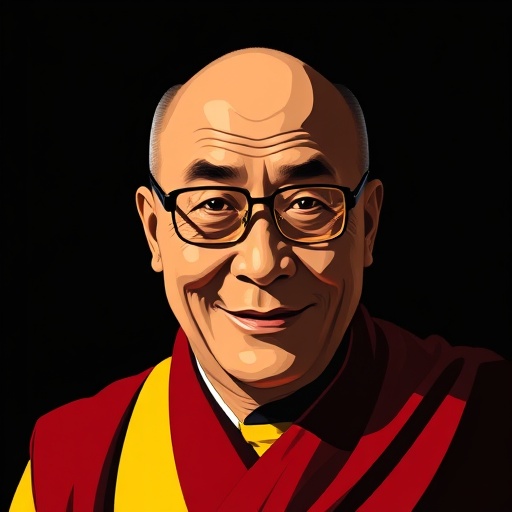
Dalai Lama (14th) — "Remember that sometimes not getting what you want is a wonderful stroke of luck."
Remember that sometimes not getting what you want is a wonderful stroke of luck.
Remember that sometimes not getting what you want is a wonderful stroke of luck.
Click any product to generate a realistic preview. Up to 3 at a time.
* Initial load can take up to 90 seconds — revising the preview in another color is nearly instant.
"Sometimes I feel very sad when I see so much suffering in the world. But then I remember that I have a responsibility to help."
"Sometimes one creates a dynamic impression by saying something, and sometimes one creates as significant an impression by remaining silent."
"I believe that to achieve a truly global and human society, we must develop a sense of universal responsibility."
"I think the very purpose of our life is to seek happiness."
"I think humor is very important. Sometimes I tell jokes that are not very funny, but people laugh anyway because I am the Dalai Lama."
Found in 1 providers: deepseek
1 source checked
Unfulfilled desires can be blessings in disguise. What we think we want isn't always what serves us — circumstances sometimes steer us away from outcomes that would have caused harm or led us astray. Reframing disappointment as potential good fortune shifts perspective from loss to possibility, encouraging acceptance rather than bitterness when life doesn't unfold as planned. Trusting the gap between desire and outcome is itself a form of practical wisdom.
Tenzin Gyatso was expelled from Tibet in 1959 when China crushed the Tibetan uprising, losing his homeland, political authority, and direct access to his people. From exile in Dharamsala, India, he became a global figure for human rights, compassion, and Buddhist philosophy, winning the Nobel Peace Prize in 1989. The very catastrophe he couldn't prevent became the stage for his greatest influence — a lived embodiment of this teaching.
The 14th Dalai Lama has lived through Cold War geopolitics, China's Cultural Revolution destroying thousands of Tibetan monasteries, rapid globalization, and a consumer culture built on relentless desire. His spiritual career unfolded against both political oppression and material excess — two forces that manufacture suffering through frustrated wanting. His message that denial can be luck is a direct counterweight to these defining pressures of the contemporary era.
AI-generated insights based on extensive research and information for context. Factual errors? Email [email protected].
Your cart is empty