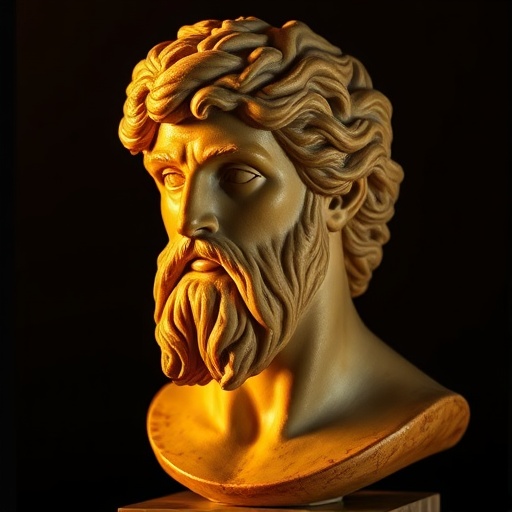
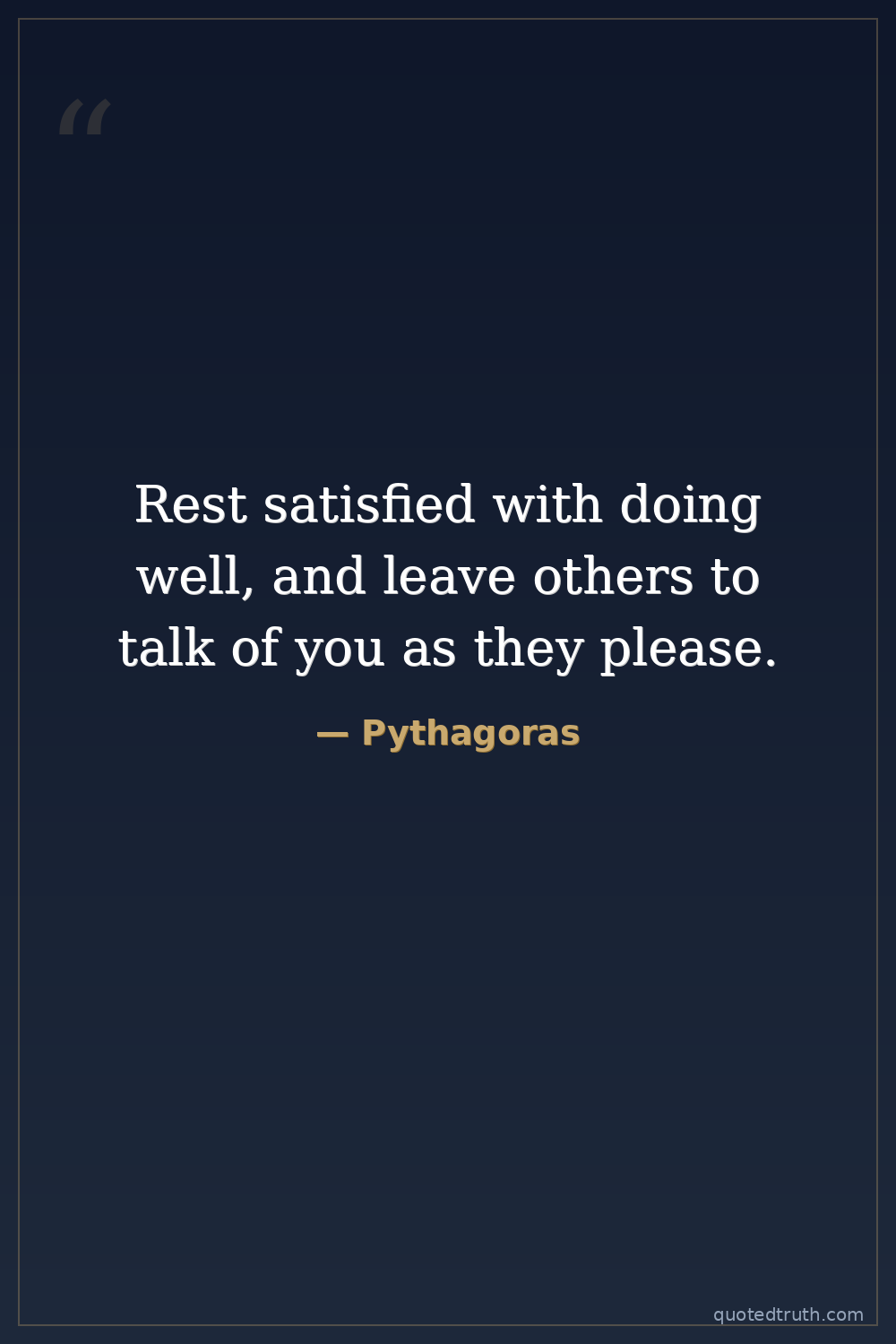
Pythagoras — "Rest satisfied with doing well, and leave others to talk of you as they please."
Rest satisfied with doing well, and leave others to talk of you as they please.
Rest satisfied with doing well, and leave others to talk of you as they please.
Click any product to generate a realistic preview. Up to 3 at a time.
* Initial load can take up to 90 seconds — revising the preview in another color is nearly instant.
"Declining from the public ways, walk in unfrequented paths."
"The 'tetractys' is the source of all things."
"As long as Man continues to be the ruthless destroyer of lower living beings, he will never know health or peace. For as long as men massacre animals, they will kill each other. Indeed, he who sows th…"
"Abstain from the flesh of beasts that die of themselves."
"Friends are as companions on a journey, who ought to aid each other to persevere in the road to a happier life."
Greek philosopher and mathematician whose school in Croton combined geometry (the Pythagorean theorem), number-mysticism, and a religious-vegetarian way of life. Closely associated with Thales of Miletus (earlier pre-Socratic and the first philosopher). For an intellectual contrast, see Heraclitus, pre-Socratic Greek philosopher of flux — Heraclitus called Pythagoras 'the chief of swindlers' — among the founding insults of the philosophical-rivalry tradition. Their 'all is flux' vs 'all is number' poles still organize the philosophy of mathematics today (Platonist vs anti-realist).
Advice on self-contentment and disregarding external criticism.
Date: c. 570-495 BCE (attributed later)
WisdomFound in 3 providers: gemini,deepseek,grok
3 sources checked
Focus on acting with integrity and doing good work, and stop worrying about your reputation or what others say about you. You cannot control public opinion, so don't let it drive your choices. Your actions themselves are the measure of your worth — external praise or criticism is irrelevant noise if your conduct is sound.
Pythagoras founded a secretive philosophical community in Croton where members lived by strict ethical codes, often misunderstood or mocked by outsiders. He taught that inner harmony and virtuous living mattered more than fame. His mathematical discoveries were shared within a brotherhood, not publicized for recognition, reflecting his belief that truth-seeking was its own reward, independent of public approval.
In ancient Greece, reputation and public honor — timē — were central to social standing and civic life. Philosophers who challenged conventional beliefs risked ridicule or exile, as Pythagoras himself experienced. His teaching pushed against this cultural obsession with external validation, radical for a society where shame and glory publicly defined a person's entire worth and social existence.
AI-generated insights based on extensive research and information for context. Factual errors? Email [email protected].
Your cart is empty