Benjamin Franklin — "Save a penny every year and you shall die a millionaire."
Save a penny every year and you shall die a millionaire.
Save a penny every year and you shall die a millionaire.
Click any product to generate a realistic preview. Up to 3 at a time.
* Initial load can take up to 90 seconds — revising the preview in another color is nearly instant.
"He that is rich, and wants a reputation, may buy it dear. But he that is poor, and wants one, may buy it cheap."
"Nothing is certain except death and taxes."
"He that is used to go to bed hungry, and rise early, may be a good workman, but he is a bad master."
"Without freedom of thought there can be no such thing as wisdom; and no such thing as public liberty, without freedom of speech."
"No gains without pains."
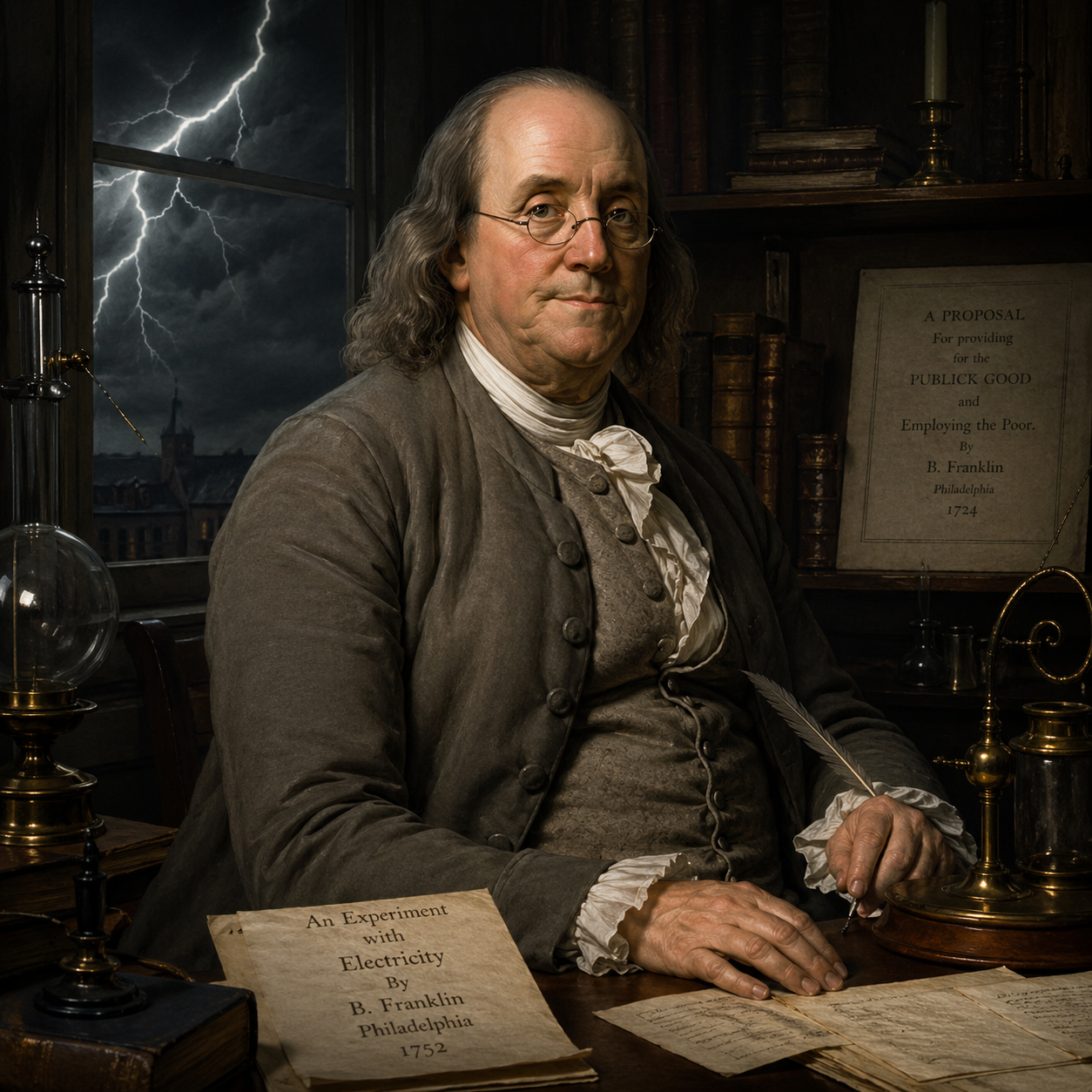
Polymath Founding Father, diplomat, and Poor Richard's Almanack author who helped draft the Declaration of Independence and the Constitution. Closely associated with John Adams (fellow Founder, Massachusetts statesman) and Thomas Jefferson (fellow Declaration drafter). For an intellectual contrast, see Thomas Hutchinson, last royal governor of colonial Massachusetts — Franklin leaked Hutchinson's loyalist correspondence to Boston in 1772 to inflame revolutionary sentiment — Hutchinson represented the colonial-aristocrat crown-loyalty that Franklin's revolution was organized to dismantle.
From 'Poor Richard's Almanack' (lesser-known wisdom)
Date: Unknown, likely 18th century
Life & AgingFound in 1 providers: gemini
1 source checked
Small, consistent savings habits compound into enormous wealth over a lifetime. The quote reframes modest daily discipline — setting aside even the smallest amount — as a path to financial security that most people overlook. Wealth isn't built through windfalls but through relentless, patient accumulation. The message is timeless: underestimate no small act of thrift, because time transforms pennies into fortunes.
Franklin embodied this principle personally, rising from a poor Boston candlemaker's son to one of colonial America's wealthiest self-made men. His 'Poor Richard's Almanack' was packed with frugality maxims — 'A penny saved is a penny earned' being the most famous. He distrusted inherited wealth and championed earned fortune through disciplined industry, making savings philosophy central to his public persona and moral writing.
In 18th-century colonial America, no banks, no pensions, and no social safety nets existed for ordinary people. Poverty was a permanent trap for most. Franklin's era saw the rise of merchant capitalism, where disciplined saving and reinvestment distinguished those who prospered from those who didn't. Encouraging thrift was a civic and moral act — self-reliance was the only reliable path to survival and independence.
AI-generated insights based on extensive research and information for context. Factual errors? Email [email protected].
Your cart is empty