Benjamin Franklin — "scarcely worth a FART-HING"
scarcely worth a FART-HING
scarcely worth a FART-HING
Click any product to generate a realistic preview. Up to 3 at a time.
* Initial load can take up to 90 seconds — revising the preview in another color is nearly instant.
"Wink at small faults; remember thou hast great ones."
"Lost time is never found again."
"The way to wealth, if you desire it, is as plain as the way to market. It depends chiefly on two words, industry and frugality."
"The doors of wisdom are never shut."
"He that is used to go to bed hungry, and rise early, may be a good workman, but he is a bad master."
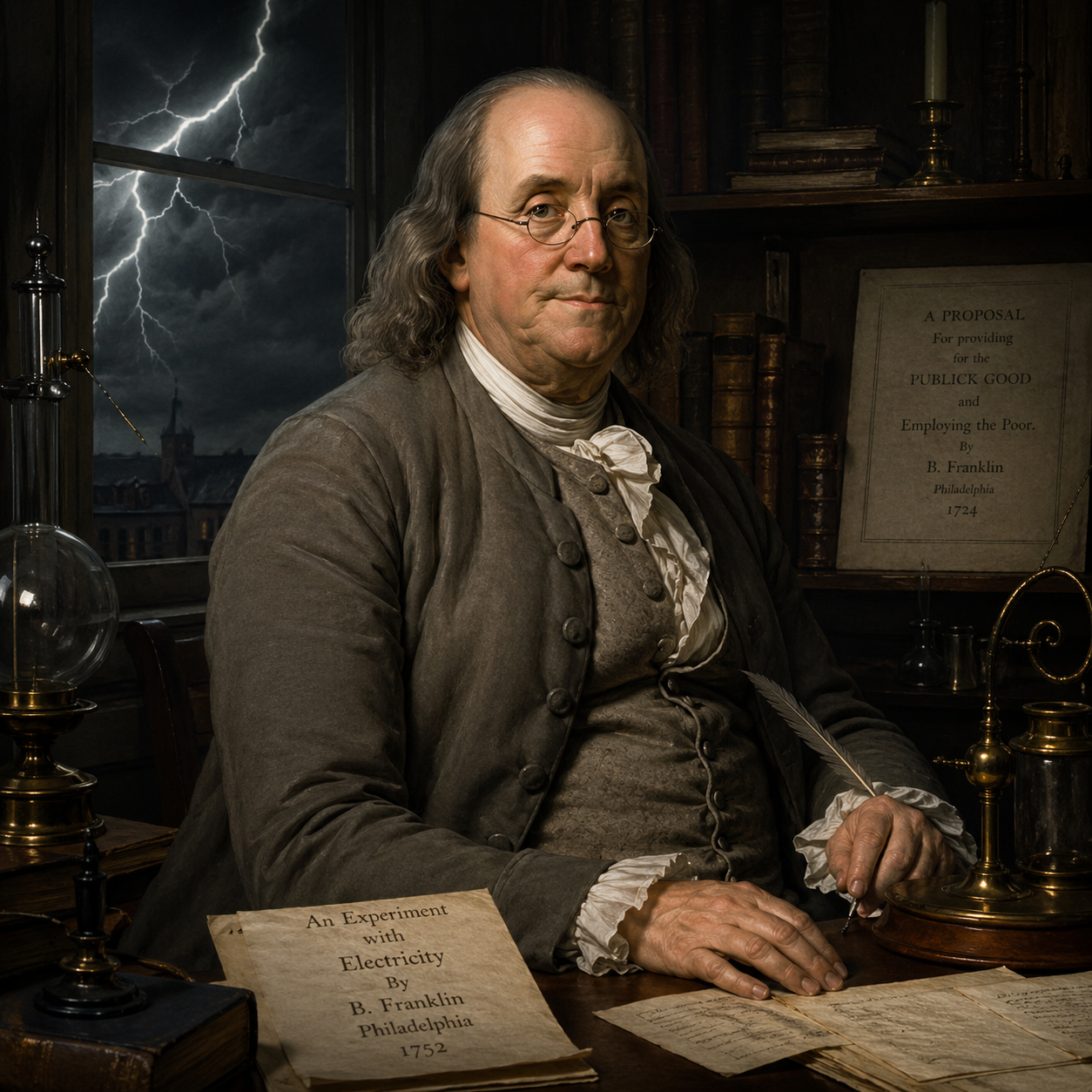
Polymath Founding Father, diplomat, and Poor Richard's Almanack author who helped draft the Declaration of Independence and the Constitution. Closely associated with John Adams (fellow Founder, Massachusetts statesman) and Thomas Jefferson (fellow Declaration drafter). For an intellectual contrast, see Thomas Hutchinson, last royal governor of colonial Massachusetts — Franklin leaked Hutchinson's loyalist correspondence to Boston in 1772 to inflame revolutionary sentiment — Hutchinson represented the colonial-aristocrat crown-loyalty that Franklin's revolution was organized to dismantle.
Found in 1 providers: gemini
1 source checked
Something is worth essentially nothing — less than the smallest coin in circulation. The deliberate capitalization of 'FART' within 'farthing' doubles the insult: the thing isn't just monetarily worthless, it's not worth a bodily function either. Franklin weaponizes the smallest British coin as both a currency measure and a crude pun, landing a contemptuous dismissal with far more sting than any polite phrasing ever could.
Franklin was celebrated for earthy, irreverent humor — he authored the 1781 essay 'Fart Proudly,' urging the Royal Academy to study pleasant flatulence. A printer by trade, he understood typographic emphasis as a comedic tool. His Poor Richard's Almanack blended practical wisdom with wordplay. This pun — hiding a vulgar word inside a respectable coin name — is pure Franklin: democratic, anti-pompous, and delighted by language that undercuts pretension with a knowing wink.
The farthing was Britain's smallest copper coin — one quarter of a penny — still common in colonial-era commerce, making 'not worth a farthing' a universally understood measure of worthlessness. In the 1700s, Enlightenment print culture was exploding with satire and pamphlets where bawdy wordplay was a recognized comedic tradition. Franklin's typographic trick made the pun visible on the page, exploiting the era's growing literate readership and love of clever, irreverent print humor.
AI-generated insights based on extensive research and information for context. Factual errors? Email [email protected].
Your cart is empty