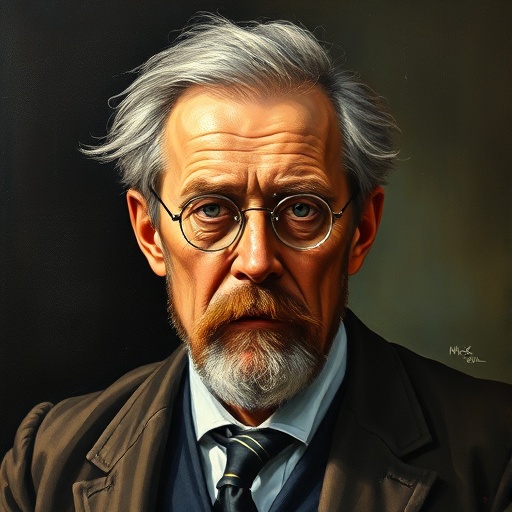
Max Planck — "Science and religion are not antagonistic; they are complementary."
Science and religion are not antagonistic; they are complementary.
Science and religion are not antagonistic; they are complementary.
Click any product to generate a realistic preview. Up to 3 at a time.
* Initial load can take up to 90 seconds — revising the preview in another color is nearly instant.
"There can never be any real opposition between religion and science; for the one is the complement of the other."
"There is no matter as such! All matter originates and exists only by virtue of a force which brings the particle of an atom to vibration and holds this most minute solar system of the atom together. W…"
"The scientist's most important tool is his imagination."
"The world is not a collection of things, but a collection of events."
"Science advances one funeral at a time."
Found in 1 providers: grok
1 source checked
The statement rejects the common view that science and religion are enemies fighting over truth. Instead, it argues they address different questions and can coexist productively. Science explains how the physical world operates through measurable evidence, while religion addresses questions of meaning, ethics, and purpose that lie beyond empirical measurement. Rather than competing, each fills gaps the other cannot reach, together giving a fuller picture of reality.
Planck founded quantum theory in 1900 yet remained a devout Lutheran throughout his life, serving as a church elder in Berlin. He gave lectures like 'Religion and Natural Science' arguing both pursuits seek ultimate truth. Having lost sons to war and execution, his faith sustained him through tragedy. For Planck, discovering quantized energy revealed a rational order behind nature, which he read as evidence of a divine intelligence rather than its absence.
Planck lived through an era when Darwin's theory, Freudian psychology, and logical positivism fueled public conflict between scientific rationalism and traditional faith. German universities debated whether religion belonged in intellectual life at all. Two world wars shattered Europe's moral certainties, pushing scientists to address meaning alongside mechanism. Planck spoke against Nazi ideology and defended Jewish colleagues like Einstein, making his reconciliation of science and religion a moral stance as much as a philosophical one.
AI-generated insights based on extensive research and information for context. Factual errors? Email [email protected].
Your cart is empty