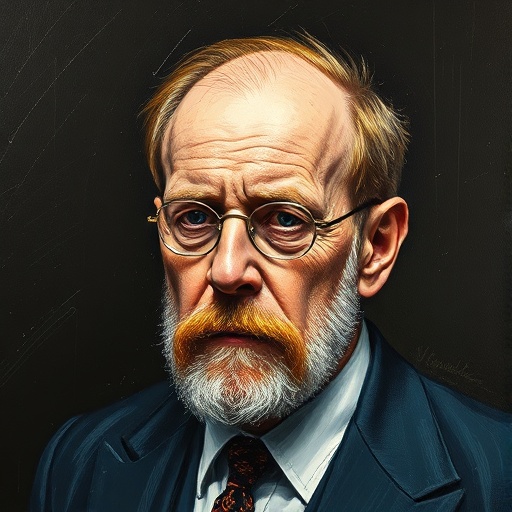
Werner Heisenberg — "Science is rooted in conversations."
Science is rooted in conversations.
Science is rooted in conversations.
Click any product to generate a realistic preview. Up to 3 at a time.
* Initial load can take up to 90 seconds — revising the preview in another color is nearly instant.
"The problems of atomic physics are not problems of technology, but problems of philosophy."
"If a man is to be a good physicist, he must have an intuitive grasp of the physical reality, which can be acquired only by much experience."
"We wouldn't have had the moral courage to recommend to the government in the spring of 1942 that they should employ 120,000 men just for building the thing up."
"The problems of language here are really serious. We wish to speak in some way about the structure of the atoms. But we cannot speak about atoms in ordinary language."
"The first gulp from the glass of natural sciences will turn you into an atheist, but at the bottom of the glass God is waiting for you."
Found in 1 providers: deepseek
1 source checked
Scientific progress does not happen in isolation. It emerges from ongoing dialogue, debate, and exchange of ideas among people. Discoveries are refined when researchers question one another, share partial insights, and build on each other's thinking. Even a solitary breakthrough is shaped by the conversations that came before it and the ones it sparks afterward. Knowledge is a collective, social activity rather than a purely individual pursuit.
Heisenberg developed quantum mechanics through intense exchanges with Bohr, Born, Pauli, and Einstein. His uncertainty principle emerged from late-night debates in Copenhagen, where Bohr relentlessly challenged his reasoning. He credited walks and arguments with colleagues for sharpening his thinking. For Heisenberg, physics was inseparable from dialogue, and he later wrote philosophical works framing science as a human conversation about nature rather than a lone pursuit of fixed truths.
Heisenberg worked during physics' most collaborative revolution, the 1920s-30s. The Copenhagen, Göttingen, and Munich schools thrived on seminars, correspondence, and Solvay Conferences where Einstein and Bohr famously sparred. Quantum theory was literally argued into existence across borders and languages. Later, under Nazi isolation and postwar rebuilding, Heisenberg saw firsthand how severing scientific conversation stalled progress, reinforcing his conviction that open dialogue was the lifeblood of discovery.
AI-generated insights based on extensive research and information for context. Factual errors? Email [email protected].
Your cart is empty