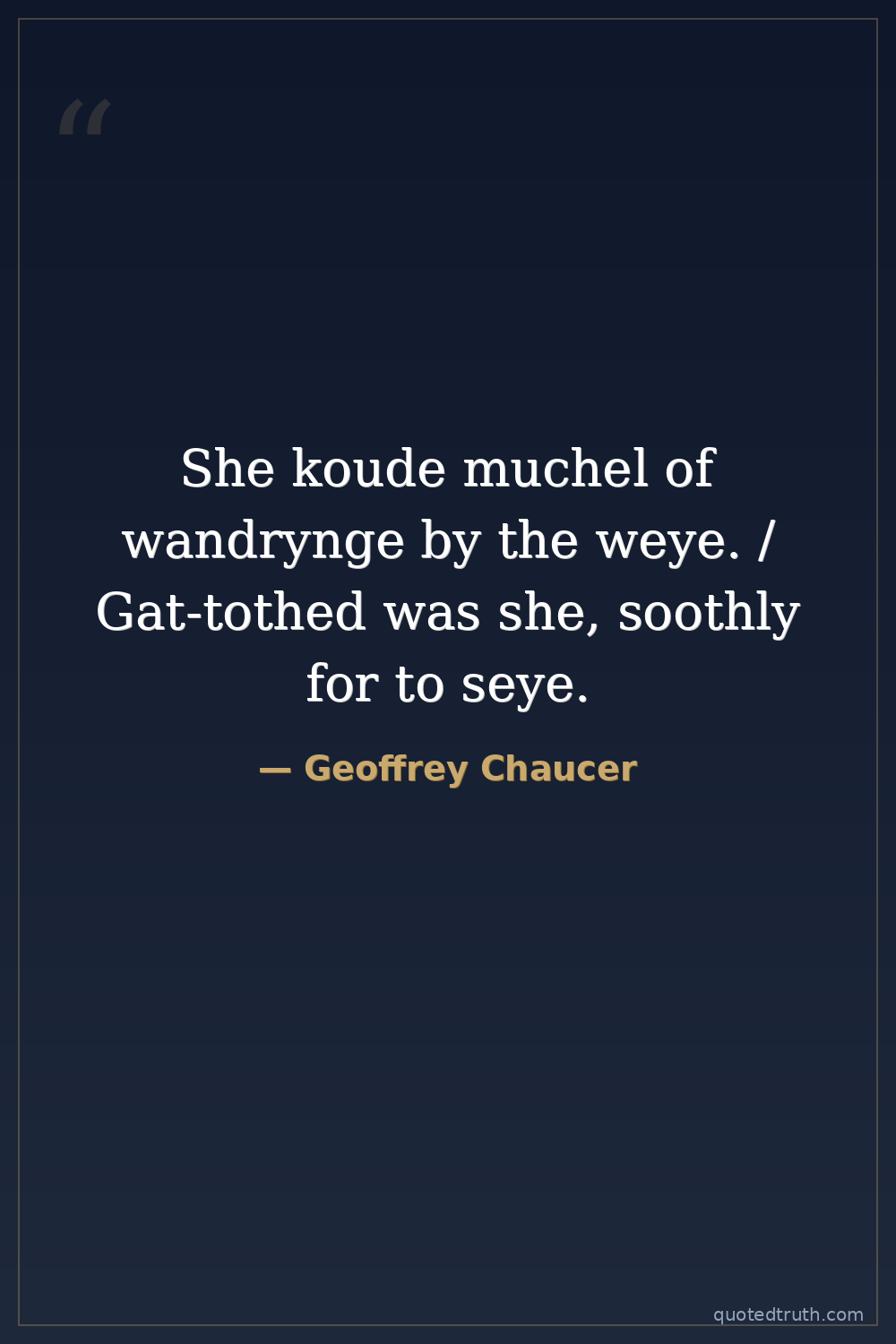
Geoffrey Chaucer — "She koude muchel of wandrynge by the weye. / Gat-tothed was she, soothly for to …"
She koude muchel of wandrynge by the weye. / Gat-tothed was she, soothly for to seye.
She koude muchel of wandrynge by the weye. / Gat-tothed was she, soothly for to seye.
Click any product to generate a realistic preview. Up to 3 at a time.
* Initial load can take up to 90 seconds — revising the preview in another color is nearly instant.
"And yet he was to hym a greet encressour. / Noon auditour koude on his word so wel / Have caught hym in his sleighte, ne in his trayne."
"For though a wydwe hadde noght a sho, / So plesaunt was his 'In principio' / Yet wolde he have a ferthyng, er he wente."
"Therfore, for to speke of the horrible sweryng of the Sowdan, and of the horrible cursedness of his lyf, I holde it nat pertinent to my tale."
"For if a man be trewe in his entent, He may nat faille of his felicitee."
"And trewely she hadde a greet talent / To laughe and for to carpe in compaignye."
English poet, civil servant, and the father of English literature; The Canterbury Tales (~1387-1400) is the founding text of English-language storytelling. Closely associated with Giovanni Boccaccio (his Italian predecessor; the Decameron preceded the Canterbury Tales by ~40 years). For an intellectual contrast, see John Wycliffe, English theologian and Lollard reform-movement leader — Wycliffe and Chaucer were near-contemporaries in the same English Christian world — Chaucer's Wife of Bath and Pardoner are the canonical literary defense of fleshly humanity against the Lollard moral austerity that would later become English Puritanism. Earthy storytelling vs proto-Protestant moralism.
General Prologue to The Canterbury Tales, describing the Wife of Bath's extensive travels and her 'gat-tothed' (gap-toothed) appearance, which was considered a sign of being lustful and bold, making it a 'weird' physical detail with symbolic weight.
Date: c. 1387-1400
WisdomFound in 1 providers: gemini
1 source checked
Your cart is empty