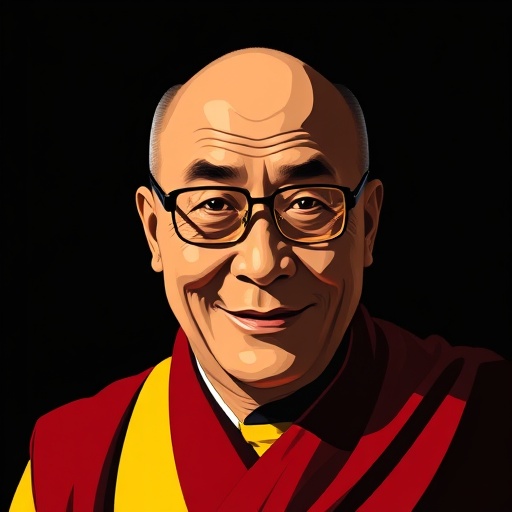
Dalai Lama (14th) — "Silence is sometimes the best answer."
Silence is sometimes the best answer.
Silence is sometimes the best answer.
Click any product to generate a realistic preview. Up to 3 at a time.
* Initial load can take up to 90 seconds — revising the preview in another color is nearly instant.
"Old people, they are not so much. Young people, many. So young people's minds are very important."
"I think the best way to solve problems is through dialogue and negotiation. Violence is never the answer."
"I meditate every morning for about four hours. It's a bit much, but it's important."
"I feel that if one has a good heart, one will be happy."
"Every day, think as you wake up, today I am fortunate to be alive, I have a precious human life, I am not going to waste it."
Found in 1 providers: grok
1 source checked
Not every situation demands a verbal response. Sometimes staying quiet communicates more powerfully than words — it signals dignity under provocation, wisdom when no good answer exists, or respect for moments too profound for language. Words can escalate conflict, misrepresent complexity, or cheapen deep truths. Knowing when to remain silent is itself a form of intelligence and emotional maturity, often more effective than any argument or explanation.
Tenzin Gyatso has navigated decades of Chinese political pressure over Tibet's occupation while maintaining strict non-violence. Buddhist practice centers silence as foundational — meditation requires it, mindfulness cultivates it. He has consistently refused to meet provocations with inflammatory rhetoric, modeling restraint as strength. His Nobel Peace Prize recognized that measured non-response to injustice can be more transformative than reactive anger. For him, silence is active, compassionate, and deeply intentional.
The contemporary era is saturated with information overload, social media demands for instant reaction, and political polarization requiring constant comment. Leaders face enormous pressure to respond to every provocation publicly. Against this noise, a global spiritual leader advocating silence becomes countercultural. The Dalai Lama also speaks amid ongoing geopolitical tension over Tibet, where China's occupation since 1950 has created situations where measured restraint carries more moral weight than inflamed declarations.
AI-generated insights based on extensive research and information for context. Factual errors? Email [email protected].
Your cart is empty